


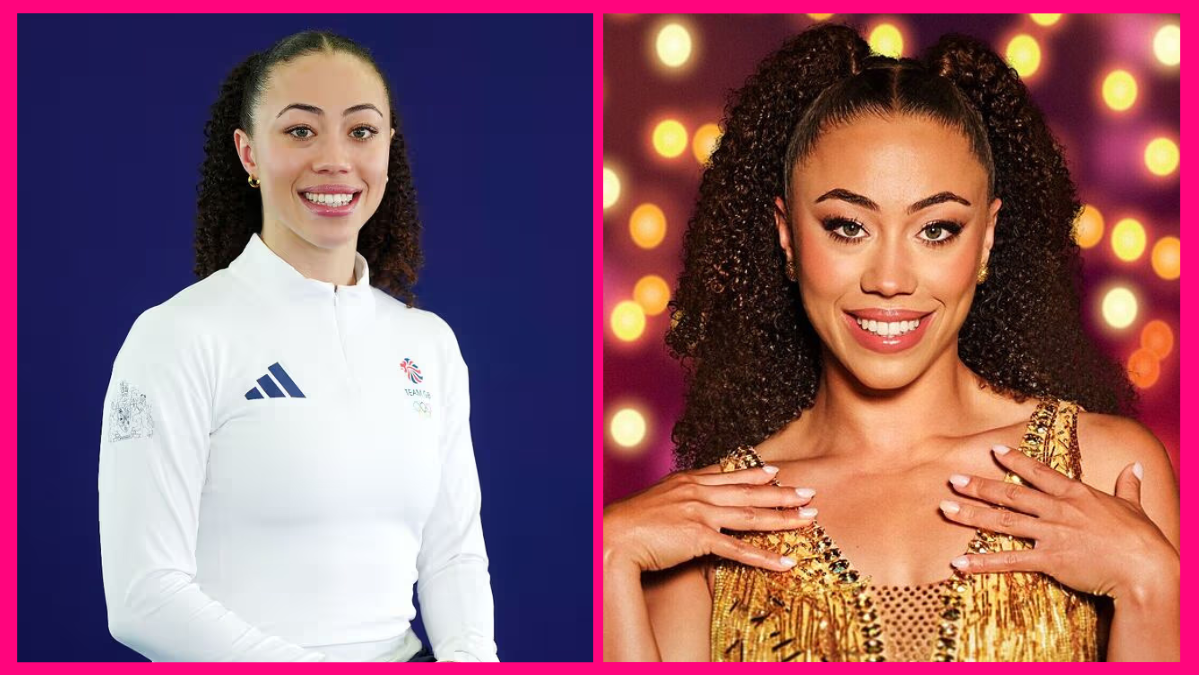
Tabby Stoecker has become one of the most fascinating new names in British winter sport. Born Tabitha Stoecker in Highgate, London, she took an unconventional route into elite athletics. Rather than growing up as a traditional winter-sports prospect, she developed her physical skills through gymnastics and circus training before discovering skeleton through the British talent-identification programme Discover Your Gold.
Her rapid rise has been remarkable. After making her international skeleton debut in 2021, she progressed from junior competition to World Cup winner, World Championship medallist and, in February 2026, Olympic champion in the inaugural mixed-team skeleton event alongside Matt Weston. She also finished fifth in the women’s individual skeleton event at the Milano Cortina Winter Olympics.
The story behind her success is just as interesting as the medals. Years spent learning trapeze, juggling, acrobatics and other circus disciplines helped her develop balance, body awareness and confidence under pressure. Those skills eventually proved remarkably useful on a skeleton sled travelling at extremely high speed.
Who Is Tabby Stoecker?
Tabby Stoecker is a British skeleton athlete who represents Great Britain at international competitions. She was born on November 24, 2000, in Highgate, London, and became involved with British Skeleton after being selected through the Discover Your Gold programme in 2019. Her international competition career began on the Europa Cup circuit in 2021.
What makes her sporting background unusual is that skeleton was not her original specialist discipline. As a child, she was successful in gymnastics and later spent several years training at the National Centre for Circus Arts in London. Her experience included trapeze work, juggling, clowning and acrobatics, giving her a physical foundation that was very different from the typical route into winter sliding sports.
Her transition into skeleton demonstrates how athletic skills can transfer between seemingly unrelated activities. Instead of starting with years of experience on ice, she brought coordination, spatial awareness and a willingness to perform under pressure. Those qualities became valuable as she learned one of the world’s fastest and most technically demanding sliding sports.
Her Early Life and Circus Background
Before skeleton became central to her life, Stoecker developed her athletic abilities through gymnastics. Around the age of 11, she attended an open day at the National Centre for Circus Arts in London with a friend. That experience introduced her to a completely different style of physical training and eventually led to several years of serious circus development.
Her circus education was intensive rather than simply recreational. Reports have described her training for roughly 20 to 25 hours each week between the ages of 11 and 17. She worked on skills such as the flying trapeze, juggling and clowning while continuing her school education. She later explained that the experience gave her a broad athletic foundation and taught her to become comfortable with physical challenges.
The connection between circus and skeleton becomes clearer when looking at the demands of both. A trapeze performer must understand body position, timing and movement through space. A skeleton racer needs similarly precise control while travelling head-first down an icy track. Stoecker has credited her circus background with helping her develop body awareness, confidence and tolerance for adrenaline.
How Tabby Stoecker Discovered Skeleton
The move into skeleton happened through the Discover Your Gold campaign in 2019. The talent programme was designed to identify athletes who might have the physical characteristics needed for winter sports, even if they had never previously competed in disciplines such as skeleton or bobsleigh. Stoecker responded to an advertisement and eventually progressed through the selection process.
Her own description of that discovery captures just how unexpected the transition was. She told BBC Breakfast that she saw an Instagram advertisement for the Discover Your Gold talent-identification process and was subsequently selected for skeleton. At the time, she was coming from a completely different sporting environment.
That opportunity changed the direction of her athletic career. She joined the British Skeleton talent system and eventually made her Europa Cup debut in Igls in December 2021, finishing seventh. Within a short period, she was competing for medals and establishing herself as one of Britain’s most promising young sliders.
Tabby Stoecker’s Rise Through Junior Competition
Stoecker’s early international results suggested that she had considerable potential. During her first competitive season, she won silver at the Junior World Championships. She followed that performance with another Junior World Championship silver in 2023 and became junior European champion at Igls. She also finished second overall in the Europa Cup standings in 2023.
Those achievements were important because they showed that her development was more than a brief breakthrough. She was consistently competitive across different levels of the sport. The British Skeleton profile notes that she collected two gold medals, a silver and a bronze during her Europa Cup campaign, demonstrating her ability to compete successfully against experienced international athletes.
Her progress was particularly impressive given how recently she had entered the sport. Instead of spending her childhood on a skeleton track, she had to learn the discipline as a young adult while adapting her existing athletic abilities to an entirely new environment.
Her Breakthrough World Cup Victory
One of the biggest early milestones in Stoecker’s career arrived in December 2023 at La Plagne. In only her second World Cup start, she won the women’s skeleton race, producing a result that immediately elevated her profile in British skeleton. The victory was also significant for Great Britain because it represented the country’s first female skeleton World Cup race win since 2015.
The victory was followed by another podium finish just one week later in Innsbruck, where she took bronze. Her debut World Cup season ended with her ranked tenth overall and as the top junior across the eight-race campaign.
Her La Plagne performance showed that she could translate potential into results against established senior competitors. It also established an important pattern in her career: rapid adaptation, strong technical development and the ability to perform when expectations suddenly increased.
World Championship Success With Matt Weston
Stoecker’s success has not been limited to individual competition. She has developed a particularly successful mixed-team partnership with fellow British skeleton racer Matt Weston. The pair won silver in the mixed-team event at the 2024 World Championships in Winterberg and repeated the achievement at the 2025 World Championships in Lake Placid.
The back-to-back World Championship silver medals demonstrated the strength of Britain’s mixed-team programme. The events also gave Stoecker valuable experience competing on major international stages before her Olympic debut. The consistency of her results helped establish her as an important member of the British skeleton team.
The following table summarizes some of the key milestones in her career:
| Career stage | Achievement | Significance |
|---|---|---|
| 2019 | Joined the British Skeleton talent pathway | Beginning of her skeleton journey |
| 2021 | Europa Cup debut | First international competition |
| 2022 | Junior World Championship silver | Major early international medal |
| 2023 | Junior European title | Breakthrough junior success |
| 2023 | World Cup gold at La Plagne | First senior World Cup victory |
| 2024 | World Championship mixed-team silver | First senior World Championship medal |
| 2025 | World Championship mixed-team silver | Back-to-back World Championship medals |
| 2026 | World Cup overall bronze | First British women’s overall World Cup medal in 11 years |
| 2026 | Olympic mixed-team gold | First Olympic title |
Tabby Stoecker at the 2026 Winter Olympics
The 2026 Winter Olympics in Milano Cortina represented a major milestone because they were Stoecker’s first Olympic Games. She entered the women’s skeleton competition after an outstanding 2025–26 season that included World Cup podium finishes and a European Championship silver medal.
In the women’s individual event, she finished fifth overall. Although she missed the individual podium, her Olympic campaign was far from over. She then teamed with Matt Weston in the inaugural mixed-team skeleton event, where the British pair won Olympic gold.
The mixed-team victory placed Stoecker among Britain’s Olympic skeleton champions. The British Bobsleigh and Skeleton Association describes her as an Olympic champion who won gold at the age of 26, following a rapid progression from newcomer to the highest level of international competition.
Her Olympic experience is especially striking because her international skeleton career had begun only a few years earlier. The achievement highlights the speed of her development and the effectiveness of the British talent pathway that first introduced her to the sport.
Her 2025–26 Season Was a Major Breakthrough
The Olympic title was part of a wider period of success rather than an isolated result. During the 2025–26 World Cup season, Stoecker repeatedly finished near the front of the field and collected individual medals in Lillehammer and Sigulda. She also won mixed-team races with Marcus Wyatt.
At the European Championships in St Moritz in January 2026, she won silver. She subsequently secured third place in the overall World Cup standings, becoming the first British female slider in 11 years to win an overall World Cup medal.
This consistency is an important part of understanding her development. Elite skeleton is not simply about producing one exceptionally fast run. Athletes must repeatedly manage starts, steering, track conditions, equipment and pressure. Stoecker’s string of podium performances shows how her skills have developed across an entire season.
The Athletic Skills Behind Her Success
The physical demands of skeleton are considerable. Competitors sprint alongside a sled before diving onto it and racing head-first through a twisting ice track. Success requires explosive acceleration, balance, precise steering movements and the ability to process information while travelling at high speed.
Stoecker’s background gave her several skills that naturally complement those demands. Circus training required coordination and spatial awareness, while gymnastics helped develop strength, flexibility and control. Her experience performing physically demanding routines also meant that being watched while attempting difficult movements was not completely unfamiliar.
Speaking about the similarities between skeleton and her new television challenge, Stoecker said both require “physical training, mental resilience and determination.” She also highlighted the importance of being adaptable, coachable and able to cope with pressure.
Those qualities are central to elite sport. A skeleton racer has very little room for hesitation. A small steering error can affect an entire run, making concentration and confidence essential.
Tabby Stoecker and Strictly Come Dancing
Following her Olympic success, Stoecker moved into another high-profile challenge by joining the 2026 cast of Strictly Come Dancing. The announcement introduced her to an audience beyond winter sports and gave fans an opportunity to see a different side of the Olympic champion.
The transition from skeleton to ballroom dancing might sound unusual, but Stoecker sees clear similarities between the two activities. Both require physical conditioning, timing, coordination, learning from coaches and performing under live pressure. Her circus background adds another connection because movement and performance were already familiar parts of her life.
Her appearance on Strictly also represents a new chapter rather than a replacement for skeleton. Team Bath reported that she planned to continue her skeleton career and return to the ice in the following year.
What Makes Her Story So Interesting
The appeal of Stoecker’s story comes from the unusual sequence of events behind her success. She moved from gymnastics to circus arts, then from circus training to skeleton, and eventually from an inexperienced newcomer to an Olympic champion. Each stage contributed something to the next.
Her journey also challenges the assumption that elite athletes must identify their ultimate sport during childhood. Stoecker discovered skeleton through a talent programme at 18, proving that sporting development can take unexpected directions. Her existing physical skills provided a foundation, but her subsequent success required years of structured training and competition.
There is also a useful lesson in the way her career has developed. Talent identification can reveal potential in people who might otherwise never consider a particular sport. Stoecker had never followed the conventional pathway into skeleton, yet her transferable skills allowed her to adapt remarkably quickly.
Tabby Stoecker’s Personality and Approach to Competition
Public descriptions of Stoecker’s career consistently emphasize her willingness to learn and adapt. That quality has been particularly important because she entered skeleton without extensive experience and had to absorb technical information rapidly.
Her own comments about sport also reveal an appreciation for preparation and feedback. In discussing the transition to Strictly, she emphasized being open to coaching and remaining composed under pressure.
That mindset is valuable in skeleton, where performance depends on constant refinement. Athletes work with coaches to improve starts, steering technique, equipment preparation and race strategy. Small improvements can make a meaningful difference when races are decided by fractions of a second.
Her Impact on British Skeleton
Stoecker’s emergence adds another high-profile athlete to Britain’s successful skeleton tradition. The country has produced Olympic champions including Amy Williams and Lizzy Yarnold, and Stoecker has now joined that group after winning the mixed-team title at Milano Cortina.
Her achievements also carry significance for the development of women’s skeleton in Britain. Her 2023 World Cup victory ended an eight-year wait for a British female race winner, while her overall World Cup bronze in 2026 marked Britain’s first women’s overall World Cup medal in the discipline for 11 years.
For younger athletes, her route into the sport provides an especially interesting example. She did not need to begin as a specialist skeleton racer to reach the highest level. Instead, skills developed through other activities became part of her competitive toolkit.
What Comes Next for Tabby Stoecker?
After a remarkable 2026, Stoecker’s career has entered a new phase. Olympic champion status brings greater public recognition, while her appearance on Strictly Come Dancing has introduced a completely different performance environment. Yet her sporting career is continuing rather than concluding.
The next stage of her skeleton career will likely focus on maintaining her position among the world’s leading sliders and building on the results achieved during the 2025–26 season. She already has Olympic gold, World Championship silver medals, European Championship silver and World Cup success on her résumé.
That combination gives her a strong foundation for future seasons. More importantly, her development remains a reminder that sporting careers can evolve in unexpected ways. From circus school to the Olympic podium, her story has already covered an extraordinary amount of ground.
Frequently Asked Questions About Tabby Stoecker
Who is Tabby Stoecker?
Tabby Stoecker is the nickname of Tabitha Stoecker, a British skeleton racer born in Highgate, London, in 2000. She represents Great Britain and became an Olympic champion at the 2026 Winter Olympics in Milano Cortina.
Her sporting background is unusual because she trained extensively in circus arts before entering skeleton. She eventually joined British Skeleton through the Discover Your Gold programme and progressed rapidly through junior and senior international competition.
What sport does Tabby Stoecker compete in?
Tabby Stoecker competes in skeleton, a winter sport in which athletes race head-first on a small sled down an ice track. Competitors rely on sprint speed, body control, steering technique and precise timing to produce fast runs.
She competes for Great Britain and has won World Cup races, World Championship medals and a European Championship medal. Her biggest achievement to date is Olympic gold in the mixed-team skeleton event at Milano Cortina 2026.
Did Tabby Stoecker train in the circus?
Yes. Before becoming a skeleton athlete, Stoecker spent several years training at the National Centre for Circus Arts in London. Her training included activities such as trapeze, juggling, clowning and acrobatics.
She has described the circus experience as an important part of her athletic development. The training helped her build body awareness, coordination and confidence, skills that later proved useful when she began racing skeleton.
When did Tabby Stoecker start skeleton?
Stoecker entered the British Skeleton pathway in 2019 after taking part in the Discover Your Gold talent-identification programme. She made her Europa Cup debut in 2021, marking the beginning of her international competitive career.
Her rise was fast. She reached the Junior World Championship podium, became junior European champion and eventually won a senior World Cup race in only her second World Cup start in 2023.
Did Tabby Stoecker win an Olympic gold medal?
Yes. Tabby Stoecker won Olympic gold with Matt Weston in the inaugural mixed-team skeleton event at the 2026 Winter Olympics in Milano Cortina. She also finished fifth in the women’s individual skeleton competition at the Games.
The Olympic victory was the biggest achievement of her career to that point and made her one of Britain’s newest Olympic skeleton champions. It came after several seasons of World Cup and World Championship success.
Is Tabby Stoecker appearing on Strictly Come Dancing?
Yes. Stoecker joined the 2026 cast of Strictly Come Dancing after her Olympic success. Her participation brought her skeleton career to a much wider entertainment audience.
She has explained that she sees similarities between dancing and skeleton because both require physical preparation, concentration, adaptability and the ability to perform under pressure. Her previous circus training also gives her an interesting connection to performance-based movement.
Conclusion
Tabby Stoecker’s career is a striking example of how an unconventional sporting background can lead to extraordinary results. Her journey from gymnastics and circus training to skeleton racing was not a traditional route, yet the skills she developed early in life became valuable when she discovered winter sport through Discover Your Gold.
Her achievements now include World Cup victories, two World Championship mixed-team silver medals, European Championship silver, an overall World Cup bronze and Olympic mixed-team gold. Her fifth-place individual Olympic finish in 2026 further demonstrated her competitiveness at the highest level.
Beyond the medals, her story stands out because of its variety. The former circus performer became an elite skeleton racer and Olympic champion, then took on another live-performance challenge through Strictly Come Dancing. With her skeleton career continuing, there is plenty of reason to follow what comes next in her remarkable sporting journey.
Read also King Charles Health: What We Know About His Cancer Journey and Latest Updates
