



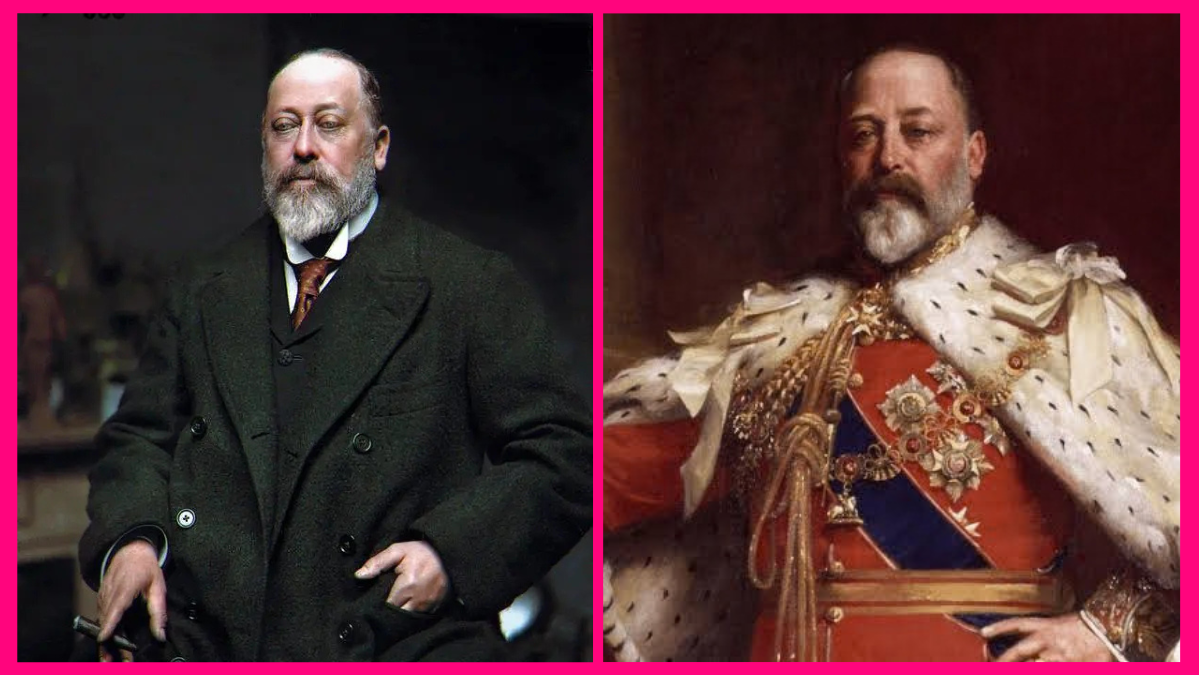
King Edward VIII remains one of the most recognizable figures in modern British royal history. His name is closely associated with one of the most dramatic constitutional events of the twentieth century: the abdication crisis of 1936. Although his time on the throne lasted less than a year, the circumstances surrounding his reign had consequences that shaped the British monarchy for decades.
Born Edward Albert Christian George Andrew Patrick David in 1894, he was the eldest son of King George V and Queen Mary. From childhood, he was prepared for a future role as sovereign. As Prince of Wales, he became internationally famous and developed a public image that was considerably more modern and informal than that of previous generations of royalty.
The story of King Edward is not simply about a monarch who gave up the throne. It also involves changing social attitudes, constitutional traditions, the role of the British government, royal expectations, international affairs, and the complicated relationship between personal choice and public duty. His life before and after the abdication continues to attract historians, royal enthusiasts, and readers interested in twentieth-century British history.
Early Life and Royal Background
Edward was born on 23 June 1894 at Richmond, Surrey, during the reign of his great-grandmother Queen Victoria. His parents, the Duke and Duchess of York, later became King George V and Queen Mary. Edward therefore grew up at the heart of the British royal family at a time when the monarchy was entering a period of major change.
His childhood was highly structured. Royal education emphasized discipline, public responsibility, military service, languages, history, and constitutional duties. Edward was not raised simply as a privileged young aristocrat. He was being prepared for one of the most demanding public positions in the British Empire.
His father became King George V in 1910 following the death of Edward VII. Edward then became Prince of Wales and heir apparent. His position placed him under enormous public attention, and his movements, clothes, friendships, speeches, and travels were frequently reported in newspapers.
Unlike many earlier heirs to the throne, Edward developed a particularly strong connection with the public. His appearance was fashionable, his personality was considered more relaxed, and his overseas tours made him a familiar figure throughout the Empire. This popularity would become an important part of his identity long before he became king.
The Prince of Wales and His Growing Popularity
As Prince of Wales, Edward traveled extensively and represented the Crown at important events. He visited different parts of Britain as well as countries across the Empire and Commonwealth. These journeys allowed him to see industrial communities, working-class neighborhoods, military establishments, and regions experiencing economic hardship.
Edward’s public image was also shaped by his service during the First World War. Although his position prevented him from serving in exactly the same way as an ordinary soldier, his wartime involvement contributed to the public perception that he understood the experiences of servicemen.
During the 1920s and early 1930s, the Prince of Wales became a cultural celebrity as well as a constitutional figure. His clothing and lifestyle influenced fashion, while newspapers followed his social life closely. He was frequently photographed and became associated with a more modern style of royalty.
This popularity came with disadvantages. The public expected the future monarch to behave according to traditional standards, while Edward increasingly preferred a less formal lifestyle. The tension between personal freedom and royal responsibility became more significant as he approached the throne.
Becoming King in 1936
King George V died on 20 January 1936, and Edward succeeded him as King Edward VIII. His accession created enormous public interest because he was relatively young and had already developed a strong international reputation.
The new monarch inherited a country dealing with economic difficulties and political uncertainty. Britain was also part of a much larger imperial system undergoing transformation. The role of the sovereign was constitutional rather than that of an elected political leader, but the monarch still had important formal responsibilities and represented continuity within the state.
King Edward did not have much time to establish a distinctive style of monarchy. His reign began in January and ended in December 1936. He was never crowned, making his reign unusual in British history.
One of the most important features of his short reign was his interest in maintaining a direct connection with ordinary people. His earlier visits as Prince of Wales had already established this reputation, and his approach to royal duties often appeared less formal than the traditional image of monarchy.
Yet the greatest challenge to his reign was not a public ceremony or constitutional speech. It was his relationship with Wallis Simpson, an American woman whose personal circumstances created a constitutional and political crisis.
Wallis Simpson and the Abdication Crisis
Edward had met Wallis Simpson several years before becoming king. She was an American socialite who was married at the time of their early relationship. Her second marriage also ended in divorce, and she was seeking another divorce in 1936.
Edward became determined to marry Simpson. The problem was that the monarch was also Supreme Governor of the Church of England, and established royal and religious conventions made the proposed marriage deeply controversial.
The British government and political establishment became increasingly concerned as it became clear that Edward intended to proceed with the relationship. The issue was not treated as an ordinary private marriage because the sovereign’s personal decisions could have constitutional consequences.
The situation became a national crisis. Edward faced a choice between remaining on the throne and abandoning his plan to marry Simpson. He ultimately chose abdication.
In December 1936, he formally gave up the throne. His decision was legally implemented through the abdication process, and his brother Albert became King George VI.
Why the Abdication Changed the Monarchy
The abdication was extraordinary because the British monarchy depended heavily on continuity and tradition. A sovereign voluntarily leaving the throne was an event with few modern precedents.
For the royal family, the consequences were immediate. Albert, Duke of York, had not expected to become king. He became George VI and had to assume responsibilities for which he had not been prepared in the same way as his elder brother.
The change also altered the future of Princess Elizabeth, the elder daughter of George VI. Before the abdication, she was not expected to become queen while her uncle and father stood ahead of her in the succession. After Edward stepped down and George became king, Elizabeth became heir presumptive.
This meant that the abdication indirectly transformed the future of the British monarchy. Princess Elizabeth eventually became Queen Elizabeth II after the death of her father in 1952.
The event therefore had effects that extended far beyond Edward himself. A decision made in 1936 influenced the succession, the royal family, and the monarchy’s public image for generations.
The Duke of Windsor After the Abdication
Following his abdication, Edward received a new title: Duke of Windsor. His brother, George VI, remained king, while Edward moved away from Britain and began a very different chapter of his life.
In 1937, Edward married Wallis Simpson in France. Because of the circumstances surrounding the abdication, she did not become queen and was not given the style traditionally associated with a British queen consort.
The Duke and Duchess of Windsor spent much of their lives outside Britain. They traveled extensively and remained subjects of considerable public fascination. Their relationship continued to attract newspaper coverage, while Edward’s former status as king ensured that he remained a recognizable international figure.
During the Second World War, Edward was appointed Governor of the Bahamas in 1940. He held the position until 1945. His time there represented a return to official service after the dramatic events surrounding his departure from the throne.
After the war, the Duke and Duchess largely lived in France. Edward continued to participate in selected royal and public occasions, but he never returned to the role of sovereign.
King Edward and the Meaning of Royal Duty
The story of King Edward is often presented as a conflict between love and duty, but the historical reality is more complicated. The abdication involved constitutional rules, religious expectations, government concerns, public opinion, and the personal wishes of the monarch.
The famous theme of choosing love over the Crown has become part of popular culture because Edward himself explained his decision in personal terms. In his abdication broadcast, he famously referred to the woman he loved, saying, “I have found it impossible to carry the heavy burden of responsibility and to discharge my duties as King as I would wish to do.”
That statement became one of the most memorable royal quotations of the twentieth century. It reflected Edward’s personal explanation, but understanding the crisis requires looking beyond the romantic narrative.
The British monarchy operates within constitutional traditions and parliamentary structures. The sovereign’s position is therefore fundamentally different from that of a private citizen. Edward’s personal decision had institutional consequences, which explains why the crisis became a matter of national importance.
A Monarch Who Was Never Crowned
One of the most unusual facts about King Edward is that he was never crowned. His reign was too short for a coronation to take place.
A coronation had originally been planned for 1937. After the abdication, the ceremony instead became the coronation of George VI. The date remained significant because it had already been selected for Edward’s planned ceremony.
George VI’s coronation took place at Westminster Abbey in May 1937. His elder daughter, Princess Elizabeth, attended alongside the royal family. The event represented a public transition from one reign to another and helped establish a sense of stability after the previous year’s crisis.
Edward’s lack of a coronation distinguishes him from most British monarchs of the modern era. Although he legally became sovereign, he never experienced the ceremonial moment traditionally associated with taking the Crown.
King Edward in Popular Culture and Historical Memory
The abdication story has remained popular because it combines monarchy, romance, constitutional history, celebrity, and personal sacrifice. Books, documentaries, films, television dramas, biographies, and historical programs have repeatedly revisited Edward’s life.
Popular portrayals sometimes simplify the circumstances into a straightforward love story. Historical accounts generally provide a broader picture, emphasizing the constitutional implications of the proposed marriage and the political environment of 1936.
Edward’s public image also changed over time. As Prince of Wales, he had been celebrated as a modern and charismatic royal figure. After the abdication, his position became much more complicated. Historians have examined his political attitudes, relationships, wartime activities, and life as the Duke of Windsor in addition to the events of 1936.
This makes his biography especially interesting. His life cannot be understood through a single event. The abdication was certainly the defining moment of his public story, but it came after decades of preparation and was followed by more than three decades of life outside the throne.
King Edward and His Relationship With George VI
The relationship between Edward and his younger brother Albert became an important part of the family’s history. Albert, who became George VI, had to take on an unexpected role after the abdication.
George VI faced considerable pressure as an unplanned monarch. He was naturally more reserved than his elder brother and had to develop confidence in public speaking and royal leadership.
The brothers’ relationship was affected by the circumstances of the succession. Edward had surrendered the throne, while Albert had to carry responsibilities that he had never expected to inherit. The family consequences of this transition were significant.
George VI ultimately became an important wartime symbol. He and his wife, Queen Elizabeth, remained in Britain during the Second World War and visited areas affected by bombing. His reign helped stabilize the monarchy during an exceptionally difficult period.
King Edward and the Path to Elizabeth II
The most far-reaching consequence of Edward’s abdication was its effect on the succession. When George VI became king, his elder daughter Elizabeth became first in line to the throne.
Elizabeth was only ten years old when the abdication changed her position. Her childhood was therefore transformed by an event she had not caused and could not have anticipated.
When George VI died in 1952, Elizabeth became queen. Her eventual reign lasted for more than seven decades and became the longest in British history.
The connection between Edward’s brief reign and Elizabeth’s extraordinary time on the throne is one of the most fascinating aspects of modern royal history. A change that initially seemed to concern only one king ultimately shaped the monarchy for an entire generation.
Personal Life and Later Years
Edward and Wallis Simpson remained together for the rest of his life. They became a recognizable couple in European social circles and spent considerable time in France.
Edward continued to write and speak about his experiences, and his memoirs contributed to the public understanding of his perspective. He remained interested in fashion, travel, social life, and royal affairs.
Although he no longer had constitutional responsibilities, his identity as a former British monarch followed him throughout his later years. He was still invited to certain royal events, although his position was fundamentally different from that of reigning members of the family.
The Duke of Windsor died in Paris on 28 May 1972 at the age of 77. He was buried at Frogmore, near Windsor, while Wallis Simpson was later buried beside him following her death in 1986.
Key Facts About the Former Monarch
| Fact | Details |
|---|---|
| Full name | Edward Albert Christian George Andrew Patrick David |
| Born | 23 June 1894 |
| Parents | King George V and Queen Mary |
| Became king | 20 January 1936 |
| Reign | January to December 1936 |
| Marriage | Wallis Simpson, 1937 |
| Post-abdication title | Duke of Windsor |
| Never crowned | Yes |
| Later official role | Governor of the Bahamas |
| Died | 28 May 1972 |
| Burial | Frogmore, Windsor |
This timeline highlights how brief the royal reign actually was. Edward spent many years preparing to become king, but his period as sovereign lasted only 325 days. His life afterward was considerably longer than his reign.
The Historical Legacy of Edward VIII
The legacy of Edward VIII is difficult to separate from the abdication. His decision remains one of the most famous examples of a monarch voluntarily surrendering the throne.
For the British monarchy, the event demonstrated that personal choices made by a sovereign could have profound constitutional implications. It also highlighted the importance of Parliament, government, religious tradition, and public expectations within the British system.
For the royal family, the abdication created a new line of succession. George VI inherited the Crown, and Elizabeth eventually became queen. In this sense, Edward’s short reign became an important turning point between the monarchy of George V and the long Elizabethan era.
His story also illustrates how public perceptions of royalty can change. Edward had once represented a modern and glamorous future for the monarchy. After the abdication, he became an unusual historical figure whose reputation was shaped as much by what he gave up as by what he achieved.
Conclusion
King Edward VIII occupies a unique place in British royal history. He was raised to become sovereign, became king after the death of his father, and then surrendered the Crown before he could be crowned. His relationship with Wallis Simpson triggered a constitutional crisis that changed the succession and altered the course of the royal family.
His story is more than a famous romance. It is a window into the constitutional role of the British monarch, the expectations placed on royal figures, and the tension between personal choices and public responsibility. His abdication also unexpectedly placed his younger brother George VI on the throne and ultimately positioned Princess Elizabeth to become one of Britain’s longest-reigning monarchs.
Although his reign was remarkably brief, the historical impact of Edward VIII was anything but small. His life remains a compelling chapter in twentieth-century British history because it connects personal decisions with institutions, traditions, and a succession that shaped the monarchy for generations.
Frequently Asked Questions
Who was King Edward VIII?
King Edward VIII was the eldest son of King George V and Queen Mary and became British monarch in January 1936. He had previously served as Prince of Wales and was widely known for his international tours and modern public image. His reign ended later that year when he abdicated so that he could marry Wallis Simpson.
How long did King Edward VIII reign?
King Edward VIII reigned for 325 days, from 20 January 1936 until his abdication in December 1936. Because his reign lasted less than a year, he was never crowned. His brother Albert succeeded him and became King George VI.
Why did King Edward VIII abdicate?
King Edward VIII abdicated because he wanted to marry Wallis Simpson, an American divorcee. The proposed marriage created serious constitutional and political difficulties because of the monarch’s position and the religious and social expectations surrounding the Crown. Edward ultimately decided that he could not remain king while pursuing the marriage.
Did King Edward VIII ever get crowned?
No. King Edward VIII was never crowned. A coronation had been planned for 1937, but his abdication meant that the ceremony instead became the coronation of his brother, George VI.
What happened to Edward after he abdicated?
After his abdication, Edward was created Duke of Windsor. He married Wallis Simpson in France in 1937 and spent much of his later life outside Britain. During the Second World War, he served as Governor of the Bahamas from 1940 to 1945 before returning to private life.
Was King Edward VIII related to Queen Elizabeth II?
Yes. Edward VIII was Queen Elizabeth II’s uncle. He was the elder brother of her father, George VI. When Edward abdicated, George unexpectedly became king, which made the young Princess Elizabeth first in line to the throne after her father.
Where did King Edward VIII die?
Edward VIII died in Paris, France, on 28 May 1972. He was 77 years old. He was buried at Frogmore, Windsor, where Wallis Simpson was also later laid to rest.
Why is Edward VIII still remembered today?
Edward VIII remains well known because his reign ended in one of the most dramatic abdication crises in modern British history. His decision affected the succession, changed the position of his brother George VI, and ultimately helped place Elizabeth II on the throne. His life continues to receive attention because it combines royal tradition, constitutional history, personal relationships, and major changes in twentieth-century Britain.
What title did Edward receive after leaving the throne?
After his abdication, Edward was given the title Duke of Windsor. He retained a prominent place in royal history but no longer had the constitutional role of a reigning monarch. His life as the Duke of Windsor was largely spent away from the United Kingdom.
Read also Princess Iman bint Abdullah: Life, Family, Education, Marriage and Royal Journey
