



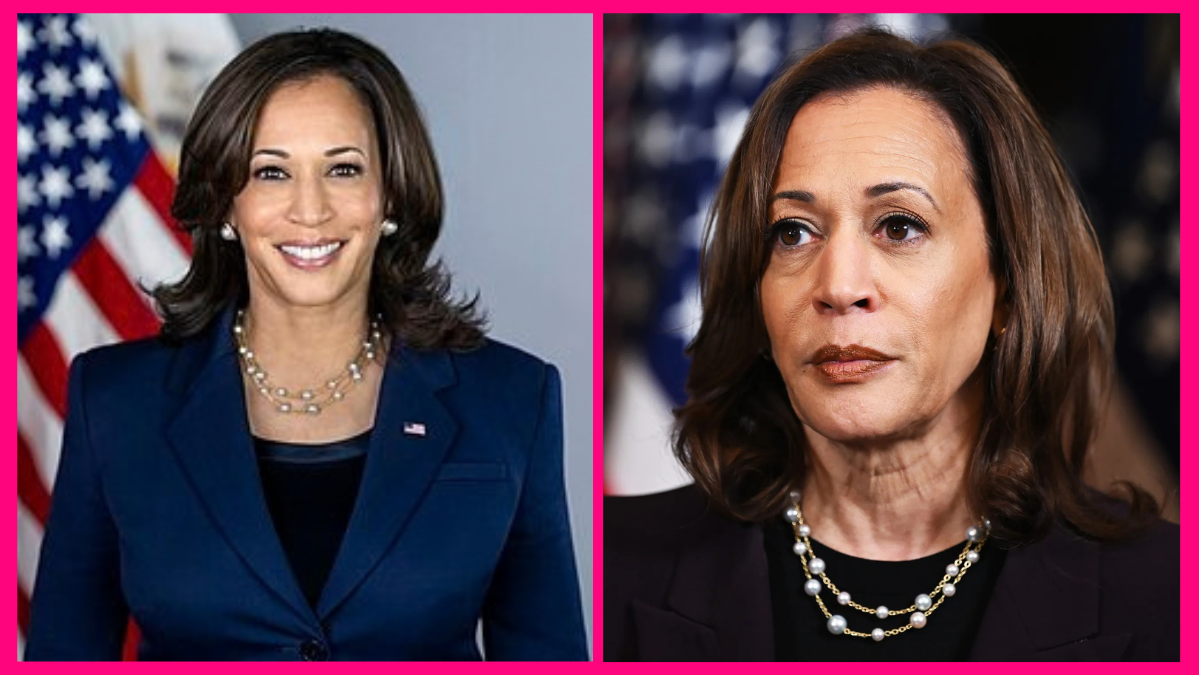
Kamala Harris is one of the most prominent figures in modern American political history, with a career that has taken her from the courtroom in California to the highest levels of the federal government. Her public life has included service as a prosecutor, San Francisco district attorney, California attorney general, U.S. senator, and vice president of the United States. Her career has also been shaped by several historic milestones, particularly her rise as a woman of Black and South Asian heritage in national politics.
Born and raised in the East Bay of California, Harris developed an early connection to public service and the legal profession. She attended Howard University and later studied law at the University of California, Hastings College of the Law. After beginning her career as a prosecutor in Alameda County, she moved through increasingly senior positions in California’s criminal justice system.
Her career has attracted both strong support and significant criticism, making her an important subject for understanding contemporary American politics. Rather than focusing only on campaign moments, her story can be understood through the different stages of her professional life, her policy priorities, her historic achievements, and the debates surrounding her record.
Meta Description: Explore Kamala Harris’s biography, career, vice presidency, political record, historic milestones, and continuing influence in American politics.
Early Life and Family Background
Kamala Harris was born in Oakland, California, and grew up in the East Bay. Her mother, Shyamala Gopalan, was a biomedical scientist who came to the United States from India for graduate study at the University of California, Berkeley. Her family background later became an important part of how Harris described her identity and connection to different communities.
Harris attended public schools in California before studying at Howard University in Washington, D.C. She then returned to California for legal education at the University of California, Hastings College of the Law. Her education helped establish the foundation for a career centered on law, prosecution, government, and public policy.
Her childhood was also influenced by the civil rights era. In later remarks, Harris discussed attending Berkeley public schools during the period of desegregation and connected those experiences with the opportunities she later received. In one speech, she described herself as a “literal daughter of Brown versus the Board of Education,” linking her personal history to the broader American civil rights movement.
Career as a Prosecutor
The professional story of Kamala Harris began in criminal justice rather than electoral politics. After graduating from law school, she joined the Alameda County District Attorney’s Office. Her early work included prosecuting cases involving child sexual assault, homicide, and robbery. She worked there during the 1990s before moving to the San Francisco District Attorney’s Office.
Her legal career continued to develop through increasingly senior positions. In San Francisco, she became managing attorney of the Career Criminal Unit and later served in a city attorney’s office focused on families and children. These roles gave her experience with both criminal prosecutions and broader government policy.
In 2003, Harris was elected district attorney of San Francisco and took office in 2004. She became the first woman to hold that position and was also the first African American woman and South Asian American woman to serve as San Francisco district attorney.
Her tenure included initiatives addressing violent crime, gun offenses, domestic violence, and recidivism. California’s Department of Justice later described several programs established during her district attorney years, including specialized prosecution units and efforts aimed at preventing repeat offending.
California Attorney General Career
The next major stage in Kamala Harris’s career came in 2011, when she became California attorney general. She was the first woman, first African American, and first South Asian American to hold California’s top state law enforcement position.
As attorney general, she dealt with issues that extended beyond traditional criminal prosecution. Her office worked on consumer protection, financial fraud, environmental matters, privacy, public safety, and other areas of state law. Her administration also became involved in the aftermath of the mortgage and foreclosure crisis.
Her record during this period has been examined from different perspectives. Supporters pointed to enforcement efforts, consumer protections, and criminal justice initiatives, while critics challenged particular decisions and approaches associated with her time as a prosecutor and attorney general. Understanding this period requires looking at the specific policies and cases rather than reducing her entire record to a single political label.
Harris left the attorney general’s office in 2017 after being elected to the U.S. Senate. California’s official historical record lists her tenure as attorney general from January 2011 through January 2017.
Senate Career and National Profile
Kamala Harris entered the U.S. Senate in January 2017 as a representative of California. She became the first African American senator from California, adding another historic milestone to her career.
Her Senate career brought national attention to her work on the Judiciary Committee and other legislative matters. Her background as a prosecutor was particularly visible during Senate hearings, where her questioning of government officials and judicial nominees frequently generated widespread media coverage.
During her time in the Senate, she became associated with issues including criminal justice reform, voting rights, healthcare, immigration, consumer protection, and civil rights. Her legislative record included both bipartisan activity and positions that reflected the priorities of the Democratic Party.
Her Senate service was relatively brief compared with many long-serving members. She resigned her Senate seat in January 2021 after being elected vice president. The Senate’s historical records list her service as running from January 3, 2017, to January 18, 2021.
Historic Vice Presidency
The election of Kamala Harris as vice president in 2020 represented a major milestone in American political history. She was sworn into office on January 20, 2021, alongside President Joe Biden. The Senate records her as the 49th vice president of the United States, serving from 2021 to 2025.
She became the first woman to serve as vice president and the first Black American and South Asian American to hold the position. The significance of that achievement was widely recognized during her inauguration, which represented a major moment in the history of women and minority representation in the federal government.
The vice president has several constitutional and political responsibilities. The officeholder serves as president of the Senate and can cast a deciding vote when the Senate is evenly divided. Vice presidents also advise the president and frequently represent the administration at domestic and international events.
During her vice presidency, Harris traveled internationally, met with foreign leaders, and worked on administration priorities involving economic policy, voting rights, reproductive rights, immigration, infrastructure, and other issues. The Biden administration’s official biography highlighted her role in domestic initiatives as well as international diplomacy.
Major Responsibilities During the Biden Administration
The role of Kamala Harris as vice president involved a broad mixture of constitutional duties, political responsibilities, and policy assignments. One particularly visible part of her work involved serving as a public representative of the administration on issues that affected families and communities across the country.
She also participated in international diplomacy. According to the Biden administration’s official biography, Harris made more than a dozen foreign trips, visited more than 19 countries, and met with more than 150 world leaders during her vice presidency.
Another important aspect of the vice presidency was her role in the Senate. Because the Senate was closely divided for portions of the Biden administration, the vice president’s constitutional authority to break tied votes became especially significant. The vice president’s Senate responsibilities are defined by the Constitution and remain separate from the broader political role of serving as the president’s adviser.
The administration also promoted Harris as a leading voice on reproductive rights, voting access, gun violence prevention, environmental issues, and economic opportunity. These priorities formed a major part of her public profile between 2021 and 2025.
Presidential Campaign and the 2024 Election
Kamala Harris became the Democratic Party’s presidential nominee in 2024 after President Joe Biden ended his reelection campaign and endorsed her. She subsequently ran for president with Minnesota Governor Tim Walz as her running mate.
The 2024 campaign focused heavily on the economy, abortion policy, democracy, immigration, healthcare, foreign affairs, and the future direction of the federal government. Harris presented herself as a continuation of the Biden administration in some areas while also emphasizing her own priorities and biography.
The election ultimately resulted in Donald Trump receiving 312 electoral votes compared with 226 for Harris, according to the National Archives’ official Electoral College results.
The outcome meant that Harris did not become president. Her candidacy nevertheless represented another historic moment because she became the first woman of South Asian and African American heritage to receive a major-party presidential nomination, according to California’s Commission on Asian and Pacific Islander American Affairs.
The campaign also demonstrated how quickly a national presidential contest can change. Harris moved from vice president to presidential nominee within a matter of months, creating one of the most closely watched campaigns of the 2024 election cycle.
Political Positions and Policy Themes
The policy record of Kamala Harris covers a wide range of issues because her career has included local prosecution, statewide law enforcement, federal legislation, executive responsibilities, and presidential campaigning.
Criminal justice has remained one of the most notable areas because she spent much of her professional career as a prosecutor. Her approach has evolved over time, and debates about her record often involve the balance between public safety, prosecution, rehabilitation, and criminal justice reform.
Voting rights have also been an important theme. During her vice presidency, she frequently spoke about access to voting and democratic participation. Her administration responsibilities placed her at the center of national discussions about federal voting legislation and election administration.
Healthcare and reproductive rights became increasingly prominent during her national career as well. As vice president, Harris became one of the Biden administration’s most visible advocates on abortion rights following the Supreme Court’s 2022 decision in Dobbs v. Jackson Women’s Health Organization.
Economic policy was another major component of her public work. The Biden administration promoted investments in infrastructure, manufacturing, clean energy, and employment, while Harris frequently discussed costs facing families, small businesses, and working Americans. Evaluating these policies requires separating the administration’s stated objectives from independent assessments of their economic results.
Historic Firsts and Public Significance
The career of Kamala Harris contains several historic firsts that extend beyond the vice presidency. Her election as California attorney general, U.S. senator, and vice president each marked significant developments in the representation of women and minority communities in American government.
The Senate’s historical records specifically identify her as the first woman to serve as president of the Senate and the first Asian American and African American to hold that position.
Her background also made her a prominent figure among Americans with connections to both South Asian and African American communities. Her mother was born in India, while her father, Donald J. Harris, was born in Jamaica. This multicultural family background became part of the broader public discussion surrounding her political identity.
Representation does not, by itself, determine a politician’s policies or record. However, historic milestones can still be important when examining how the composition of American political institutions has changed over time.
Personal Life and Public Image
Kamala Harris is married to Doug Emhoff, an attorney who became the first second gentleman of the United States when Harris became vice president. Their blended family has also received considerable public attention, particularly because Emhoff’s children from his previous marriage refer to Harris as “Momala.”
Harris has generally maintained a public image centered on professional service, legal experience, family, and political leadership. Her career has placed her under intense media scrutiny, especially during her vice presidency and presidential campaign.
Public figures often develop different reputations among different audiences, and Harris is no exception. Supporters have emphasized her historic achievements and policy priorities, while critics have focused on her prosecutorial record, political decisions, communication style, and administration responsibilities. A balanced biography should distinguish these competing interpretations from verifiable facts.
Kamala Harris Career at a Glance
| Career stage | Period | Major role | Significance |
|---|---|---|---|
| Alameda County | 1990–1998 | Deputy District Attorney | Began career as a prosecutor |
| San Francisco | 2004–2011 | District Attorney | First woman to hold the office |
| California | 2011–2017 | Attorney General | First woman, Black American, and South Asian American in the role |
| U.S. Senate | 2017–2021 | Senator from California | Became California’s first African American senator |
| White House | 2021–2025 | Vice President | First woman, first Black American, and first South Asian American vice president |
| Presidential campaign | 2024 | Democratic nominee | First woman of South Asian and African American heritage nominated for president by a major U.S. party |
The timeline shows how her career moved through several levels of American government. It also illustrates why her biography is closely connected to the history of women, African Americans, South Asian Americans, California politics, and the modern Democratic Party.
Legacy in American Politics
The legacy of Kamala Harris will likely be discussed through several different lenses. One is representation: she reached offices that had never previously been held by a woman or by someone with her combined Black and South Asian heritage.
Another lens is professional experience. Her career moved from prosecution to elected local office, statewide leadership, the U.S. Senate, the vice presidency, and eventually a major-party presidential nomination. That path gives her biography unusual breadth.
A third lens is policy. Her record contains decisions and positions that will continue to be debated, particularly in areas such as criminal justice, immigration, reproductive rights, healthcare, voting rights, and economic policy. Those debates are best understood through specific legislation, official actions, court cases, and documented statements.
Her historic achievements therefore form only one part of her story. The other part is the substance of the decisions she made while holding public office and how those decisions affected the communities and institutions she served.
What Kamala Harris Is Known For
Kamala Harris is widely known for becoming the first woman, first Black American, and first South Asian American vice president of the United States. She is also known for serving as California attorney general and as a U.S. senator before joining the Biden administration.
Her prosecutorial background is another defining feature of her career. Unlike many national politicians who enter politics primarily through legislative or executive positions, Harris spent decades working in criminal justice before reaching Washington.
She is also known for her 2024 presidential campaign. Although she did not win the election, her nomination added another major chapter to the history of women and minority candidates seeking the presidency.
Conclusion
Kamala Harris has built a career across some of the most important institutions in American government. From her early work as an Alameda County prosecutor to her years as San Francisco district attorney and California attorney general, she developed a professional identity rooted in law and public service. Her later Senate career expanded that experience onto the national stage.
Her vice presidency from 2021 to 2025 represented a historic breakthrough, while her 2024 presidential campaign placed her at the center of another major chapter in American electoral history. The official record confirms that she lost the 2024 Electoral College contest to Donald Trump, but her candidacy remains significant in the history of U.S. presidential politics.
The broader story is more complex than any single campaign or political label. Her record includes accomplishments, controversial decisions, major policy positions, and historic milestones. Looking at all of these elements together provides a clearer picture of a public figure whose career has become closely connected with the changing face of American politics.
Frequently Asked Questions
Who is Kamala Harris?
Kamala Harris is an American lawyer and Democratic politician who served as California attorney general, U.S. senator from California, and vice president of the United States. She served as vice president under President Joe Biden from January 2021 through January 2025.
What was Kamala Harris’s job before becoming vice president?
Before becoming vice president, Harris served as a U.S. senator representing California. Before that, she was California attorney general and district attorney of San Francisco. She began her professional career as a prosecutor in Alameda County.
When did Kamala Harris become vice president?
Kamala Harris was sworn in as vice president on January 20, 2021, alongside President Joe Biden. She served as the 49th vice president until January 20, 2025.
What historic firsts are associated with Kamala Harris?
Kamala Harris became the first woman, first Black American, and first South Asian American to serve as vice president of the United States. She also became the first woman to serve as president of the Senate and the first Asian American and African American to hold that position.
Did Kamala Harris run for president in 2024?
Yes. Harris became the Democratic presidential nominee in 2024 and ran with Tim Walz as her vice-presidential running mate. The National Archives records 226 electoral votes for Harris compared with 312 for Donald Trump.
What was Kamala Harris’s legal background?
Her legal career began with prosecution work in Alameda County. She later worked in the San Francisco District Attorney’s Office, became San Francisco district attorney, and then served as California attorney general. Her early legal work included cases involving child sexual assault, homicide, robbery, and other serious offenses.
What is Kamala Harris’s political legacy?
Her political legacy includes her historic role as vice president, her years representing California in federal and state government, and her work on issues including criminal justice, voting rights, healthcare, reproductive rights, economic policy, and consumer protection. Her individual policies and decisions remain subjects of political debate and historical analysis.
Read also Kamala Harris Daughter: Meet Ella Emhoff & Her Family
