



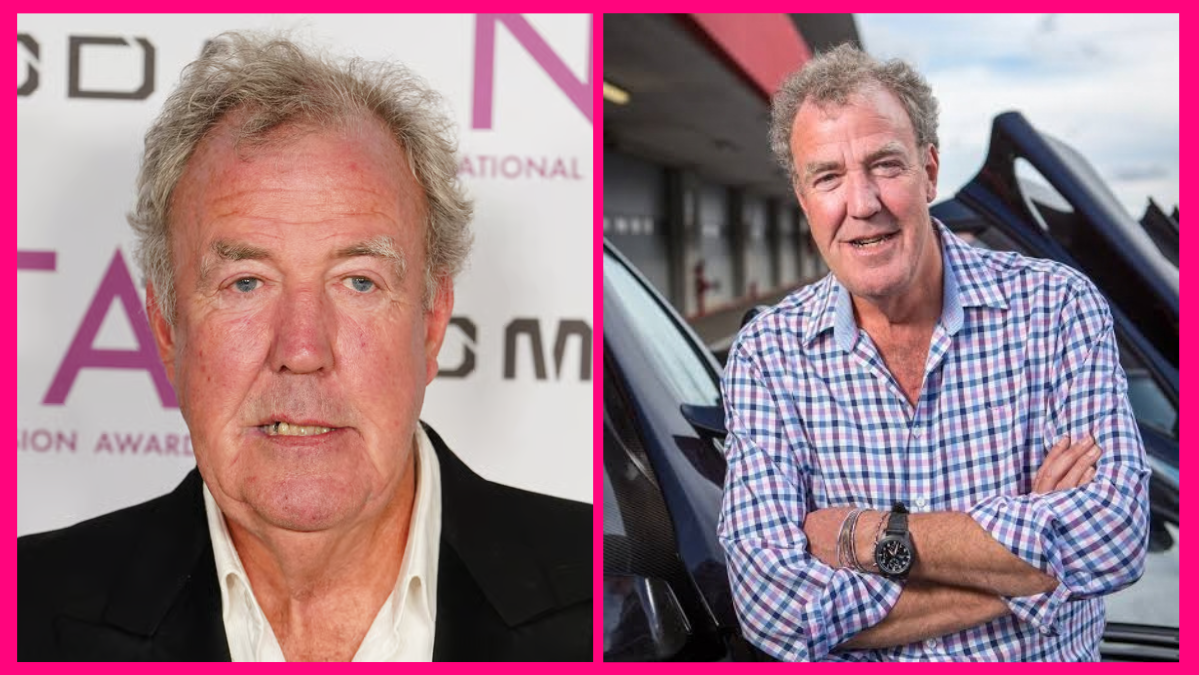
Jeremy Clarkson is one of the most recognizable names in British television, journalism, and motoring. Known for his outspoken personality, dry humour, strong opinions, and unmistakable broadcasting style, he has built a career that stretches far beyond traditional car journalism. From his early newspaper columns to global television success and later ventures in farming, his professional life has continually evolved while retaining the irreverent character that made him famous.
Born in Doncaster, South Yorkshire, in 1960, Clarkson developed an interest in cars at a relatively young age. His parents worked in the business of selling Paddington Bear toys, and the family background gave him an appreciation for writing and entrepreneurship. After leaving school, he began working as a local journalist, eventually moving into automotive journalism. That path would ultimately lead him to one of the biggest television programmes in motoring history.
Over several decades, his career has covered newspapers, magazines, radio, television, books, documentaries, and business ventures. He became particularly associated with Top Gear, where his chemistry with Richard Hammond and James May helped turn the programme into an international entertainment phenomenon. Later, The Grand Tour continued that partnership in a different format.
His interests have also expanded beyond automobiles. His farm in the Cotswolds became the subject of the popular series Clarkson’s Farm, giving viewers an entertaining and surprisingly detailed look at modern agriculture. The programme has introduced him to a completely different audience while showing a more practical side of his personality.
Early Life and Entry Into Journalism
Jeremy Clarkson was born on 11 April 1960 in Doncaster, England. His parents, Eddie and Shirley Clarkson, were involved in the sale of toys, particularly the Paddington Bear character. Although his later career would be dominated by cars and television, journalism became the foundation on which his professional life was built.
After leaving school, Clarkson trained as a journalist with the Repton-based Rothermere American Institute? More accurately, his early professional experience came through local newspapers rather than a conventional university journalism career. He worked for several regional publications, covering ordinary local stories and gradually developing the distinctive writing style that would later become his trademark.
His breakthrough into automotive journalism came through the Motoring Press Agency, which he established with Jonathan Gill. The work allowed Clarkson to write about new cars and test vehicles for publications around Britain. His reviews were rarely dry technical assessments. Instead, they combined specifications with humour, storytelling, sarcasm, and strong personal opinions.
That approach made his work accessible to readers who might not normally read traditional motoring magazines. Rather than focusing exclusively on horsepower, fuel economy, and mechanical details, he considered how a vehicle felt, looked, sounded, and fitted into everyday life.
The Rise of a Television Personality
Television changed Clarkson’s career dramatically. He first appeared on the original Top Gear programme in the late 1980s and returned to the series during its relaunch in the 1990s. The programme gradually moved away from being a straightforward motoring show and developed into a mixture of car reviews, road trips, challenges, comedy, and adventure.
Clarkson became the central personality of the new format. His tall frame, distinctive voice, quick delivery, and willingness to make exaggerated statements gave the programme an identity that was easy to recognize. His presenting style was deliberately theatrical, but underneath the humour was considerable knowledge of cars and the automotive industry.
A major turning point came when Richard Hammond and James May became his regular presenting partners. Their contrasting personalities created a dynamic that became central to the show’s appeal. Clarkson was often the loudest and most provocative member of the group, Hammond brought enthusiasm and energetic humour, while May frequently played the more measured and technically minded character.
The three presenters developed an on-screen relationship that felt spontaneous even when the programme involved carefully planned production. Their road trips became particularly famous, often combining spectacular locations with deliberately ridiculous challenges.
Top Gear and Global Success
Under Clarkson, Top Gear became far more than a British motoring programme. It developed into a global entertainment brand watched by audiences in numerous countries. The show featured supercars, affordable cars, classic vehicles, unusual machines, motorsport, celebrity appearances, and international adventures.
One of the programme’s most important strengths was its ability to make automotive subjects entertaining for people who were not necessarily serious car enthusiasts. A viewer could enjoy an episode because of the jokes, scenery, competition, or personalities without knowing the difference between a V8 and a V12 engine.
Clarkson also became famous for enthusiastic descriptions of high-performance vehicles. His reviews often treated cars as characters rather than simple machines. A sports car might be described through its sound, acceleration, steering, or emotional impact rather than merely through a list of specifications.
The programme’s success helped establish a new model for automotive television. Instead of presenting cars purely as consumer products, Top Gear treated motoring as entertainment. This approach influenced programmes and online automotive content that followed.
| Career area | Major contribution | Why it mattered |
|---|---|---|
| Automotive journalism | Newspaper and magazine reviews | Established his distinctive writing voice |
| Top Gear | Presenter and central personality | Turned motoring into global entertainment |
| The Grand Tour | Presenter and producer | Continued the successful trio format |
| Clarkson’s Farm | Farmer and television personality | Expanded his audience beyond motoring |
| Books and columns | Numerous automotive and lifestyle works | Strengthened his profile as a writer |
| Broadcasting | Television documentaries and specials | Made him a mainstream British media figure |
His Distinctive Writing and Broadcasting Style
One reason Clarkson remained so recognizable is that his personality is central to his work. He does not present himself as a neutral narrator. Instead, his writing and television appearances are built around opinions, observations, exaggeration, and humour.
His automotive journalism frequently combines technical knowledge with deliberately dramatic language. A conventional review might explain that a car accelerates rapidly. Clarkson may instead build an entire comic description around the sensation of acceleration. This makes the information memorable while giving the reader or viewer a sense of the experience.
His style has also been controversial. Clarkson has made comments throughout his career that have attracted criticism, and his willingness to provoke has sometimes created serious professional consequences. Supporters regard this bluntness as part of his appeal, while critics argue that certain remarks cross reasonable boundaries.
That tension has remained part of his public identity. He is rarely presented as a conventional presenter who tries to please everyone. His brand has instead been built around strong opinions and an intentionally outspoken persona.
The Grand Tour Era
Following his departure from Top Gear, Clarkson reunited with Hammond and May for The Grand Tour. The programme was developed for Amazon Prime Video and gave the trio an opportunity to continue exploring cars, travel, comedy, and elaborate challenges.
The basic ingredients were familiar, but the new programme had greater freedom to travel internationally and experiment with its format. Episodes were filmed across different countries and often involved expensive cars, ambitious journeys, unusual competitions, and elaborate production.
The chemistry between the presenters remained one of the biggest attractions. Their disagreements, jokes, mistakes, and friendly rivalry provided continuity for audiences who had followed them on Top Gear.
At the same time, The Grand Tour gradually evolved. What began as a traditional studio-and-travel format increasingly focused on longer specials. These episodes gave the presenters more space to explore locations and undertake large-scale adventures.
Clarkson’s Farm and a New Chapter
One of the most surprising developments in Clarkson’s career was his move into farming. He purchased a large farm in the Cotswolds and began managing it despite having limited professional farming experience.
The experience became the basis of Clarkson’s Farm, a television series that combines humour with genuine agricultural challenges. Rather than simply presenting farming as a picturesque rural lifestyle, the programme shows how complicated modern agriculture can be.
Weather, soil conditions, machinery, regulations, labour costs, animal welfare, crop prices, and unpredictable yields all influence whether a farm makes money. Clarkson’s mistakes therefore become part of the story, while experienced agricultural workers provide practical knowledge that balances his often chaotic approach.
Kaleb Cooper became particularly popular through the series. His practical farming knowledge and frequently unimpressed reactions to Clarkson provide an entertaining contrast. Their relationship has become one of the show’s defining features.
The series also introduced audiences to subjects such as regenerative agriculture, crop management, livestock, farm shops, rural planning, and agricultural economics. As a result, its appeal extends well beyond Clarkson’s established motoring audience.
The Diddly Squat Farm Brand
Diddly Squat Farm became closely associated with Clarkson’s agricultural venture. The name itself reflects his humorous approach, while the farm shop has become a recognizable destination for fans and visitors.
The business sells products connected with the farm and surrounding agricultural activity. This has allowed Clarkson to combine television, retail, farming, and branding in a way that few traditional broadcasters have attempted.
The farm has also been involved in planning disputes and discussions about rural development. These issues have provided another layer to Clarkson’s Farm, because they demonstrate the challenges faced by farmers trying to diversify their businesses.
For Clarkson, farming appears to have become more than a television project. It has developed into a substantial business interest and a major part of his public identity.
Cars That Became Closely Associated With Him
Although his career now covers many subjects, cars remain central to Clarkson’s reputation. Over the years, he has driven and reviewed thousands of vehicles, ranging from inexpensive hatchbacks to exotic supercars.
His enthusiasm for performance cars is particularly well known. Models from Ferrari, Lamborghini, Aston Martin, Porsche, Mercedes-Benz, and other premium manufacturers have frequently featured in his television work.
He has also shown appreciation for unusual and sometimes unfashionable vehicles. That willingness to find entertainment value in ordinary cars helped make Top Gear accessible to a broader audience.
His automotive interests have included classic cars, modern sports cars, off-road vehicles, luxury models, electric vehicles, and powerful performance machines. His views on different technologies have sometimes changed over time, reflecting the wider transformation taking place across the automotive industry.
Jeremy Clarkson’s Influence on Car Culture
The influence of Clarkson’s broadcasting career extends beyond television ratings. He helped change the way popular audiences think about cars and car journalism.
Before the modern entertainment-focused approach became dominant, automotive programmes often concentrated on practical buying advice and straightforward technical reviews. Clarkson and his colleagues demonstrated that car television could be closer to a travel show, comedy programme, documentary, and action series combined.
This approach influenced digital publishers, YouTube creators, automotive websites, and social media personalities. The idea that a car review should be entertaining as well as informative is now common across the industry.
His influence can also be seen in the popularity of automotive personalities themselves. Viewers often follow presenters because of their personality and opinions rather than simply because they want information about vehicles.
Personal Interests and Life Outside Television
Away from broadcasting, Clarkson has developed interests in farming, food, property, writing, and rural life. His newspaper columns have often covered British culture, politics, travel, technology, and everyday observations in addition to motoring.
He has also written numerous books, including automotive titles and collections of his columns. His writing career has therefore remained active alongside his television work.
Food and agriculture have become particularly important in his later projects. The farm has connected him with local producers and rural businesses, while the farm shop has provided a platform for selling food and other products.
This later stage of his career is notably different from the image of the presenter who spent most of his time travelling between exotic destinations. Farming has placed him in a slower, more unpredictable environment where success depends heavily on weather, planning, physical work, and commercial decisions.
Public Controversies and Criticism
A discussion of Clarkson’s career would be incomplete without acknowledging controversy. His outspoken style has repeatedly generated criticism, particularly when jokes or comments have been viewed as offensive or inappropriate.
His career demonstrates both the power and risks of personality-driven broadcasting. A presenter who is willing to say controversial things can attract huge attention, but that same approach can create professional problems.
Clarkson has faced criticism from viewers, journalists, organizations, and public figures at different points in his career. Some controversies have resulted in apologies or disciplinary action, while others have generated wider debates about freedom of expression and standards in entertainment.
The continuing public interest in these incidents shows how closely audiences associate Clarkson’s professional work with his personal personality. His fame has made even relatively ordinary comments capable of generating substantial media attention.
Why Jeremy Clarkson Remains Popular
The continuing popularity of Clarkson can be explained by several factors. His voice is instantly recognizable, his writing style is distinctive, and his television persona is difficult to confuse with anyone else’s.
He also has an unusual ability to make ordinary subjects entertaining. A farm tractor, a difficult crop, an old car, or a long road journey can become the centre of a compelling story when presented through his perspective.
Another factor is longevity. Clarkson has been visible to British audiences for decades, meaning several generations have grown up watching his programmes or reading his columns.
His career has also adapted. When his professional focus moved away from Top Gear, he did not disappear. The Grand Tour created a new chapter in automotive television, while Clarkson’s Farm introduced him to people who might never have watched a car programme.
The Legacy of His Television Career
The lasting legacy of Clarkson’s television work is closely connected with entertainment-driven factual programming. He helped prove that specialist subjects could reach mass audiences when they were presented through compelling personalities and strong storytelling.
His influence is especially clear in automotive media. Modern car content often mixes technical information with humour, travel, personality, and lifestyle. That formula owes something to the transformation of Top Gear during his era.
His legacy is not entirely positive, however. The controversies surrounding his career remain part of the discussion, and his approach has sometimes been criticized for prioritizing shock value over sensitivity.
Nevertheless, his ability to remain culturally relevant for such a long period is remarkable. Few automotive journalists have achieved comparable recognition outside the specialist car world.
Quotes and Memorable Clarksonisms
Clarkson’s television career is filled with memorable phrases and exaggerated descriptions, although many are remembered more for their delivery and context than as standalone quotations. His recurring expressions became part of the language of Top Gear and later The Grand Tour.
One of his most recognizable recurring phrases is “And on that bombshell…”, traditionally used to signal the conclusion of an episode or segment. The phrase became strongly associated with the programme and eventually entered wider popular culture.
Another familiar element of his presentation is his enthusiastic opening of automotive segments, where a simple car review could be transformed into a dramatic event. His ability to turn technical details into entertainment became a defining feature of his work.
These expressions matter because they demonstrate how presentation style can become as memorable as the subject itself. Clarkson did not simply report on cars; he created a recognizable performance around them.
Conclusion
Jeremy Clarkson has built an unusually varied career across automotive journalism, television, writing, farming, and business. His journey from local newspaper reporter to internationally recognized broadcaster demonstrates the power of a distinctive voice and a willingness to approach familiar subjects differently.
His contribution to Top Gear helped transform a traditional motoring programme into a global entertainment franchise. His partnership with Richard Hammond and James May produced some of the most recognizable automotive television of the modern era, while The Grand Tour continued that relationship for a new audience.
His later move into agriculture added another unexpected dimension to his career. Clarkson’s Farm showed that his appeal was not limited to fast cars and international road trips. The series also highlighted the complexity of modern farming while giving audiences an entertaining look at rural business.
Whether admired for his humour, criticized for his controversial remarks, or followed simply because of his unmistakable personality, Clarkson remains an important figure in British popular culture. His career continues to demonstrate how television personalities can evolve when they combine strong storytelling with a distinctive personal identity.
Frequently Asked Questions
Who is Jeremy Clarkson?
Jeremy Clarkson is a British journalist, television presenter, writer, and farmer best known for his work on Top Gear and The Grand Tour. He later became the star of Clarkson’s Farm, a series documenting his experiences running a farm in the Cotswolds.
How old is Jeremy Clarkson?
Jeremy Clarkson was born on 11 April 1960. His long broadcasting career began in journalism before he became one of Britain’s most recognizable television personalities.
What is Jeremy Clarkson best known for?
He is best known for presenting Top Gear alongside Richard Hammond and James May. He later worked with the same presenters on The Grand Tour and became the central figure in Clarkson’s Farm.
What is Clarkson’s Farm about?
Clarkson’s Farm follows his experiences managing Diddly Squat Farm in the Cotswolds. The programme covers crops, livestock, machinery, weather, farming regulations, business decisions, and the everyday difficulties involved in running a modern farm.
Who are Jeremy Clarkson’s co-presenters from Top Gear?
Richard Hammond and James May are his best-known television partners. Their contrasting personalities and long-running friendship became a major part of the success of Top Gear and later The Grand Tour.
Does Jeremy Clarkson still work with cars?
Cars remain an important part of his career and public identity, although his work has expanded significantly into farming, food, writing, and other subjects. His automotive background continues to influence his television projects and journalism.
What is Diddly Squat Farm?
Diddly Squat Farm is the Cotswolds farm operated by Clarkson and featured prominently in Clarkson’s Farm. The farm also has a shop and has become associated with a range of agricultural and food products.
Why is Jeremy Clarkson considered influential?
His influence comes largely from changing the way automotive subjects were presented to mainstream audiences. By combining motoring journalism with humour, travel, challenges, and personality, he helped turn car television into a major form of entertainment.
Read also King Edward: The Story of a Short and Extraordinary British Reign
