



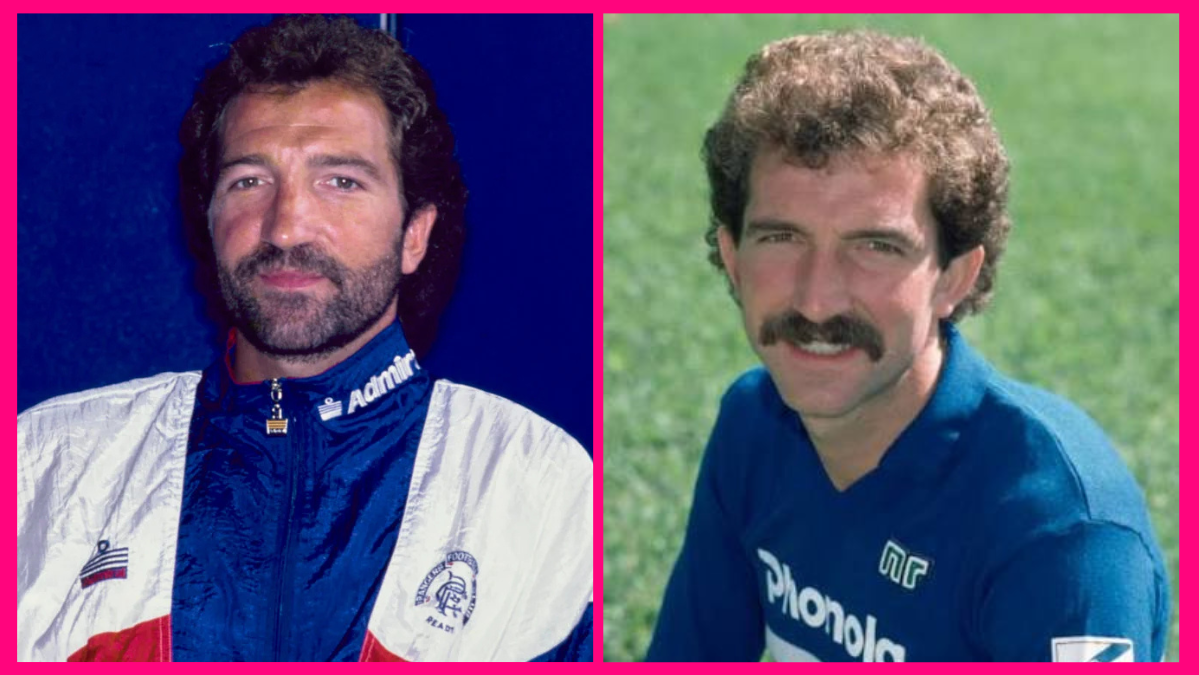
Graeme Souness is one of the most recognizable figures in British football, a player whose reputation was built on determination, technical ability, leadership and an uncompromising approach to the game. Born in Edinburgh, Scotland, on May 6, 1953, he developed from a promising young midfielder into one of the defining players of Liverpool’s dominant era in the late 1970s and early 1980s. The Scottish Football Association records 54 international appearances and four goals for Scotland, with his international career spanning 12 years and three World Cups.
For many football supporters, his name is inseparable from Liverpool’s golden period under managers such as Bob Paisley and Joe Fagan. During his six years at Anfield, he became a central figure in a side that repeatedly won domestic championships and European trophies. Liverpool’s official records list 359 appearances and 55 goals for the club, along with five First Division titles, three European Cups and four League Cups.
His career did not end when he left the pitch. He later became a player-manager at Rangers, returned to Liverpool as manager, worked with clubs across several countries and eventually became one of the most familiar football television pundits in the United Kingdom. In 2024, he was also appointed a CBE for services to football and charity.
Early Life and Football Beginnings
Growing up in Edinburgh, Souness developed a passion for football at an early age. His first professional pathway took him to Tottenham Hotspur, although he did not establish himself in the club’s first team. His breakthrough came after moving to Middlesbrough, where he spent several important years developing his skills and reputation as a midfielder.
The Scottish Football Museum notes that he joined Middlesbrough in 1973 and helped the club win promotion to the First Division. His performances attracted the attention of Liverpool, where manager Bob Paisley saw qualities that could strengthen an already successful midfield.
His style was distinctive even during his early career. He combined physical strength with passing ability, ball control and an aggressive competitive instinct. That combination would eventually become one of the defining characteristics of his playing identity.
Rather than being simply a defensive midfielder, he could influence matches in several ways. He could win possession, carry the ball forward, deliver passes into dangerous areas and score from distance. That versatility became especially valuable at Liverpool.
The Liverpool Years That Defined His Career
The arrival at Liverpool in January 1978 represented a major step forward. Paisley paid a then-record fee between two English clubs to bring the midfielder from Middlesbrough to Anfield.
Souness made an immediate impression. One of his most memorable early moments came when he scored a spectacular strike against Manchester United. His first season also ended with European Cup success, as Liverpool defeated Club Brugge at Wembley.
The midfielder supplied the pass that created Kenny Dalglish’s winning goal in that final, providing an early indication that his contribution was about much more than tackling.
Over the following seasons, he became an essential part of Liverpool’s midfield. The team combined technical quality, tactical discipline and tremendous experience, and Souness provided an aggressive edge that helped balance the side.
Liverpool’s official historical records credit him with 359 appearances and 55 goals during his Anfield career. His trophy collection included five league titles, three European Cups and four League Cups.
| Career area | Key achievement |
|---|---|
| Liverpool appearances | 359 |
| Liverpool goals | 55 |
| First Division titles | 5 |
| European Cups | 3 |
| League Cups | 4 |
| Scotland appearances | 54 |
| Scotland goals | 4 |
| Liverpool manager | 1991–1994 |
| Rangers player-manager | 1986–1991 |
Those numbers help explain why his Liverpool career remains so highly regarded. He was not simply part of a successful squad; he was one of the players responsible for maintaining its competitive standards.
Liverpool’s own description of him captures the unusual combination of qualities he brought to the pitch, describing him as “a bear of a player with the delicacy of a violinist.”
That contrast is important. The popular image of Souness is often based on his physical style, but his footballing ability was considerably broader.
A Midfielder With Strength and Technique
The phrase “hard man” is frequently associated with Souness, but it can hide the technical side of his game. He was a midfielder capable of making difficult passes look simple and controlling the rhythm of a match.
His strength was particularly useful in an era when midfield battles were often extremely physical. However, his ability to read situations and distribute the ball separated him from players who relied purely on physicality.
Former Liverpool teammate Alan Kennedy was quoted by Liverpool in 2026 as saying, “Nobody got the better of Souness.”
That description reflects the competitive personality that became central to his football identity. Souness wanted to impose himself on matches and was comfortable operating in difficult situations.
He also possessed an effective long-range shot. His spectacular early goal against Manchester United became one of the best-known moments of his arrival at Liverpool, while his ability to contribute goals from midfield made him even more valuable.
The National Football Museum describes him as a player whose career combined strong leadership with a significant impact against opponents across Europe.
Captaincy and Leadership at Anfield
Leadership became another defining feature of Souness’s Liverpool career. Bob Paisley appointed him club captain in January 1982, and the responsibility appeared to suit his personality.
He captained Liverpool during some of the most successful seasons in the club’s history. The role required more than wearing the armband. Liverpool’s teams of that period were expected to perform under intense pressure in domestic competition and European football.
Souness embraced that responsibility. His approach was direct and demanding, and his teammates knew what he expected when matches became difficult.
His leadership reached its peak during the 1983–84 season. Liverpool won the league championship, League Cup and European Cup, completing a remarkable treble. Souness played in 61 of the team’s 67 matches in all competitions that season.
The European Cup final against Roma was particularly memorable. Liverpool won on penalties at Rome’s Olympic Stadium, and Souness scored in the shootout.
That match became the final appearance of his Liverpool playing career. Instead of remaining in England, he chose a new challenge in Italy with Sampdoria.
Sampdoria and a New Challenge in Italy
Leaving Liverpool at the height of his powers was a major decision. Souness moved to Sampdoria in 1984, entering Italian football at a time when Serie A was regarded as one of the world’s most demanding competitions.
The move demonstrated his willingness to test himself outside England. At Sampdoria, he experienced a different football culture and tactical environment.
His time in Italy also produced silverware. Sampdoria won the Coppa Italia during his spell, adding another significant domestic trophy to an already impressive collection.
The Italian chapter was relatively short, but it broadened his football experience. That experience later became useful when he moved into management and worked in several different countries.
Rangers and the Player-Manager Revolution
After leaving Sampdoria, Souness returned to Britain and took on one of the most important challenges of his career at Rangers. He became player-manager in 1986, combining responsibilities on the pitch and in the dugout.
His arrival helped launch a successful period for Rangers. The Scottish Football Museum credits him with helping inspire the club’s dominance, including three Scottish league titles and four Scottish League Cups.
Managing while still playing demanded a different type of leadership. Souness was no longer responsible only for his own performance. He had to recruit players, establish tactics, manage personalities and make decisions that affected the entire club.
His Rangers spell helped establish his reputation as a manager before he returned to Liverpool. It also demonstrated that his understanding of elite football extended beyond his own playing position.
Returning to Liverpool as Manager
In 1991, Souness returned to Anfield, this time as manager. The appointment carried enormous expectations because of his history with the club.
Liverpool had enjoyed years of domestic dominance, but the squad was changing and the club faced a period of transition. Souness attempted to rebuild the team and introduce his own ideas.
His managerial tenure produced an FA Cup victory in 1992. Liverpool defeated Sunderland 2–0 at Wembley, giving Souness a major trophy in his first full season.
However, his time in charge was considerably more complicated than his playing career. Liverpool’s official history notes that injuries, health issues and recruitment decisions affected the period.
Souness later acknowledged that he tried to change too much too quickly, reflecting on the difficulty of replacing an aging generation while integrating new players.
He eventually left the Liverpool managerial position in 1994. His record at the club therefore contains an interesting contrast: extraordinary success as a player and a much more challenging period as manager.
Management Across Europe and England
After Liverpool, Souness continued his managerial career across different football cultures. He managed Galatasaray, Southampton, Torino, Benfica, Blackburn Rovers and Newcastle United. The National Football Museum records that his managerial career covered eight clubs in five countries.
His spell at Galatasaray became particularly memorable. He won the Turkish Cup, while his time at the Istanbul club remains part of his wider European football story.
At Benfica, he experienced another major football institution with a demanding history and enormous expectations. His later work at Blackburn Rovers brought another notable achievement when the club won the League Cup during his tenure.
The breadth of these appointments is significant. Few managers from his generation experienced such different football environments, from Scottish football and the English Premier League to Italy, Portugal and Turkey.
| Club | Role or period | Notable point |
|---|---|---|
| Rangers | Player-manager | Major domestic success in Scotland |
| Liverpool | Manager | FA Cup winner in 1992 |
| Galatasaray | Manager | Turkish Cup success |
| Southampton | Manager | Premier League management |
| Torino | Manager | Short spell in Italy |
| Benfica | Manager | Managed one of Portugal’s major clubs |
| Blackburn Rovers | Manager | League Cup success |
| Newcastle United | Manager | Final senior management position |
This managerial journey shows how varied Souness’s football career became after his playing days. It also explains why his opinions later carried the perspective of someone who had experienced football from the dressing room, dugout and boardroom sides.
Scotland Career and World Cups
Souness was also an important figure for Scotland. According to the Scottish FA, he made 54 appearances for the national team, scored four goals and represented Scotland at three World Cups.
His international career lasted from 1974 to 1986. During that period, he played against some of the strongest national teams in world football.
International football offered a different challenge from club competition. Players had limited time together, and Scotland frequently faced opponents with different tactical approaches.
Souness’s experience and leadership made him an important member of the national team. His Scotland career also reinforced his status as one of the leading Scottish midfielders of his generation.
Life After Management and Television Career
After leaving Newcastle United in 2006, Souness moved increasingly toward football analysis and television work. He became a prominent Sky Sports pundit, where his direct style made him a familiar figure to Premier League viewers.
In 2023, Sky Sports announced that he would leave the broadcaster after 15 years. Souness said the role had allowed him to continue enjoying the “buzz of live football.”
His television career became an important second act. Instead of analyzing football only from historical memory, he could connect modern tactical developments with his own experiences as a player and manager.
His opinions were often delivered in a straightforward style. That approach sometimes generated debate, but it also helped make him recognizable beyond the traditional Liverpool and Scotland fan bases.
Charity Work and His CBE Recognition
Football is not the only part of Souness’s later public life. His charitable work became increasingly significant, particularly through his involvement with DEBRA UK.
Liverpool reported that he began working with the charity in 2019 and later completed a swim across the English Channel that raised more than £1.5 million to support research related to epidermolysis bullosa.
His contribution to football and charity was formally recognized in the 2024 King’s Birthday Honours when he received a CBE.
The honor added another dimension to a career already filled with football achievements. His later charitable efforts showed that his public work extended well beyond television and football commentary.
Why His Liverpool Legacy Remains Important
Souness’s legacy at Liverpool is largely defined by what happened between 1978 and 1984. In those six years, he became one of the team’s central figures and helped the club win major trophies in England and Europe.
Liverpool’s 2026 official “Greatest” series listed him as the club’s No. 6 selection, again highlighting the lasting importance of his contribution. The club records his 359 appearances, 55 goals and trophy haul from that period.
His legacy also comes from the style in which he played. Modern midfielders are often judged by a mixture of defensive work, passing, tactical awareness and attacking contribution. Souness displayed many of those characteristics decades earlier.
His influence was not limited to statistics. He helped set standards for leadership at Liverpool and became one of the club’s European Cup-winning captains. Liverpool’s historical material identifies him among the small group of captains to lift the European Cup for the club.
That combination of trophies, leadership and personality explains why his name continues to appear whenever discussions of Liverpool’s greatest midfielders arise.
Graeme Souness in Modern Football History
Today, Souness is remembered across several generations of football. Older supporters remember the midfielder who dominated games at Anfield. Younger fans may know him primarily from television analysis and his outspoken football opinions.
The difference between those two images is interesting. The television pundit is only one chapter of a career that began more than five decades ago.
His playing career included Tottenham Hotspur, Middlesbrough, Liverpool, Sampdoria and Rangers. His managerial career took him through Scotland, England, Turkey, Italy and Portugal. His international career included three World Cups.
Few aspects of elite football were unfamiliar to him. He experienced title races, European finals, international tournaments, management pressure, transfers and media scrutiny.
That breadth gives his career a historical significance beyond any single club. He was part of an era when British clubs dominated European competition, and he later became an observer of the Premier League era.
Frequently Asked Questions
Who is Graeme Souness?
Graeme Souness is a Scottish former professional footballer, manager and television football pundit. Born in Edinburgh in 1953, he became particularly famous for his successful playing career with Liverpool and later managed clubs including Rangers, Liverpool, Galatasaray, Southampton, Torino, Benfica, Blackburn Rovers and Newcastle United.
How many trophies did Graeme Souness win with Liverpool?
During his Liverpool playing career, Souness won five First Division titles, three European Cups and four League Cups. Liverpool records his career at the club at 359 appearances and 55 goals.
Was Graeme Souness a Liverpool captain?
Yes. Souness became Liverpool captain in January 1982 and led the club during some of its most successful seasons. He captained Liverpool to major domestic and European achievements, including the 1984 European Cup triumph in Rome.
How many times did Graeme Souness play for Scotland?
Souness made 54 appearances for Scotland and scored four goals. His international career lasted from 1974 to 1986, and he represented his country at three World Cups.
Did Graeme Souness manage Liverpool?
Yes. He became Liverpool manager in 1991 after previously enjoying success as player-manager of Rangers. He won the FA Cup in 1992 and remained in charge until 1994.
What clubs did Graeme Souness manage?
His senior managerial career included Rangers, Liverpool, Galatasaray, Southampton, Torino, Benfica, Blackburn Rovers and Newcastle United. The National Football Museum describes his management career as covering eight clubs in five countries.
When did Graeme Souness leave Sky Sports?
Souness announced his departure from Sky Sports in April 2023 after 15 years as a football pundit. He explained that the role had allowed him to continue enjoying live football after moving away from management.
Conclusion
Graeme Souness built a football career that crossed generations, competitions and countries. His greatest achievements came during his Liverpool playing days, when he established himself as a powerful and technically gifted midfielder, became captain and collected an extraordinary number of major trophies.
His later career added further chapters. Success with Rangers as a player-manager led to the Liverpool dugout, followed by managerial experiences across Europe and England. His years as a television pundit then introduced his football personality to a much wider audience.
Away from the pitch, his charity work and CBE recognition have become important parts of his public life.
For football history, his career remains particularly interesting because it combines elite playing success, leadership, international football, management and media work. Few British football figures have experienced so many different sides of the sport, making his story a lasting part of the game’s modern history.
