



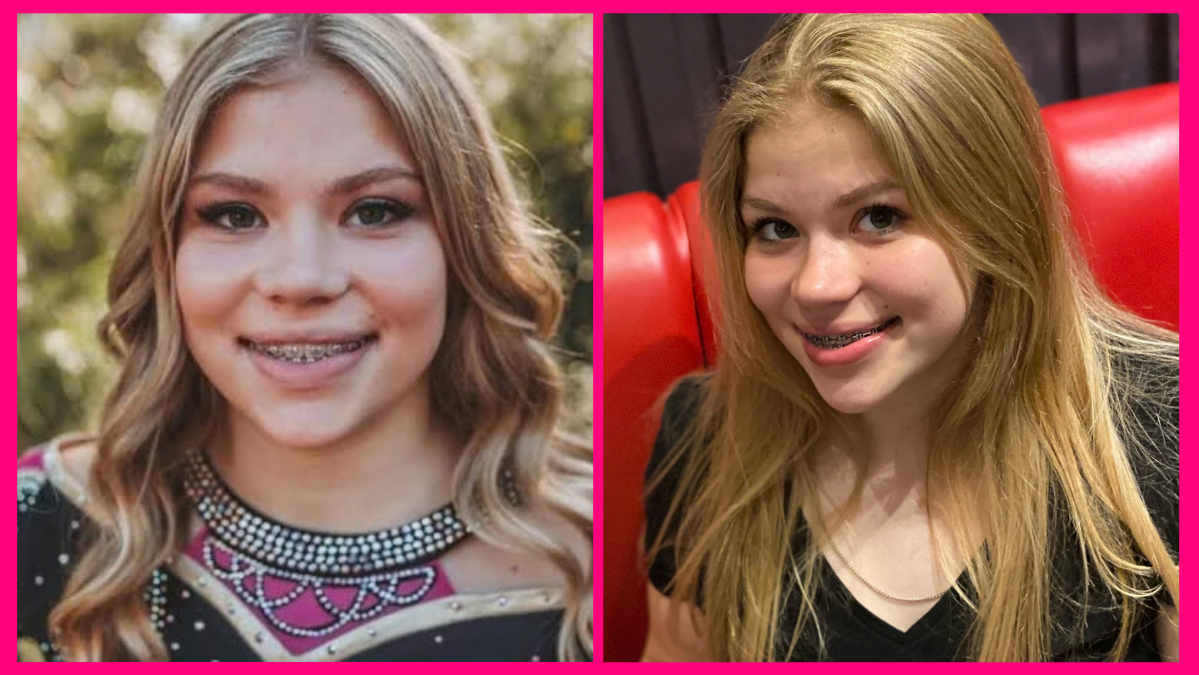
Tristyn Bailey was a 13-year-old girl from St. Johns County, Florida, whose life was tragically cut short in May 2021. She was a middle school student, cheerleader, daughter, sister, and friend whose death shocked her local community and attracted national attention. Although much of the public discussion surrounding her name has focused on the criminal case that followed, understanding her story also means remembering that she was much more than a victim in a widely reported crime.
Born in January 2008, Bailey was growing up in a close family in the St. Johns area. Friends, teachers, coaches, and relatives described her as energetic and involved in the lives of people around her. Her connection to cheerleading was an important part of her identity, and she was remembered by people who knew her as a young teenager with relationships, ambitions, and a future that had barely begun.
The circumstances surrounding her death became the subject of an extensive investigation and criminal prosecution. Her schoolmate Aiden Fucci, who was 14 at the time, ultimately pleaded guilty to first-degree murder in February 2023. He was sentenced to life in prison the following month, with the sentence subject to review after 25 years because of his age at the time of the offense.
Who Was Tristyn Bailey?
Tristyn Bailey was known within her community as a cheerful and active teenager. She attended school in St. Johns County and participated in cheerleading, an activity that gave her an important social circle and allowed her personality to shine. Her teachers and coaches later spoke about the impression she made on the people around her.
The public record surrounding the case naturally concentrates on the events leading to her death, but the people who knew Bailey often emphasized her personality and relationships instead. Her family spoke openly about the loss of a daughter and sister whose absence affected everyday life in ways that a court sentence could never fully repair.
Her story became especially heartbreaking because of her age. At 13, she was still at an early stage of adolescence, surrounded by school friends, family members, and teammates. The tragedy therefore affected not only her immediate family but also a wider community that had watched her grow up.
During the sentencing proceedings, members of Bailey’s family and people who knew her gave victim-impact statements. Their testimony helped move the focus beyond the crime itself and toward the person who had been lost. The proceedings demonstrated how a criminal case can document a tragedy while still being unable to capture the full human consequences of a young person’s death. Judge R. Lee Smith told the family that the sentence could not heal them or bring Bailey back.
What Happened to Tristyn Bailey in May 2021?
On May 9, 2021, Bailey was reported missing by her family in St. Johns County. It was Mother’s Day, making the circumstances particularly painful for her family. A search began in the surrounding community, and later that day her body was discovered in a wooded area near the residential neighborhood where she lived.
Investigators quickly began assembling evidence about Bailey’s final hours. Surveillance footage, witness information, forensic evidence, and other investigative material became important parts of the case. Authorities eventually focused on Aiden Fucci, a schoolmate who had been seen with Bailey during the early morning hours.
The investigation revealed that Bailey had suffered numerous stab wounds. Prosecutors later presented evidence describing the attack as exceptionally violent, and an autopsy became a significant part of the criminal proceedings. Public reporting and court testimony have consistently described 114 stab wounds.
The brutality of the killing was one reason the case generated such intense public attention. However, responsible reporting about the case is important because graphic details can easily overshadow the person at the center of the tragedy. Bailey’s life, family, friendships, and community should remain part of the story rather than allowing the violence alone to define her memory.
The Investigation and Arrest
The investigation into Bailey’s disappearance moved rapidly because of the urgency surrounding a missing child. Law enforcement officers gathered surveillance footage and physical evidence while speaking with people who had information about her movements. Investigators also examined Fucci’s connection to Bailey and the circumstances surrounding the pair being together before her disappearance.
Fucci was initially charged with second-degree murder, but prosecutors later pursued a first-degree murder charge. The case developed into a major criminal proceeding in St. Johns County, with evidence concerning the circumstances of the killing becoming central to the prosecution.
The investigation also drew attention because both the victim and accused were teenagers. Fucci was only 14 when the killing occurred, although he was ultimately prosecuted as an adult. Florida law allows juveniles charged with serious offenses under certain circumstances to face adult criminal proceedings. The legal consequences of that decision became an important element of the case.
For Bailey’s family, however, the legal process represented only one part of a much larger tragedy. A criminal investigation can establish facts and identify responsibility, but it cannot reverse the loss experienced by parents, siblings, relatives, classmates, and friends.
The Guilty Plea of Aiden Fucci
The case was scheduled to proceed toward trial, but in February 2023 Fucci pleaded guilty to first-degree murder. The plea was entered just before jury selection was expected to begin, meaning a full trial would no longer be necessary to determine whether he was responsible for the killing.
Fucci also addressed the court during the plea proceedings and apologized to the Bailey family as well as his own family. The guilty plea established responsibility for the murder while leaving the sentencing phase to the judge.
Because Fucci was a juvenile at the time of the crime, Florida’s sentencing rules were different from those applicable to an adult convicted of first-degree murder. The death penalty was not available, and the possible sentence ranged from a lengthy prison term to life imprisonment. AP reported that juvenile offenders convicted of first-degree murder in circumstances such as this can face between 40 years and life in prison.
The guilty plea also meant that the sentencing hearing became a crucial stage for Bailey’s family. Rather than a conventional trial focused on determining guilt, the proceedings allowed the court to consider the circumstances of the offense, the defendant’s age and development, and the devastating impact on the victim’s family.
The Sentencing and Life in Prison
On March 24, 2023, Judge R. Lee Smith sentenced Fucci to life in prison. Because Fucci was 14 when the murder occurred, the sentence includes eligibility for review after 25 years. The court’s decision followed a two-day sentencing hearing involving testimony from investigators, experts, members of Fucci’s family, and Bailey’s loved ones.
The judge described the case as extraordinarily serious and concluded that life imprisonment was the appropriate sentence. One of the statements that received significant attention was the judge’s observation that “this crime had no motive.” The court said the killing was not driven by ordinary motives such as revenge, financial gain, or retaliation.
That statement became one of the defining lines from the sentencing. It reflected the court’s view of the seriousness and disturbing nature of the offense, while also explaining why the maximum available sentence was imposed.
The sentence brought a formal conclusion to the main criminal proceedings, but it did not represent an end to the family’s grief. As Judge Smith explained, no punishment could restore Bailey’s life. His remarks acknowledged the difference between legal justice and personal healing, a distinction that is often important in cases involving the loss of a child.
The Impact on Bailey’s Family
The sentencing hearing provided some of the most emotional moments of the entire case. Bailey’s relatives spoke directly about the person they had lost and the effect her death had on their family. Their statements made clear that the tragedy could not be reduced to a courtroom verdict.
One particularly memorable moment involved Bailey’s sister, Alexis. She placed 114 aqua-colored heart-shaped stones into a jar, representing the number of stab wounds documented in the case. The symbolic act gave the number a deeply personal meaning and showed how families sometimes use physical symbols to communicate grief that ordinary words cannot fully express.
The family also spoke about the qualities that made Bailey unique. These accounts were important because they restored some of the individuality that can become lost when a victim is discussed mainly through police reports, court filings, and headlines.
Judge Smith encouraged Bailey’s family to eventually allow happiness and laughter back into their home. His message was not that grief should disappear, but that continuing to live and find moments of happiness should not be viewed as forgetting her.
Tristyn Bailey and the Importance of Remembering Her Life
The lasting public interest in Tristyn Bailey is closely connected to the shocking circumstances of her death, but her legacy should not be limited to those circumstances. She was a daughter, sister, student, cheerleader, and friend before she became the subject of national crime coverage.
This distinction matters when discussing cases involving young victims. Repeatedly focusing only on violence can unintentionally turn a person’s life into a collection of disturbing details. Remembering Bailey as a teenager with interests, friendships, family connections, and everyday experiences provides a more complete and respectful account.
Her family and community were left to deal with the ordinary realities of grief after the attention of the criminal case faded. Birthdays, school memories, family gatherings, holidays, and milestones all became reminders of the future Bailey would not experience.
That is one reason victim-centered reporting remains important. A legal case explains what happened and establishes accountability, while personal memories explain why the loss mattered so deeply.
A Timeline of the Case
| Date | Major development |
|---|---|
| January 18, 2008 | Tristyn Bailey was born. |
| May 9, 2021 | Bailey was reported missing on Mother’s Day and was later found dead in St. Johns County. |
| 2021 | Investigators developed evidence against schoolmate Aiden Fucci, who was charged in the case. |
| February 2023 | Fucci pleaded guilty to first-degree murder shortly before jury selection for his trial. |
| March 2023 | A two-day sentencing hearing included testimony from family members, investigators, and other witnesses. |
| March 24, 2023 | Fucci received a life sentence, with eligibility for review after 25 years because he was a juvenile at the time of the offense. |
| March 25, 2023 | Fucci was booked into the Florida prison system following his sentence. |
The timeline shows how the case developed from a missing-person investigation into a major homicide prosecution. It also illustrates how long the legal process continued after the initial tragedy. The guilty plea resolved the question of criminal responsibility, while the sentencing hearing addressed punishment and the circumstances surrounding the offense.
For Bailey’s family, each stage brought a different emotional challenge. The initial search involved uncertainty and hope, the discovery of her death brought devastating confirmation, and the criminal proceedings required the family to repeatedly revisit the circumstances surrounding her loss.
Why the Case Received National Attention
The Bailey case attracted national attention for several reasons. The victim and defendant were both teenagers, the killing occurred in a suburban Florida community, and the violence of the offense was extraordinary. The fact that Fucci was 14 when the crime occurred also raised broader questions about juvenile justice and how the law should respond to exceptionally serious crimes committed by minors.
The case also drew attention to the difference between juvenile status and adult prosecution. Fucci’s age influenced the sentencing possibilities, but prosecutors still pursued an adult criminal case. His eventual life sentence, combined with the possibility of review after 25 years, became an important part of the public discussion.
Media coverage was also intensified by the sentencing hearing. Victim-impact testimony from Bailey’s family gave the public a direct view of the emotional consequences of the crime. At the same time, the judge’s remarks provided insight into the legal reasoning behind the sentence.
Despite the extensive coverage, it is important to distinguish verified court facts from online speculation. High-profile criminal cases often generate rumors, social-media theories, and unsupported claims. The most reliable information comes from court proceedings, law enforcement records, official documents, and established news organizations reporting from those sources.
The Legal Significance of the Sentence
The life sentence imposed on Fucci was significant because it represented the maximum punishment available under the circumstances. His age at the time of the offense meant that the law treated the sentence differently from an identical conviction involving an adult offender.
The 25-year review provision does not mean that a release after 25 years is automatic. It means that the sentence can be reviewed at that point under the applicable legal framework. Court TV reported that the judge specifically noted the eligibility for review after 25 years because of Fucci’s age.
The case therefore sits at the intersection of several important legal issues: first-degree murder, juvenile offenders, adult prosecution, sentencing discretion, victim-impact evidence, and constitutional considerations surrounding lengthy sentences for minors.
For the public, the legal terminology can sometimes be confusing. A life sentence with future review is not the same thing as a guaranteed release date. The eventual legal status of an incarcerated person can depend on later proceedings, statutory requirements, and decisions made by the relevant authorities.
What Tristyn Bailey’s Story Means Today
Years after the 2021 killing, the most meaningful way to discuss Bailey’s story is to recognize both the legal outcome and the person behind the case. The court established responsibility and imposed a life sentence, but the emotional impact of her death continues beyond the courtroom.
Bailey’s story also demonstrates why missing-person reports involving children are treated with urgency. Her disappearance led to a community search and a rapid law-enforcement investigation. The case ultimately showed the importance of surveillance footage, forensic work, witness accounts, and coordinated investigative efforts.
At the same time, the story highlights the devastating consequences that violent crime can have on families and communities. A conviction may provide accountability, but it cannot recreate the future that was taken away.
The words used by Judge Smith during sentencing capture that distinction especially well: “the sentence cannot heal you.” The statement recognizes that criminal justice and grief serve different purposes. One establishes legal consequences; the other is a deeply personal process that may continue for decades.
Frequently Asked Questions About Tristyn Bailey
Who was Tristyn Bailey?
Tristyn Bailey was a 13-year-old student and cheerleader from St. Johns County, Florida. She was reported missing on May 9, 2021, and was later found dead in a wooded area near her neighborhood. Her death led to a major homicide investigation and the prosecution of her schoolmate Aiden Fucci.
How old was Tristyn Bailey when she died?
Bailey was 13 years old when she was killed on May 9, 2021. Her young age was one of the factors that made the case particularly devastating to her family, school community, and the wider public.
Who was convicted in the Tristyn Bailey case?
Aiden Fucci, who was 14 years old at the time of the killing and was a schoolmate of Bailey, pleaded guilty to first-degree murder in February 2023. He was subsequently sentenced to life in prison by Judge R. Lee Smith.
What sentence did Aiden Fucci receive?
Fucci received a life sentence on March 24, 2023. Because he was a juvenile when the offense occurred, the sentence is eligible for review after 25 years. The court’s sentencing decision followed a two-day hearing involving extensive testimony.
When did the Tristyn Bailey case happen?
The killing occurred on May 9, 2021, in St. Johns County, Florida. Bailey was reported missing that morning, and her body was discovered later the same day. The criminal proceedings continued for nearly two years before Fucci pleaded guilty and was sentenced in 2023.
What was important about the sentencing hearing?
The sentencing hearing allowed the court to consider the circumstances of the crime as well as testimony from Bailey’s family and other witnesses. It also gave her relatives an opportunity to explain the personal impact of her death. The judge ultimately determined that life imprisonment was the appropriate sentence.
Conclusion
The story of Tristyn Bailey is ultimately about a young life that ended far too soon and a family forced to endure an unimaginable loss. The criminal case brought accountability through a guilty plea and a life sentence, but the legal outcome could never undo what happened or restore the future Bailey should have had.
Remembering her as a person rather than only as the victim of a notorious crime is an important part of telling the story responsibly. She was a daughter, sister, student, cheerleader, and friend whose life mattered to many people. The public may remember the courtroom proceedings, the investigation, and the sentence, but her family and community remember the teenager who existed before those headlines.
The case also leaves broader lessons about juvenile crime, criminal justice, victim impact, and the lasting consequences of violence. Ultimately, the most respectful account is one that acknowledges the seriousness of the crime while keeping Bailey’s humanity at its center.
Read also Alastair Campbell: Career, Politics, Books, Podcast and Life Story
