



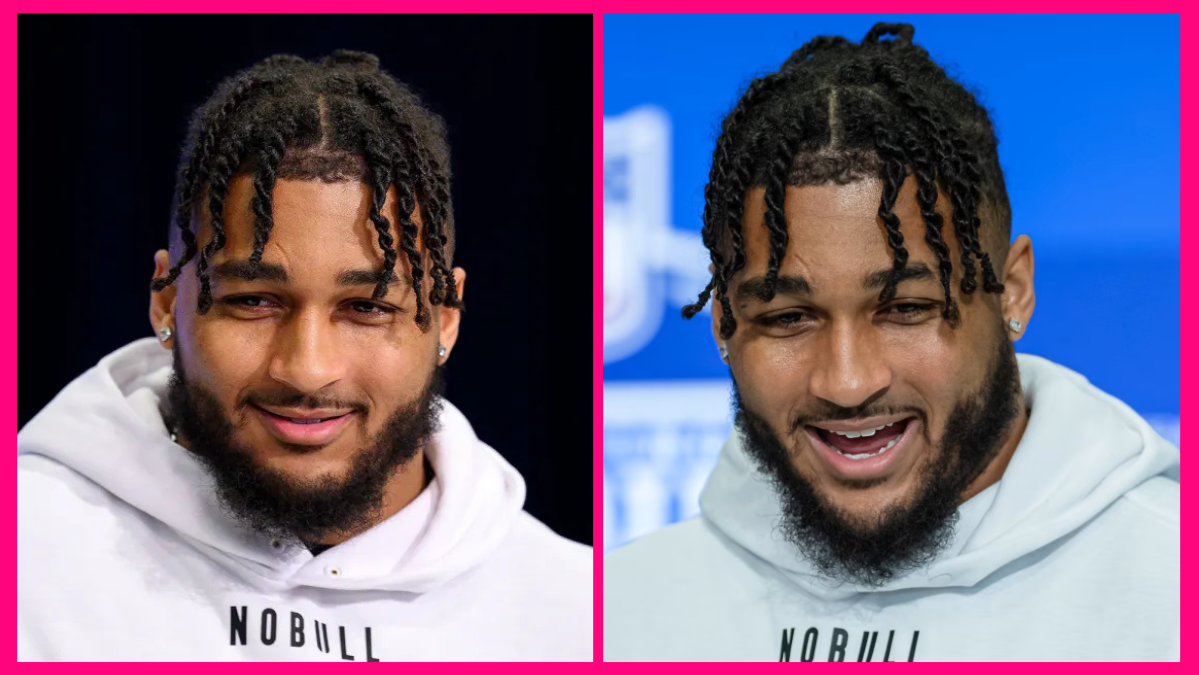
Marshawn Kneeland was an American professional football player who played as a defensive end for the Dallas Cowboys in the National Football League (NFL). Born in Grand Rapids, Michigan, he developed into a talented defensive player through years of hard work, college football experience and determination. His journey from a young football enthusiast to an NFL second-round draft pick represented the achievement of a lifelong ambition.
Although his professional career lasted only two seasons, his athletic ability and dedication made him a player worth remembering. He represented Western Michigan University before joining one of the most recognised franchises in American football. His performances demonstrated the qualities teams look for in a defensive lineman, including strength, explosiveness, discipline and the ability to pressure opposing quarterbacks.
The story of Marshawn Kneeland also includes profound personal challenges and a tragic ending. He died on November 6, 2025, at the age of 24, leaving behind family members, friends, teammates and supporters who mourned his loss. His death prompted tributes throughout the football community and renewed conversations about emotional wellbeing and mental health.
Understanding his life means looking beyond the statistics. His background, college achievements, NFL development and relationships with those around him help explain why his passing affected so many people. His story reflects both the excitement of achieving a professional sporting dream and the importance of recognising the person behind the uniform.
Who Was Marshawn Kneeland?
Marshawn Kneeland was a professional American football defensive end whose NFL career began with the Dallas Cowboys in 2024. He entered the league after an impressive college career at Western Michigan University, where he established himself as a productive defensive player in the Mid-American Conference.
The Cowboys selected him with the 56th overall pick in the second round of the 2024 NFL Draft. Being selected so early demonstrated the organisation’s belief in his potential and his ability to contribute to its defensive line. For a player who had worked towards reaching the NFL since childhood, the selection represented an important personal and professional milestone.
He wore number 94 for Dallas and played in a position that demands physical strength, quick reactions and a detailed understanding of offensive schemes. Defensive ends are responsible for disrupting running plays, applying pressure to quarterbacks and helping their teams control the line of scrimmage.
Despite the demands of professional football, Kneeland continued working to establish himself in the league. Injuries affected his rookie season, but he returned to the field in 2025 and recorded his first NFL touchdown. That achievement became an especially memorable part of his brief career because it occurred only days before his death.
Early Life and Family Background
Born on July 8, 2001, in Grand Rapids, Michigan, Kneeland grew up in a family environment that helped shape his ambitions. His mother, Wendy Kneeland, played an important role in supporting his football journey, encouraging him as he developed his interest in the sport and worked towards higher levels of competition.
Family support can make a significant difference for young athletes, particularly during the years when training, education and competitive sport must be balanced. For Kneeland, the path to professional football involved progressing through school athletics, improving his physical abilities and developing the discipline required to compete against increasingly talented opponents.
His mother remained an important influence throughout his development. Reports about his life described how she helped him pursue football opportunities and supported his dream of playing in the NFL. Her encouragement was particularly meaningful because reaching the professional level requires years of commitment without any guarantee of success.
In February 2024, shortly before he attended the NFL Scouting Combine, his mother died unexpectedly. The loss came at a crucial point in his career, when he was preparing for the opportunity to turn his college success into a professional contract. He spoke publicly about the importance of her support and the emotional significance of carrying her ashes with him.
His experience highlighted the complicated relationship between personal grief and professional ambition. Athletes are often expected to concentrate on performance even when facing difficult circumstances outside their sport. Kneeland’s journey showed that reaching a career milestone does not remove the emotional challenges that can accompany it.
High School Football and Athletic Development
Kneeland attended Godwin Heights High School in Wyoming, Michigan, near Grand Rapids. His time in high school provided the foundation for his future as a defensive player and helped him move towards college football.
High school is an important stage for aspiring American football players. It provides opportunities to learn defensive positioning, improve tackling technique, build strength and understand how individual responsibilities contribute to a team’s overall performance. For defensive linemen, these skills must be developed alongside speed, balance and the ability to react quickly to offensive movement.
Kneeland’s progression through the sport reflected the value of consistent training and competitive experience. Players who eventually reach major college programmes often spend years refining their technique and learning how to perform against opponents with different physical attributes and tactical approaches.
His eventual move to Western Michigan University gave him the opportunity to continue that development in a more demanding environment. College football offered a pathway to national exposure, advanced coaching and the professional scouting process that ultimately brought him to the NFL.
College Career at Western Michigan University
Kneeland played college football for the Western Michigan Broncos from 2019 through 2023. During those years, he developed from a young defensive prospect into a productive defensive lineman who attracted attention from professional scouts.
His college career involved learning the technical and tactical aspects of playing along the defensive front. Defensive linemen must recognise blocking assignments, anticipate offensive movements, maintain leverage and find ways to reach the quarterback while dealing with large offensive linemen. These responsibilities require more than physical power; they demand preparation, awareness and consistent execution.
His statistical production improved as he gained experience. In 2023, he recorded 57 total tackles and 4.5 sacks, earning Second-Team All-Mid-American Conference recognition. Those performances helped strengthen his NFL prospects and demonstrated his value to the Western Michigan defence.
Kneeland completed a degree in sports management at Western Michigan in 2023. Earning a degree alongside competing in college football represented an additional achievement, showing that his time at the university extended beyond athletic development.
By the end of his college career, he had built a record that included substantial tackling production, quarterback sacks and experience across multiple seasons. His combination of physical attributes, game experience and college performance helped make him an appealing prospect for an NFL team looking to strengthen its defensive line.
College Football Statistics and Achievements
College statistics offer a useful way to understand how Kneeland developed as a defensive player. His production at Western Michigan reflected his growing involvement in stopping running plays, tackling opponents and creating pressure in passing situations.
The following table summarises his main college achievements and professional milestones.
| Career detail | Information |
|---|---|
| Full name | Marshawn Kneeland |
| Date of birth | July 8, 2001 |
| Hometown | Grand Rapids, Michigan |
| High school | Godwin Heights High School |
| College | Western Michigan University |
| College playing years | 2019–2023 |
| NFL team | Dallas Cowboys |
| NFL draft | 2024, second round |
| Overall draft position | 56th |
| College recognition | Second-Team All-MAC, 2023 |
| College career tackles | 148 |
| College career sacks | 13.5, according to Western Michigan Athletics |
| NFL position | Defensive end |
| NFL jersey number | 94 |
| Date of death | November 6, 2025 |
| Age at death | 24 |
Sources: Western Michigan University Athletics and the Dallas Cowboys. College sack totals may vary slightly between statistical databases because of differences in how seasons and games are counted.
One of the most encouraging aspects of his college career was his ability to contribute in different defensive situations. Tackles demonstrated his involvement in stopping offensive plays, while sacks reflected his ability to disrupt passing attempts. Both are important measures, although coaches also evaluate positioning, effort, gap discipline and how effectively a defender creates opportunities for teammates.
His Second-Team All-MAC selection in 2023 provided external recognition of his progress. It also helped establish the credentials that made him a second-round NFL selection the following spring.
NFL Draft and Selection by the Dallas Cowboys
The 2024 NFL Draft marked a major turning point in his career. The Dallas Cowboys selected him 56th overall, bringing him into a franchise with a long history, a large supporter base and considerable expectations for its players.
Being chosen in the second round is a significant accomplishment. NFL teams evaluate prospects through college film, physical measurements, interviews, medical assessments and performances at scouting events. A high selection indicates that a club sees potential value in a player’s skills and believes he can contribute to its plans.
Kneeland’s selection reflected his combination of size, strength and experience at Western Michigan. His ability to play along the defensive front made him a prospect who could be developed within the Cowboys’ defensive system. The organisation had an opportunity to refine his technique and gradually expand his responsibilities as he adjusted to the professional game.
For Kneeland, the draft was also the fulfilment of a dream he had pursued for years. It represented a transition from college football, where players develop their potential, to the NFL, where competition is faster, opponents are stronger and mistakes can have immediate consequences.
His selection placed him among a small group of players who successfully progressed from high school and college football to the highest level of the sport. That achievement remains an important part of his legacy.
Rookie Season With the Dallas Cowboys
The rookie season of Marshawn Kneeland began with the challenge of adapting to professional football. NFL defensive linemen must learn complicated playbooks, recognise offensive formations quickly and execute assignments against some of the most physically gifted athletes in the world.
His first season was affected by injuries. He missed six games but appeared in 11 contests, starting one. Although those absences limited his opportunities, he gained experience within the Cowboys organisation and began learning what was required to compete consistently at the professional level.
A rookie defensive end typically needs time to adjust to the speed of NFL offensive tackles. College opponents may offer more favourable matchups, but professional linemen are highly trained in hand placement, footwork and pass protection. Defenders must find ways to overcome those techniques without sacrificing their responsibilities against the run.
Kneeland’s first season was therefore part of a broader development process. His coaches could assess his strengths, identify areas for improvement and determine how he might fit into different defensive packages. His playing time also provided valuable exposure to the preparation routines and tactical demands of professional football.
While injuries interrupted his progress, his rookie campaign still represented an important step. Every appearance offered an opportunity to build confidence and experience, setting the stage for further involvement during his second NFL season.
Second NFL Season and First Touchdown
The 2025 season brought further opportunities for the young defensive end. He appeared in seven of Dallas’s first nine games, recording 15 tackles, one sack and six quarterback pressures before his death. These figures reflected his continued involvement in the Cowboys’ defensive rotation.
His most memorable moment arrived on November 3, 2025, during a Monday Night Football game against the Arizona Cardinals. Dallas blocked a punt, and Kneeland recovered the ball in the end zone for his first NFL touchdown. The Cowboys lost the game 27–17, but his score became a personal milestone in an otherwise difficult result for the team.
A defensive player’s first touchdown can be an unusual achievement because scoring opportunities are limited. Defensive linemen generally focus on stopping opponents rather than carrying the ball into the end zone. Recovering a blocked punt for a touchdown therefore gave Kneeland a memorable highlight from his professional career.
The moment became particularly poignant after his death three days later. A career milestone that had initially been celebrated as an example of his contribution to the team took on a different significance for his teammates, family and supporters.
His touchdown also illustrated an important feature of American football: players in defensive roles can change a game through effort and awareness, even when they are not expected to score. His recovery turned a special-teams play into a defining moment in his brief NFL career.
Playing Style, Strengths and Position
Kneeland played defensive end, a position that combines physical power with speed, balance and tactical awareness. Defensive ends line up near the outside of the defensive front and are often responsible for pressuring quarterbacks, containing running plays and preventing offensive players from reaching open space.
Successful players in this position need to understand leverage. They must use their hands and body positioning to keep offensive blockers from controlling the engagement. They also need quick reactions because a split-second decision can determine whether a defender reaches the quarterback or allows a running back to escape.
His college production and NFL opportunities demonstrated the potential to contribute in several areas. Tackling numbers reflected his defensive involvement, while quarterback pressures showed that he could create problems for opposing passers. His development at Western Michigan gave him a foundation on which the Cowboys could build.
Professional defensive systems also require teamwork. A player may be asked to occupy a blocker so that a linebacker can make a tackle, or maintain a particular lane rather than chase a quarterback. Individual statistics cannot capture every contribution, which is why coaches review film and evaluate whether players follow their assignments as well as produce visible results.
Kneeland’s role placed him in a demanding position that requires both athleticism and discipline. His progression from college football to the NFL demonstrated that he had earned the opportunity to compete at that level.
Personal Life, Relationships and Family
Away from football, Kneeland was a son, partner, teammate and friend. Although much of the public information about his life concerns his sporting career, reports following his death also highlighted the importance of his family relationships and the people closest to him.
He was in a relationship with Catalina, and the couple were expecting a child at the time of his death. The Dallas Cowboys acknowledged Catalina and his family in their official statement, asking for them to be kept in the thoughts and prayers of the organisation and its supporters.
His mother’s death in early 2024 was another significant event in his personal life. She had supported his football ambitions, and he spoke about the lasting connection he felt with her while preparing for the NFL Scouting Combine. The loss came during a period when he was approaching the biggest professional opportunity of his life.
These experiences provide important context for understanding his story, but they do not reveal everything about his private world. Public reporting cannot fully capture a person’s relationships, emotional experiences or the challenges they may face outside the public eye.
Remembering him with dignity means acknowledging both his achievements and his humanity. He was more than an NFL player, and his life cannot be reduced to statistics, draft positions or a single tragic event.
Marshawn Kneeland’s Death and Its Impact
On November 6, 2025, the Dallas Cowboys announced that Kneeland had died at the age of 24. The news shocked the organisation and the wider NFL community, coming only days after his first professional touchdown. Authorities in Frisco, Texas, investigated the circumstances surrounding his death, which was reported as a suspected suicide.
His death prompted an outpouring of grief from teammates, coaches, former associates and football supporters. The Cowboys described him as a beloved member of the organisation, while Western Michigan University mourned a former player who had represented its football programme and completed his degree there.
The tragedy also highlighted the importance of approaching discussions about suicide with care. It is not possible to understand all the circumstances behind a person’s death from public reports alone, and it would be inappropriate to speculate about his private thoughts or motivations. Mental health challenges can be complex, and outward achievements do not tell the complete story of someone’s wellbeing.
His passing encouraged conversations about the importance of checking in with friends, family members and colleagues, including people who may appear successful or confident. Professional athletes face distinctive pressures, but emotional struggles are not limited to any profession, age group or background.
The loss was especially difficult for teammates who had shared practices, games and daily experiences with him. In a statement following the tragedy, Cowboys head coach Brian Schottenheimer expressed the challenge of navigating grief while continuing the team’s work.
He explained the approach with a simple distinction: “We don’t move on, but we do move forward.” The comment captured the idea that people can continue living and working without pretending that a painful loss has disappeared.
For those affected by suicide or severe emotional distress, seeking support from a trusted person or qualified mental health professional can be an important step. In the United States, people experiencing a mental health crisis can call or text 988 to reach the Suicide and Crisis Lifeline.
Tributes From the Cowboys and Western Michigan
The Dallas Cowboys’ response reflected the close relationships that develop within a professional sports organisation. Players and coaches spend substantial time together, preparing for competition, travelling and sharing the demands of a long season. The loss of a teammate can therefore affect people well beyond the immediate playing group.
The Cowboys discussed ways to honour Kneeland during the remainder of the 2025 season. The organisation’s leadership also spoke publicly about the grief felt throughout the team. Those responses demonstrated that his place in the organisation was not limited to his performance on the field.
Western Michigan University also paid tribute to its former defensive end. The university recognised his accomplishments, including his All-MAC selection, college statistics and completion of a sports management degree. For a college programme, seeing a former player reach the NFL is an important achievement, making his loss especially painful.
Tributes from both organisations connected the different stages of his life. Western Michigan represented the years in which he developed as a student and athlete, while Dallas was the professional destination he had worked towards throughout his football journey.
These expressions of remembrance helped preserve the wider story of his career. They recognised his athletic achievements while acknowledging the personal loss experienced by those who knew him.
Marshawn Kneeland’s Legacy in American Football
The legacy of Marshawn Kneeland rests on more than his short time in the NFL. His journey from Michigan high school football to Western Michigan University and then the Dallas Cowboys illustrates what young athletes can achieve through years of preparation, commitment and competitive experience.
His college record remains an important part of that story. Recording 148 career tackles and earning Second-Team All-MAC recognition demonstrated that he had become a productive defensive player before entering the professional ranks. His second-round draft selection confirmed that an NFL franchise saw significant potential in his abilities.
His NFL career was brief, but it included a milestone that supporters will remember: recovering a blocked punt for his first professional touchdown. That achievement represented a tangible reward for his work and a moment of celebration before the tragedy that followed.
His story also reminds people that public success does not provide a complete picture of an individual’s life. Athletes are often recognised for strength, resilience and performance under pressure, yet they remain human beings who can experience grief and other personal difficulties.
A respectful legacy should recognise his achievements without romanticising his death or making unsupported claims about his private experiences. His life had value beyond football, and remembering him means acknowledging the relationships, education, ambitions and experiences that formed the person behind the jersey.
Conclusion
Marshawn Kneeland’s life was a story of ambition, athletic development and achievement cut tragically short. From his early years in Grand Rapids to his college career at Western Michigan and his selection by the Dallas Cowboys, he followed a path that many young football players dream of completing.
His second-round selection in the 2024 NFL Draft, college honours and first NFL touchdown reflected the progress he had made through years of work. His achievements earned him a place in the professional game and connected him with two football communities that would later mourn his passing.
His death at 24 was a devastating loss for his family, partner, teammates and supporters. The tributes that followed demonstrated how deeply his passing affected those who knew him and those who followed his career.
Ultimately, his story should be remembered with compassion and balance. His football accomplishments deserve recognition, but so does his humanity. The most meaningful tribute is one that honours his life, respects those grieving his loss and reinforces the importance of taking mental health seriously.
Frequently Asked Questions
Who was Marshawn Kneeland?
Marshawn Kneeland was an American professional football defensive end who played for the Dallas Cowboys in the NFL. He played college football at Western Michigan University and was selected 56th overall in the second round of the 2024 NFL Draft.
How old was Marshawn Kneeland when he died?
He was 24 years old when he died on November 6, 2025. He was born on July 8, 2001, in Grand Rapids, Michigan.
Which NFL team did he play for?
He played for the Dallas Cowboys. The team selected him in the second round of the 2024 NFL Draft, and he wore jersey number 94 during his time with the franchise.
Where did Marshawn Kneeland play college football?
He played for the Western Michigan Broncos from 2019 through 2023. During his college career, he recorded 148 total tackles and received Second-Team All-Mid-American Conference honours in 2023.
What was his most memorable NFL achievement?
One of his most memorable moments came on November 3, 2025, when he recovered a blocked punt in the end zone for his first NFL touchdown against the Arizona Cardinals. The achievement occurred just three days before his death.
Did Marshawn Kneeland have a family?
Yes. He was the son of Shawn and Wendy Kneeland, and reports identified Catalina as his girlfriend. The couple were expecting a child when he died. His mother, Wendy, died in February 2024, before he entered the NFL.
What position did he play in American football?
He played defensive end, a position focused on disrupting running plays, pressuring quarterbacks and helping the defence control the line of scrimmage. The role requires strength, speed, technique and tactical awareness.
What is Marshawn Kneeland remembered for?
He is remembered for his college football accomplishments, his determination to reach the NFL, his time with the Dallas Cowboys and his first professional touchdown. His death also prompted renewed conversations about mental health and the importance of supporting people experiencing emotional distress.
What was his college degree?
He earned a degree in sports management from Western Michigan University in 2023. This academic achievement formed an important part of his life alongside his development as a football player.
Read also Noelia Castillo Ramos: Her Life Story, Legal Battle, and the Debate Over Euthanasia in Spain
