

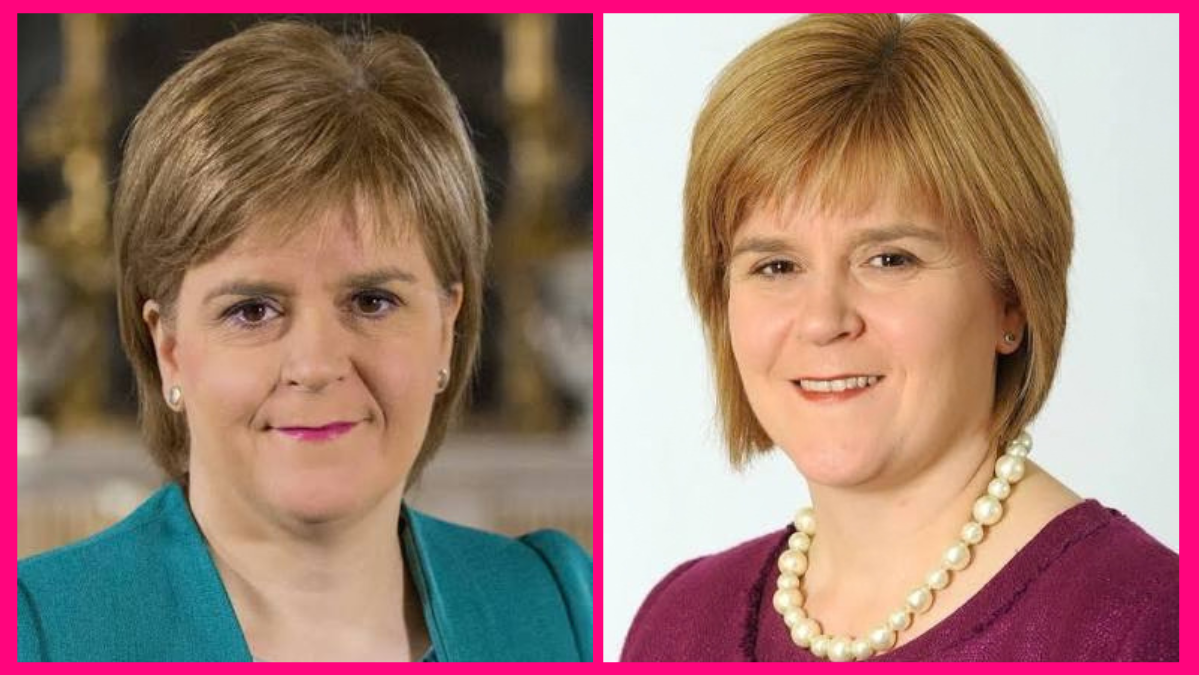
Few politicians in modern British history have divided and fascinated people quite like Nicola Sturgeon. For more than eight years she led Scotland’s devolved government, steered the country through a pandemic and kept the question of independence at the centre of British politics. Supporters saw a disciplined, articulate leader who gave Scotland a confident voice. Critics saw a divisive figure whose focus on constitutional change distracted from everyday public services.
Whatever side of the debate you land on, her story is worth understanding properly. It involves a working-class upbringing in Ayrshire, a rapid rise through the Scottish National Party, a dramatic resignation and a tumultuous period afterwards. This article walks through the key chapters, explains the policies and controversies, and looks at what her time in office means for Scotland today.
Early Life and Path into Politics
Sturgeon was born in Irvine, North Ayrshire, in 1970, and grew up in a modest household where politics was not a dinner-table staple. Her father was an electrician and her mother a dental nurse. She has often said that the Thatcher era, with its mine closures and industrial decline, shaped her outlook and pushed her towards the SNP as a teenager. She joined the party at sixteen, which in those days made her something of an oddity among her classmates.
She studied law at the University of Glasgow and worked as a solicitor before politics took over. After losing a couple of early election bids, she entered the Scottish Parliament in 1999 as a list member for Glasgow, the first intake of the new devolved institution. That early grounding in Glasgow’s communities, along with her legal training, gave her a reputation as someone who read the detail and came prepared. Colleagues from that period often describe her as relentless in debate and unusually well briefed.
Rise Through the Scottish National Party
Her ascent inside the SNP was steady rather than sudden. She became deputy leader in 2004 under Alex Salmond, and when the party formed a minority government in 2007, she took on the health brief as Deputy First Minister. Health is one of the most politically exposed jobs in any government, yet she handled it with enough authority to build a profile well beyond her party base.
The turning point came after the 2014 independence referendum. Scotland voted No by around 55 to 45 per cent, Salmond resigned, and Sturgeon was elected leader unopposed. She became First Minister in November 2014. In a twist that surprised many analysts, the party’s membership surged after the defeat rather than collapsing, and under her leadership the SNP swept almost every Scottish seat at Westminster in 2015. That result cemented her position as the dominant figure in Scottish politics.
Key Policies and Achievements in Government
Over her time in office, the Scottish Government under Sturgeon pursued a distinctive social-democratic agenda. Free university tuition for Scottish students was maintained, free prescriptions continued, and a baby box scheme was introduced to support new parents. Scotland also became the first country in the world to introduce a minimum unit price for alcohol, a public health policy that drew attention from health experts abroad. Her government also expanded free childcare hours and introduced the Scottish Child Payment, a weekly benefit aimed at reducing child poverty.
On climate, Scotland set some of the most ambitious legal targets in the developed world, including net zero by 2045, five years ahead of the UK as a whole. Delivering on those targets has proved harder than writing them, and the government eventually dropped its interim 2030 goal. That gap between ambition and delivery is a theme critics return to often, and it is a fair point in any honest assessment of her record.
The Independence Question and the Brexit Divide
Independence was always the north star of Sturgeon’s career. The 2016 Brexit vote gave her a powerful argument, since Scotland voted to remain in the European Union by roughly 62 per cent but was taken out regardless. She argued that this was a material change in circumstances justifying a second referendum, and she pressed the case repeatedly through the late 2010s and early 2020s.
The legal route eventually closed. In November 2022 the UK Supreme Court ruled unanimously that the Scottish Parliament could not hold a referendum without Westminster’s consent. Sturgeon accepted the ruling and said she would respect it, but she then tried to reframe the next general election as a de facto referendum. That idea never gained serious traction, even within her own movement, and the independence campaign lost momentum. Whether she pushed too hard or not hard enough remains a live argument among nationalists today.
Leading Scotland Through the Pandemic
Many people outside Scotland first became properly aware of Sturgeon during Covid-19. Her near-daily televised briefings were clear, calm and often more detailed than those from Westminster. Polling in 2020 showed that a majority of Scots trusted her handling of the crisis more than that of the UK Prime Minister, which is rare for any leader in a pandemic.
Her approach was not free of criticism. Care home discharge policies, testing in the early weeks and the timing of some restrictions were all examined by the UK Covid-19 Inquiry and by campaigners representing bereaved families. The inquiry also drew attention to how the pandemic was handled in the devolved nations more broadly. Sturgeon has said she would never stop reflecting on decisions made under enormous pressure, a line that sounded sincere to some and insufficient to others.
Resignation, Investigation and Personal Upheaval
In February 2023, she announced her resignation at a press conference in Edinburgh, saying that her decision came from her head and heart and was not a reaction to any single event. The timing led many commentators to link it to disputes over the Gender Recognition Reform Bill, a controversy over transgender rights that had split her party and drawn a UK government veto. She denied this. Humza Yousaf succeeded her as First Minister after a leadership contest.
What followed was an extraordinary few years. Police Scotland’s investigation into SNP finances, known as Operation Branchform, led to her arrest in June 2023, after which she was released without charge pending further inquiries. She has maintained throughout that she did nothing wrong. Her husband, Peter Murrell, the former SNP chief executive, was later charged and pleaded guilty to embezzlement, and the couple separated. In a candid memoir published in 2024, she described the period as one of the hardest of her life.
Key Moments at a Glance
A quick timeline helps put the main events in context, particularly for readers who are new to Scottish politics.
| Year | Event | Why It Mattered |
|---|---|---|
| 1999 | Elected to the Scottish Parliament | Began a long career in devolved politics |
| 2007 | Became Deputy First Minister and Health Secretary | Built her governing credentials |
| 2014 | Became SNP leader and First Minister | Took over after the referendum defeat |
| 2016 | Brexit vote | Fuelled calls for a second independence referendum |
| 2020 | Covid-19 briefings | Raised her profile across the UK |
| 2022 | Supreme Court ruling | Blocked a unilateral referendum |
| 2023 | Resigned as First Minister | Ended the longest tenure in the post |
| 2024 | Memoir published | Offered her own account of her years in office |
Political Style and Public Perception
Part of the reason Sturgeon remained so prominent was her communication style. She spoke in full, structured sentences, rarely lost her composure and was seldom tripped up by hostile questioning. Admirers called this competence, while opponents called it control. Her ability to project steadiness at tense moments gave her a rare kind of authority, particularly during the early pandemic months.
She also had a gift for tone. Interviews with her could be warm, even funny, which sat oddly alongside her sharp parliamentary performances. She has spoken openly about her miscarriage and about the toll of life in public service, and moments like these helped many voters see her as a human being rather than just a party leader. In her own words, she tried not to pretend that politicians are immune from ordinary feelings, and that candour earned her loyalty from many who did not share her politics.
Criticism and Controversy
A fair account has to include the criticisms. Education was one of the areas where her government faced the sharpest attacks. She once said she wanted to be judged on closing the attainment gap in schools, and opponents have since pointed to international rankings showing Scottish performance slipping. Health waiting times, drug deaths and the troubled ferry procurement saga also drew sustained fire.
The gender recognition debate was another flashpoint. Supporters argued the reforms would make life fairer for a small group of people; opponents raised concerns about women’s single-sex spaces and safeguarding. Handling of the Alex Salmond harassment inquiry, which ended with Salmond acquitted in court and a parliamentary committee reviewing the government’s conduct, left a lasting stain on relations within the SNP. For many Scots, these episodes made her tenure feel more complicated than the polished briefings suggested.
Life After Frontline Politics
Since stepping down, she has continued as a backbench member of the Scottish Parliament and has reportedly indicated she will not seek re-election at Holyrood. Her public appearances have shifted towards book events, lectures and conversations about leadership, including the pressures women face in high office. She has also become a more reflective commentator on Scottish and UK politics, offering opinions on independence strategy without the constraints of government.
Her memoir gave readers a rare look behind the scenes, including her relationship with Murrell, her views on her opponents and her sense of regret over certain decisions. Reviewers noted that it was more personal than most political books, although some thought it avoided the hardest questions about the SNP’s finances. Either way, it confirmed that Nicola Sturgeon has no intention of disappearing from the national conversation.
Legacy and What Comes Next for Scottish Politics
Assessing her legacy is not simple. She won every election she contested as leader, held the SNP together through years of strain and made Scotland a visible player on the international stage. Yet the central goal of her career, independence, remains unachieved, and several domestic public services are under pressure. Both facts can be true at once.
What the future holds for the SNP and the independence movement without its most recognisable figure is still unfolding. Younger leaders must now rebuild the argument for independence while managing budgets, health boards and a cost of living squeeze. How voters judge her record will likely shift over time, the way they do for most long-serving leaders. For now, Nicola Sturgeon remains a benchmark against which every successor will be measured.
Conclusion
The story of Nicola Sturgeon is one of ambition, discipline, achievement and hard lessons. She rose from a small Ayrshire town to lead a nation, delivered progressive social policies, guided Scotland through a global health crisis and kept constitutional change on the table for nearly a decade. She also faced criticism over education, health, policy delivery and the turbulence that surrounded her party’s finances.
Understanding her career gives you a window into modern Scottish politics as a whole: devolution, Brexit, independence and the evolving relationship between Edinburgh and London. Whether you admire her or not, her time in office reshaped the country’s political landscape, and the debates she championed are far from settled.
Frequently Asked Questions
Who is Nicola Sturgeon?
Nicola Sturgeon is a Scottish politician who served as First Minister of Scotland and leader of the Scottish National Party from 2014 to 2023. She was the first woman to hold the office and, at over eight years, its longest-serving occupant. Before that she was Deputy First Minister and Health Secretary.
Why did Nicola Sturgeon resign as First Minister?
She announced her resignation in February 2023, explaining that it was the right time for her, her party and the country, and that it was not driven by a single crisis. Commentators pointed to the independence stalemate and the controversy over gender recognition reform as contributing pressures, though she rejected the idea that she was forced out.
Was Nicola Sturgeon ever charged with a crime?
She was arrested in June 2023 as part of a police investigation into SNP finances and then released without charge. She has consistently denied wrongdoing. Her husband, Peter Murrell, later faced separate charges and pleaded guilty to embezzlement, which was a different matter from any allegation against her.
What were the biggest achievements of her government?
Supporters highlight the minimum unit pricing of alcohol, the Scottish Child Payment, expanded free childcare, ambitious climate legislation and the continuation of free tuition. Many also credit her with a calm and clear approach to communication during the Covid-19 pandemic.
Does she still play a role in Scottish politics?
She remained a member of the Scottish Parliament after leaving government, though she has signalled she will step back from frontline politics. Her influence continues through public speaking, her memoir and her commentary on independence. Nicola Sturgeon remains one of the most recognised political voices in Scotland.
Did she support Scottish independence after the Supreme Court ruling?
Yes. She accepted that the court decision closed the route to a unilateral referendum, but she remained a committed supporter of independence and argued that the movement needed to build broader public support. She continues to say that Scotland’s constitutional future should be decided by its people.
Read also Fielder Jewett: Biography, Career, Education, Marriage, and Life in 2026
