

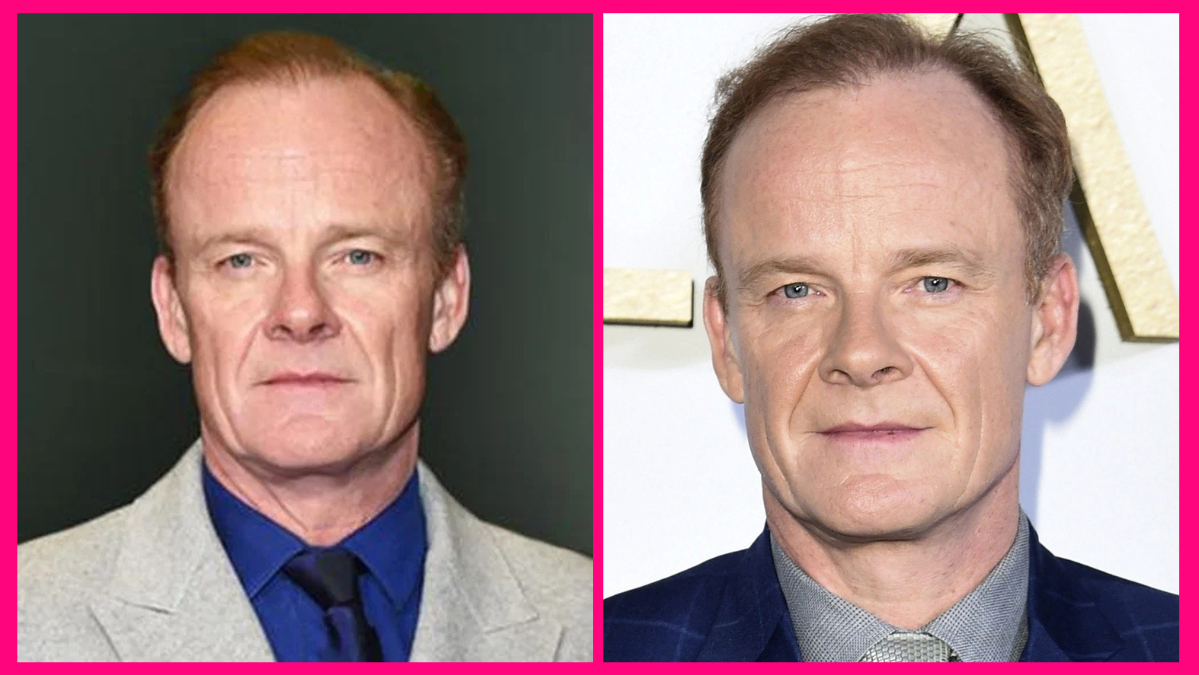
Alistair Petrie has built a reputation as one of Britain’s most dependable character actors, moving comfortably between prestige television, major Hollywood productions, streaming dramas, and serious theatre. Born on September 30, 1970, in Catterick, North Yorkshire, he trained at the London Academy of Music and Dramatic Art and developed the kind of controlled, authoritative screen presence that works especially well in demanding supporting roles.
For many viewers, he became instantly recognizable as Michael Groff, the strict and complicated headmaster in Netflix’s Sex Education. Yet that role represents only one chapter of a career that includes Rogue One: A Star Wars Story, Rush, Cloud Atlas, The Night Manager, Sherlock, The Terror, Undercover, Deep State, and a substantial body of stage work. His career is particularly interesting because he rarely relies on a single type of character. He can play a stern authority figure, a polished executive, a military officer, a troubled father, or a morally uncertain professional without making those performances feel interchangeable.
Early life and acting education
Petrie was born in North Yorkshire and spent part of his childhood living in different parts of the world, including the Middle East, mainland Europe, and East Africa. That international upbringing gave him a broad cultural experience before he entered professional acting. He later trained at LAMDA, one of Britain’s best-known drama schools, where actors receive intensive preparation for stage and screen work.
His early development was strongly connected with theatre. Like many British performers, he built experience through stage productions before becoming a familiar face on television and film. His background in classical and contemporary theatre helps explain the precision that often appears in his performances. Even when a character has only a few scenes, he tends to give the role a clear identity, physical presence, and emotional logic.
The theatre foundation behind his screen career
Before becoming widely recognized by international streaming audiences, Petrie established himself as a stage performer. His theatre credits include work with major British institutions, including the Royal Shakespeare Company and the National Theatre. He has appeared in productions connected with Shakespeare and other major dramatic works, while also taking on contemporary theatre projects.
That stage experience is important when looking at his later screen career. Petrie’s performances often feel carefully measured rather than improvised for effect. His voice, posture, timing, and ability to communicate authority without excessive movement are useful tools for characters who occupy positions of power. In 2025 and 2026, he returned to major stage work as Claudius in the National Theatre production of Hamlet, a demanding role that underlined the continuing importance of theatre in his career. His representatives described the performance as “commanding,” a fitting description of an actor whose screen work often depends on quiet control.
Breakthrough film roles and growing recognition
Petrie gradually moved into more prominent film roles during the 2000s. He appeared in The Bank Job, playing Philip Lisle, and also featured in The Duchess. These projects placed him alongside established performers and helped expand his profile beyond British television.
One of the more interesting steps came with Cloud Atlas, the ambitious 2012 film directed by Lana and Lilly Wachowski and Tom Tykwer. The movie used a large ensemble cast and asked performers to inhabit different characters across interconnected stories. Petrie’s participation demonstrated his ability to fit into an unusually complex production while maintaining a distinctive screen presence.
He then played Stirling Moss in Rush, Ron Howard’s 2013 film about the Formula One rivalry between James Hunt and Niki Lauda. Although the film focused primarily on its central rivalry, supporting performers helped recreate the atmosphere of the racing world. Petrie’s involvement added another recognizable figure from motorsport history to the ensemble.
Alistair Petrie in Rogue One and the Star Wars universe
One of the most internationally visible roles in Alistair Petrie’s career arrived in Rogue One: A Star Wars Story. He played General Davits Draven, a senior Rebel figure involved in the dangerous mission surrounding the Death Star plans. Draven is not one of the film’s largest roles, but the character has a clear military authority and contributes to the darker, more grounded tone of the story.
Rogue One was significant because it introduced a more war-focused perspective into the Star Wars universe. Petrie’s performance suited that atmosphere. Draven is direct, practical, and prepared to make difficult decisions, which is very different from the awkward domestic authority of Michael Groff in Sex Education. The contrast shows how effectively Petrie can change the emotional temperature of a performance.
The role also remained part of his career long after the film’s 2016 release. He reprised General Draven in the second season of Andor, bringing the character back into the Star Wars television universe. His return gave longtime fans another opportunity to see a character that had previously appeared only briefly on screen.
Alistair Petrie and The Night Manager
Another important television credit came with The Night Manager, the espionage thriller adapted from John le Carré’s novel. Petrie played Sandy Langbourne, a wealthy and well-connected figure within the world surrounding Hugh Laurie’s arms dealer Richard Roper.
The Night Manager gave Petrie the opportunity to work in a sophisticated ensemble where small gestures and subtle relationships mattered as much as action. His character belongs to a polished environment in which trust is uncertain and appearances can be misleading. That setting is well suited to Petrie’s ability to communicate information through restraint rather than exposition.
The series became a major critical and awards success, and Petrie returned as Sandy Langbourne for the second season released in 2026. The continuation is another example of how his career has developed through carefully chosen supporting roles rather than relying on one conventional leading-man identity.
His work in Sherlock, Undercover, and The Terror
Petrie’s television career includes several high-profile British productions. In Sherlock, he played Major James Sholto in “The Sign of Three,” appearing opposite Benedict Cumberbatch and Martin Freeman. The role required him to create a convincing sense of history and authority despite limited screen time.
He also appeared in BBC drama Undercover, alongside Sophie Okonedo and Adrian Lester. The series dealt with political power, secrets, identity, and institutional pressure, themes that have appeared repeatedly in Petrie’s television work.
In The Terror, he played Dr. Stephen Stanley. The historical horror drama centered on the doomed Franklin expedition and combined survival drama with supernatural elements. Once again, Petrie entered a world where professional status and confidence could be tested by extreme circumstances.
Alistair Petrie as Michael Groff in Sex Education
For a large international audience, Alistair Petrie is most closely associated with Michael Groff in Sex Education. The Netflix series introduced him as the strict headmaster of Moordale Secondary School and the father of Adam Groff, played by Connor Swindells.
Michael initially appears rigid, intimidating, and emotionally closed off. His relationship with Adam is especially difficult because his expectations and methods repeatedly cause damage. What makes the character more compelling, however, is that the series does not leave him frozen in that initial image. Over time, Michael is forced to confront the consequences of his behavior and reconsider what fatherhood, masculinity, and personal responsibility mean.
Netflix’s official character guide describes Michael as Adam’s father and former headmaster who eventually realizes that he needs to “repair his relationship with Adam” and start “making amends.” That description captures the central movement of the character without reducing him to either a villain or a hero.
Petrie’s performance works because he does not play Michael as a simple caricature of a strict schoolmaster. His stiff posture, controlled voice, and uncomfortable pauses communicate a man who has learned to hide vulnerability behind authority. As the story progresses, small changes in those habits become meaningful.
Why the Michael Groff performance stands out
The success of Michael Groff comes partly from contrast. In the early episodes, his character can appear almost intimidatingly formal. He represents rules, discipline, and old-fashioned ideas about how a father and school leader should behave. Yet underneath that exterior is a person who is uncertain about how to express affection or admit mistakes.
Petrie allows those contradictions to coexist. He can make Michael frustrating in one scene and unexpectedly sympathetic in another. That balance is difficult because an actor can easily make a character like this too harsh or too sentimental. Instead, the performance gradually reveals why Michael behaves as he does while still allowing the audience to recognize the harm caused by his choices.
The role also benefits from Petrie’s chemistry with Connor Swindells. Their scenes give the father-son relationship a believable awkwardness. There is often a feeling that both characters want connection but do not possess the emotional vocabulary needed to achieve it easily.
A career built around versatility
A useful way to understand Petrie’s filmography is to look at the range of worlds he has entered. The Bank Job placed him in a British crime story. Cloud Atlas moved him into ambitious science fiction. Rush brought him into sports drama. Rogue One put him inside a major space opera. The Night Manager and Undercover explored espionage and political intrigue. Sex Education gave him a character-driven family and school story.
That variety is not simply a collection of unrelated credits. It demonstrates a consistent strength: Petrie makes supporting characters feel as though they have lives beyond the boundaries of the scene. Whether he is playing a military officer, executive, teacher, father, or government-connected professional, he tends to establish a sense of history quickly.
Alistair Petrie movies and television shows
The following table highlights several of the roles that have shaped Petrie’s career. Together, these credits show how often he has moved between film, television, franchise entertainment, and prestige drama.
Rather than focusing only on his most famous projects, the table also includes roles that help explain the progression of his career from British productions to globally recognized series and films.
| Film or series | Year | Role | Why it matters |
|---|---|---|---|
| The Bank Job | 2008 | Philip Lisle | Early notable film appearance |
| Cloud Atlas | 2012 | Felix Finch | Part of a large multi-character ensemble |
| Rush | 2013 | Stirling Moss | Played a real motorsport figure |
| Sherlock | 2014 | Major James Sholto | Memorable British television role |
| Rogue One: A Star Wars Story | 2016 | General Davits Draven | Major international franchise role |
| The Night Manager | 2016, 2026 | Sandy Langbourne | High-profile espionage drama |
| The Terror | 2018 | Dr. Stephen Stanley | Historical horror performance |
| Sex Education | 2019–2023 | Michael Groff | His best-known streaming role |
| Andor | 2025 | General Davits Draven | Returned to the Star Wars universe |
| Hamlet | 2025–2026 | Claudius | Major recent theatre role |
Other notable screen work
Beyond his best-known credits, Petrie has continued to work steadily across film and television. His screen credits include The Mark of Cain, Cranford, Utopia, Victor Frankenstein, Hellboy, Funny Woman, The Following Events Are Based on a Pack of Lies, and Magpie.
This consistency is one of the most impressive parts of his career. Rather than disappearing between major projects, he has maintained a steady presence across different genres and production scales. Some roles have been highly visible, while others have been smaller, but the overall filmography shows a performer comfortable working as part of an ensemble.
His work in Funny Woman, for example, placed him in a lighter television setting, demonstrating that his career is not limited to serious drama. He has also contributed voice work and appeared in games and audio productions, showing that his acting range extends beyond traditional on-camera performances.
Recent projects and career development
The mid-2020s have been an especially interesting period for Petrie. His return as General Draven in Andor connected an older film role with a newer television story. His appearance in the second season of The Night Manager similarly brought back a character from an earlier stage of his career.
At the same time, his theatre work has remained substantial. His portrayal of Claudius in Hamlet demonstrates that even after achieving global recognition through streaming and franchise productions, he continues to invest in demanding stage roles. That balance between screen and theatre is a defining feature of his professional identity.
Recent credits also include Magpie and other television work, reinforcing a pattern that has been visible throughout his career: Petrie tends to move between projects rather than staying tied to one genre or format.
What makes his acting style distinctive
Petrie’s greatest strength may be his ability to project authority without making every character seem identical. He has a naturally resonant presence, but he uses it differently depending on the role. In one production, that quality can make him appear intimidating. In another, it can suggest competence, uncertainty, sophistication, or even vulnerability.
He also understands the value of understatement. Rather than explaining every emotion, he often lets a pause, expression, or change in posture do part of the work. That approach is especially effective in British television dramas and stage productions where character relationships develop gradually.
This is why his performances can remain memorable even when he is not the central character. He gives supporting roles enough detail to feel complete, which makes the surrounding story stronger.
Why audiences continue to search for Alistair Petrie
Interest in Alistair Petrie has grown alongside the international popularity of Sex Education and his appearances in major franchise and prestige television projects. Viewers who discover him through Michael Groff often recognize him later in Rogue One, The Night Manager, Sherlock, or other productions and realize that they have seen his work in several very different settings.
His career also appeals to viewers who appreciate character actors rather than performers defined solely by celebrity status. Petrie has accumulated a filmography in which the supporting role is treated as an opportunity rather than a limitation. That makes his work rewarding to explore across decades.
For newer audiences, his career provides a useful example of how an actor can build long-term recognition through consistency. There was no need for one single blockbuster role to define his entire professional identity. Instead, major projects, respected theatre work, and distinctive television characters have gradually created a broad body of work.
The lasting appeal of his best roles
The strongest Petrie performances tend to share one quality: they contain tension. His characters often occupy positions where they have something to protect, prove, or hide. That gives even relatively short appearances a sense of consequence.
Michael Groff is the clearest example. The character begins as an authority figure who seems certain of his own rules, but the story gradually exposes his emotional limitations. General Draven is different but similarly controlled, operating within a military structure where difficult decisions are part of the job. Sandy Langbourne belongs to another world of power and secrecy. These characters are very different, yet Petrie gives each a recognizable internal logic.
That ability to create distinctions between roles is a major reason his filmography remains interesting. Instead of simply repeating a familiar persona, he adjusts his energy to fit the world around him.
Conclusion
Alistair Petrie has developed a remarkably varied career across British theatre, television, international film, streaming drama, and major entertainment franchises. From early stage work to productions such as The Bank Job, Cloud Atlas, Rush, Rogue One, The Night Manager, and Sex Education, his career shows the value of patience, versatility, and strong character work.
His portrayal of Michael Groff brought him a new generation of fans, while roles such as General Draven and Sandy Langbourne connected him with audiences interested in large-scale franchise storytelling and sophisticated television drama. His continuing theatre work, including his recent portrayal of Claudius in Hamlet, also demonstrates that his ambitions extend well beyond screen fame.
Ultimately, Alistair Petrie stands out because he makes supporting characters matter. He brings authority, restraint, emotional detail, and theatrical discipline to roles that might otherwise disappear into an ensemble. That combination has allowed him to remain relevant across changing eras of British television and international entertainment.
Frequently Asked Questions
The questions below cover the main points readers often want to know about his background, career, major roles, and recent work.
His filmography is broad, so these answers focus on the credits and personal details most closely associated with his public career.
Who is Alistair Petrie?
Petrie is a British actor known for film, television, and theatre work. He is particularly recognized for playing Michael Groff in Sex Education, General Davits Draven in Rogue One and Andor, and Sandy Langbourne in The Night Manager.
How old is Alistair Petrie?
Alistair Petrie was born on September 30, 1970, in Catterick, North Yorkshire, England. He trained at the London Academy of Music and Dramatic Art before developing a career across theatre, television, and film.
What is Alistair Petrie best known for?
He is best known internationally for playing Michael Groff, the strict former headmaster and father of Adam Groff, in Netflix’s Sex Education. He is also widely recognized for Rogue One: A Star Wars Story, The Night Manager, and other British television productions.
Was Alistair Petrie in Star Wars?
Yes. Alistair Petrie played General Davits Draven in Rogue One: A Star Wars Story. He later reprised the role in the Star Wars television series Andor, extending the character’s story beyond the original film.
Is Alistair Petrie in The Night Manager?
Yes. He plays Sandy Langbourne in The Night Manager. The character is connected to the sophisticated and secretive world surrounding Richard Roper, and Petrie returned to the role for the second season released in 2026.
Is Alistair Petrie married?
Yes. Alistair Petrie is married to actress Lucy Scott, and they have three sons. The couple have also participated in charitable fundraising, including a 2007 English Channel swim supporting research into premature birth.
What theatre work has Alistair Petrie done?
Petrie has worked with major British theatre organizations, including the Royal Shakespeare Company and National Theatre. His stage credits include Shakespearean productions, contemporary drama, and the West Yorkshire Playhouse production of Mine. More recently, he played Claudius in Hamlet.
What are some Alistair Petrie movies and TV shows?
His notable credits include The Bank Job, Cloud Atlas, Rush, Rogue One: A Star Wars Story, The Duchess, Victor Frankenstein, Hellboy, The Night Manager, Sherlock, The Terror, Undercover, Sex Education, Funny Woman, and Andor. His broad filmography reflects his ability to work across drama, action, comedy, thriller, and science fiction.
Read also Gemma Jones: Biography, Career, Films, TV Roles and Lasting Legacy
