



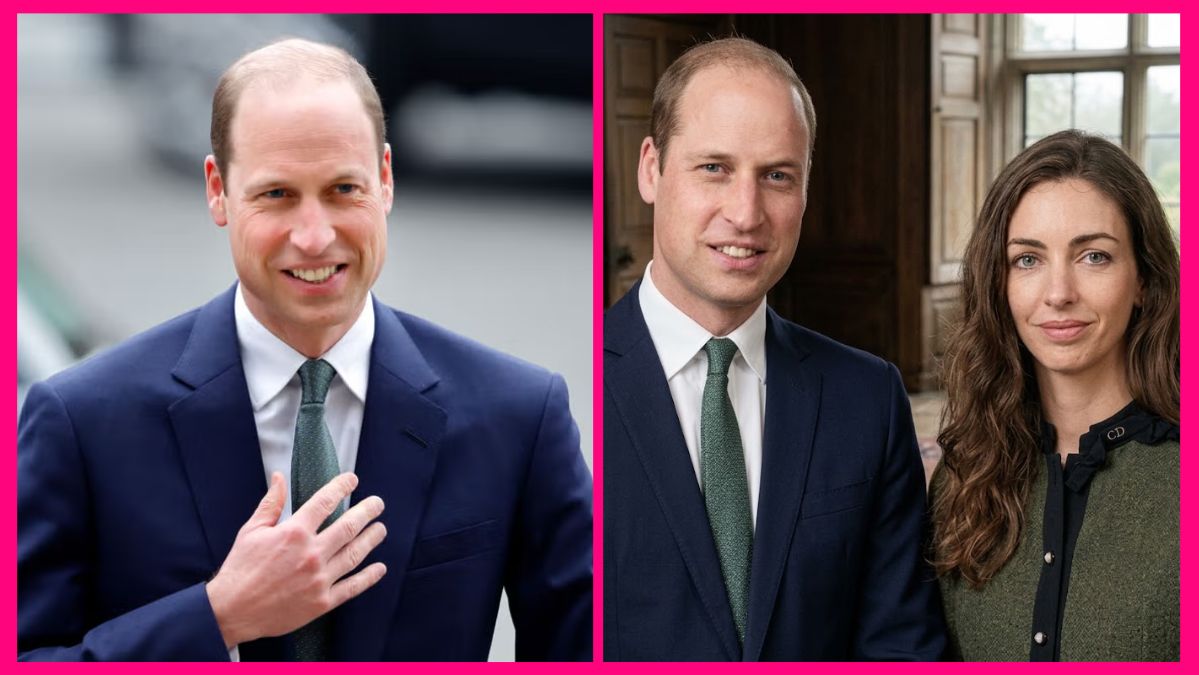
The phrase prince william affair has become one of the most searched terms connected with the modern British royal family, largely because of years of online speculation surrounding Prince William, Catherine, Princess of Wales, and their wider social circle. Stories about royal relationships can spread rapidly, particularly when a recognizable name becomes linked to an allegation that has not been established as fact.
Much of the discussion has centered on Rose Hanbury, Marchioness of Cholmondeley, who has been socially connected with the Prince and Princess of Wales for years. Online posts and tabloid commentary have repeatedly suggested that William and Hanbury had an inappropriate relationship. However, the existence of repeated internet claims should not be confused with independently established evidence. The allegations have circulated widely, while credible public evidence confirming an affair has not been established.
Understanding the story therefore requires separating documented events from anonymous claims, social-media speculation, commentary, and the normal privacy surrounding members of the royal family. This distinction is especially important because royal stories can become distorted as they move from one publication or social platform to another.
How the Prince William Affair Rumors Began
The modern prince william affair discussion became particularly visible in 2019, when British media and online commentators began focusing on the relationship between the royal couple and Rose Hanbury. Hanbury was already part of the broader Norfolk social circle around the royal family and was known as a neighbor of the couple near their country residence at Anmer Hall.
The story gained attention after reports and social-media discussions suggested that William and Hanbury had experienced a falling-out or that their relationship had become unusually significant. Those claims were followed by much stronger allegations about an alleged romantic relationship. However, the escalation from speculation about a social disagreement to claims of infidelity was not supported by publicly established evidence.
That distinction matters. A reported friendship, social connection, disagreement, or change in public appearances does not automatically demonstrate a romantic relationship. In celebrity and royal coverage, small changes in who attends an event or appears in photographs can easily be interpreted as something more significant than the available evidence actually demonstrates.
Who Is Rose Hanbury?
Rose Hanbury is a British aristocrat and former model who married David Cholmondeley, the 7th Marquess of Cholmondeley, in 2009. Her family has long-standing connections with the British establishment, and she and her husband have been associated with the Norfolk area where William and Catherine also maintain their country home.
Hanbury’s proximity to the Wales family helped make her relevant to the online narrative. She was not simply an unrelated celebrity whose name appeared suddenly beside William’s. She belonged to a social environment in which members of the aristocracy, royal family, and other prominent families can know one another for years.
That background is important when assessing photographs or reports showing William and Hanbury at overlapping social occasions. Being present at the same events does not, by itself, establish a private romantic relationship. The prince william affair narrative has often relied on interpreting ordinary social connections through the lens of an allegation that had already gained attention.
What Evidence Actually Exists?
One of the biggest problems with the prince william affair story is the difference between an allegation and verified evidence. The allegation has been discussed by tabloids, commentators, social-media accounts, and online publications, but that does not mean that the central claim has been proven.
There has been no publicly established evidence demonstrating that Prince William and Rose Hanbury had an affair. Neither the circulation of a rumor nor the existence of articles discussing it can independently verify the underlying allegation. Some reports have referred to supposed sources, but anonymous claims are difficult for the public to independently evaluate.
This is why responsible coverage should use language such as “alleged,” “reported,” or “rumored” rather than presenting the claim as established fact. The distinction protects accuracy while still allowing readers to understand why the story became such a significant topic in royal media coverage.
| Aspect of the story | What can reasonably be established |
|---|---|
| Prince William and Rose Hanbury know each other | They have been part of the same Norfolk social circle |
| Hanbury’s connection to the royal family | She has been associated with the wider social environment around the Wales family |
| Affair allegation | Widely circulated, but not publicly established as fact |
| Online speculation | Became highly visible through social media and digital publications |
| Official confirmation of an affair | No publicly established confirmation |
| Public interest | Driven partly by royal status, privacy, and intense media attention |
Why the Rumor Became So Widely Discussed
The prince william affair story attracted unusual attention because it involved a future king, his wife, and another prominent figure from the same aristocratic environment. Stories involving ordinary celebrities can become popular, but allegations involving senior royals often receive a much larger international audience.
Another factor was the way information spreads online. A short post can repeat an allegation without explaining its origin, and another website can then cite that post as though it were independent reporting. Eventually, readers may encounter the same claim dozens of times and assume that repetition equals confirmation.
Social media also encourages dramatic interpretations. A photograph, an absence from an event, or an apparently awkward interaction can become the subject of extensive speculation. Once a narrative becomes established online, almost any later event can be interpreted as supporting it, even when there is no direct connection.
Prince William and Catherine’s Public Relationship
Prince William and Catherine have maintained a highly visible public relationship for many years. They met while studying at the University of St Andrews, became a couple, separated briefly during their relationship, and eventually married at Westminster Abbey in April 2011.
Since their marriage, they have appeared together at major royal occasions, overseas tours, charitable engagements, sporting events, and family-related appearances. Their public role means that many aspects of their relationship are observed closely, while their private life remains protected to a significant degree.
The prince william affair narrative therefore exists against a background in which the couple’s public appearances are routinely analyzed. A change in schedule or a period without joint appearances can generate interest, but it cannot automatically establish what is happening privately.
The Importance of Royal Privacy
Privacy has been a major issue for the British royal family for decades. Prince William grew up under intense press attention, and his relationship with Catherine also attracted significant media interest before and after their marriage.
The history of royal journalism helps explain why modern allegations require careful treatment. In 2005, lawyers representing Catherine Middleton wrote to newspaper editors about concerns regarding coverage of her private life. The Guardian reported at the time that her representatives objected to intrusive treatment and asked editors to respect relevant press standards.
The broader issue is not simply whether a royal story attracts public curiosity. It is whether the information being published can be supported and whether the public interest justifies reporting private details. Those questions remain particularly relevant when an allegation concerns an individual’s marriage but lacks independently verifiable evidence.
How Social Media Changed the Story
The growth of social media transformed the way royal rumors travel. In previous decades, a claim might have remained within a particular newspaper audience. Today, one post can reach millions of people within hours, and screenshots can continue circulating long after the original context has disappeared.
This has influenced discussion of the prince william affair because online conversations often combine legitimate reporting with commentary, jokes, speculation, and unsupported claims. A post may cite a newspaper without linking to the original story, while another account may treat the first post as evidence.
The result is an information loop. A rumor appears, receives attention, becomes newsworthy because people are discussing it, and then receives further attention because it is already considered a popular topic. Readers can easily lose sight of the fact that popularity and verification are two different things.
The Role of Tabloid Journalism
British tabloid journalism has a long and complicated relationship with the royal family. Royal stories attract readers, and newspapers have historically competed for exclusive photographs, personal details, and dramatic narratives.
The history of press intrusion involving William and Harry is particularly relevant. The Guardian reported that journalist Clive Goodman and private investigator Glenn Mulcaire were jailed in 2007 over phone-hacking offenses involving members of the royal household and others. Years later, Prince Harry pursued legal action concerning alleged unlawful information gathering by newspaper groups.
This history does not prove or disprove the prince william affair allegation. Instead, it provides context for understanding why claims about royal private lives can be treated with considerable skepticism when their sourcing is unclear.
Why Anonymous Sources Need Careful Treatment
Anonymous sources can sometimes play an important role in journalism, particularly when individuals would face genuine consequences for speaking publicly. However, anonymous claims are difficult for readers to verify, especially when the allegation concerns private conduct.
The prince william affair story has frequently been discussed through references to unnamed insiders or supposed people familiar with the situation. Without independent corroboration, readers cannot easily determine whether such sources have direct knowledge, are repeating something they heard, or are interpreting events themselves.
Good journalism normally distinguishes between what a source claims and what can independently be demonstrated. This distinction is especially important when allegations could affect the reputations and private lives of real people.
What Happened During the 2024 Royal Speculation?
The intense online interest in Catherine’s health and whereabouts in early 2024 demonstrated how quickly speculation surrounding the Wales family could expand. Following Catherine’s abdominal surgery and her absence from public duties, social media became filled with theories and rumors.
Reuters reported in March 2024 that William and Catherine had faced widespread speculation during her recovery. The couple were later seen together at a farm shop near their Windsor home, while Kensington Palace continued to emphasize privacy around Catherine’s recovery.
That period is useful context for understanding the continuing interest in the prince william affair topic. It showed how quickly online speculation can move beyond the original subject and create new narratives around the royal family, even when reliable information is limited.
Why the Rumor Continues to Resurface
The prince william affair allegation continues to appear online partly because older celebrity rumors can be revived whenever public interest in a person increases. Search engines preserve old pages, social-media users repost old discussions, and new audiences encounter claims without necessarily knowing their original context.
Another reason is the enduring popularity of royal families. William’s position as heir to the British throne makes his personal life unusually newsworthy. Readers around the world follow his family, marriage, children, public appearances, and future role in the monarchy.
Yet continued discussion does not change the evidentiary position. A rumor can remain popular for years without becoming verified. The responsible approach is therefore to distinguish the existence of the allegation from the truth of the allegation.
What Prince William Has Publicly Said
Prince William has generally avoided publicly discussing private allegations about his marriage. This is consistent with the broader approach of senior members of the royal family, who often limit public comment about personal matters.
When the royal family does respond to media stories, statements can sometimes be unusually direct. In January 2020, William and Harry’s representatives issued a statement criticizing a report about their relationship as “offensive and potentially harmful,” according to the Guardian. The statement described the story as false.
This history demonstrates an important point: when royal representatives directly reject a particular report, that response should be distinguished from situations in which no official confirmation or denial has been issued. Silence should not automatically be interpreted as proof of either side.
The Difference Between Fact and Speculation
A useful way to understand the prince william affair discussion is to divide information into three categories: documented facts, attributed claims, and speculation.
Documented facts include public appearances, marriage dates, official announcements, published statements, and confirmed professional or social relationships. Attributed claims are statements made by named or anonymous sources and reported by media outlets. Speculation involves interpretations that go beyond what the available evidence demonstrates.
Keeping those categories separate makes the story much easier to understand. It also prevents an online rumor from gradually becoming presented as a historical fact simply because it has been repeated many times.
How Readers Can Evaluate Royal Rumors
Readers can evaluate the prince william affair claims more carefully by checking the original source rather than relying on screenshots or social-media summaries. A report that identifies its evidence clearly is easier to assess than a post that simply states an allegation as fact.
It is also useful to look for independent confirmation. If several websites are repeating the same unnamed source, they may not actually represent several independent sources. They could all be relying on one original report.
The wording of an article can also reveal how confident the publication actually is. Terms such as “reportedly,” “allegedly,” “sources claim,” and “it has been suggested” indicate that the publication is not presenting the underlying allegation as independently established fact.
Why the Story Matters Beyond Royal Gossip
Although the prince william affair story is often treated as celebrity gossip, it also illustrates a wider issue involving digital journalism and public figures. The internet has made information more accessible, but it has also made unverified claims easier to reproduce.
A modern reader may encounter the same rumor on a search engine, social platform, video, blog, and discussion forum. Seeing the claim in multiple places can create a sense of certainty even when all of those references ultimately trace back to the same original allegation.
The story therefore offers a useful lesson in media literacy. Popularity, repetition, and emotional appeal are not substitutes for evidence.
What Is Known About William and Rose Hanbury’s Connection
William and Hanbury have been associated through the wider social world surrounding the royal family’s Norfolk residence. Their families have had connections within the same regional community, which helps explain why their names have appeared together in royal coverage.
That social connection has sometimes been portrayed online as evidence of something more intimate. However, social proximity is not proof of an affair. People living within the same community can attend the same events, know the same families, and appear in the same photographs without having a romantic relationship.
The prince william affair narrative has therefore become a case study in how an ordinary social connection can become the foundation for a much larger public story when speculation is added to limited information.
The Broader Lesson From the Royal Rumor
The lasting interest in the prince william affair reflects the public’s fascination with the private lives of famous people. Prince William occupies an especially unusual position because his personal life is connected not only with celebrity culture but also with the future of the British monarchy.
At the same time, public interest does not automatically turn an unverified private allegation into established fact. Responsible reporting requires evidence, context, and clear distinctions between what is known and what is merely claimed.
For readers, the safest approach is to treat unsupported allegations cautiously, especially when they concern relationships, family life, or other private matters. The most reliable information comes from documented statements, reputable reporting, and independently verifiable evidence rather than viral repetition.
Conclusion
The prince william affair story remains one of the more persistent rumors surrounding the modern British royal family, but its longevity should not be mistaken for proof. Allegations involving Rose Hanbury have circulated widely, yet publicly established evidence confirming an affair has not emerged.
The available information supports a more measured understanding. William and Hanbury have been part of overlapping social circles, the allegations became widely discussed in the late 2010s, and the story was amplified considerably by digital media. Beyond those points, claims about a romantic relationship should be treated as allegations rather than established history.
Royal reporting has always involved a difficult balance between public interest and private life. The growth of social media has made that balance even more complicated. For anyone researching the prince william affair, the most useful approach is to examine the original reporting, distinguish confirmed information from anonymous claims, and avoid treating repeated speculation as independently verified evidence.
Frequently Asked Questions About the Prince William Affair
What is the Prince William affair rumor about?
The prince william affair rumor generally refers to allegations that Prince William had a romantic relationship with Rose Hanbury, Marchioness of Cholmondeley. The claims became especially prominent online around 2019 and were subsequently repeated across social media and entertainment-focused publications.
There is a crucial distinction between the existence of the allegation and evidence supporting it. A romantic affair between William and Hanbury has not been publicly established as fact through reliable, independently verifiable evidence.
Who is Rose Hanbury?
Rose Hanbury is the Marchioness of Cholmondeley and has been part of the wider social and aristocratic circle surrounding the royal family’s Norfolk community. She married David Cholmondeley, the 7th Marquess of Cholmondeley, in 2009.
Her connection to the same social environment as William and Catherine helped make her name relevant to the rumor. However, being socially connected to a royal family does not itself indicate a romantic relationship.
Did Prince William confirm an affair?
No public confirmation from Prince William establishing an affair with Rose Hanbury has been made. The story has largely existed through media reports, commentary, anonymous claims, and online speculation.
That absence of confirmation is significant when evaluating the prince william affair allegation. It means the claim should not be presented as an established fact simply because it has been discussed repeatedly.
Why did the rumor become so popular?
The rumor became popular because it combined several ingredients that typically attract significant media attention: a senior member of the royal family, a prominent marriage, an aristocratic social circle, and allegations of infidelity.
Social media further increased its reach by allowing old reports and speculative posts to circulate repeatedly. Once a story becomes highly visible, subsequent references can make it appear more established than the underlying evidence actually supports.
Are Prince William and Rose Hanbury still friends?
The precise details of private friendships and social relationships are not fully public. William and Hanbury have been associated through overlapping social circles, but it is difficult to determine the exact nature of any private relationship from public appearances alone.
Claims about a friendship ending or changing have also been incorporated into the prince william affair narrative, but those claims should be distinguished from documented statements or independently verified events.
What should readers believe about the affair allegations?
Readers should distinguish between documented facts and allegations. The existence of widespread reporting demonstrates that the rumor has been a significant subject of public discussion, but widespread reporting does not independently prove the allegation.
For accurate research, readers should prioritize reputable outlets, original statements, dated reporting, and independently verifiable evidence. That approach provides a clearer picture of what is genuinely known while avoiding the common mistake of turning speculation into fact.
Read also Leesa Ranganathan: Biography, Family, Career, Marriage and Life Away From the Spotlight
