



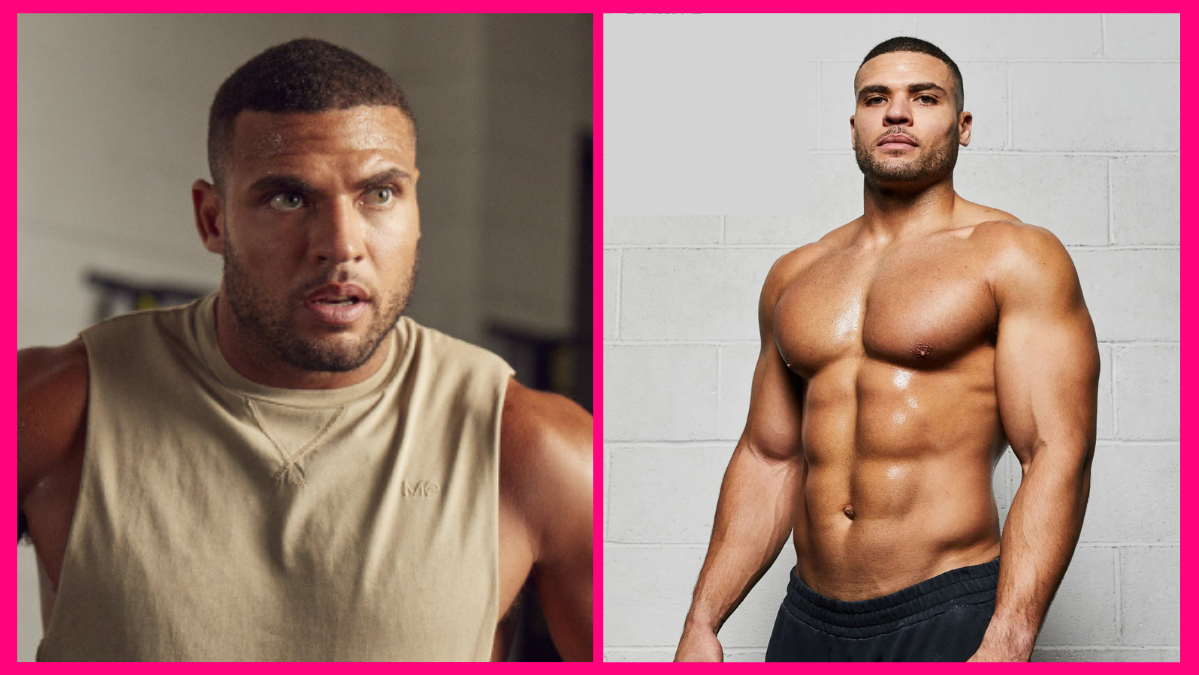
Zack George has built an inspiring career by turning a difficult relationship with fitness into a life centered on discipline, performance, and personal growth. Born and raised in Leicester, England, he became widely recognized in the CrossFit world after winning the United Kingdom’s men’s title in the 2020 CrossFit Open. His journey later expanded beyond competitive fitness when he became Steel on the BBC’s revived Gladiators series.
What makes his story particularly compelling is that elite athleticism was not always part of his identity. As a child and young teenager, George struggled with being overweight and lacked confidence in his appearance. His transformation began with a simple incentive from his father and eventually developed into a serious passion for sport. CrossFit then gave him a long-term goal: reaching the highest level of the discipline.
Today, his career combines competitive functional fitness, gym ownership, coaching, fitness media, television, and motivational work. His progression demonstrates that physical transformation is rarely about one dramatic moment. Instead, it can come from years of small decisions, consistent training, resilience, and a willingness to keep improving.
Early Life and the Beginning of His Transformation
George was born on July 13, 1990, in Leicester, Leicestershire, and grew up in an environment where sport eventually became a major part of his identity. According to his CrossFit profile, he was severely overweight during childhood and early adolescence and was unhappy with his body. That early experience became an important part of the story he later shared with audiences.
His father, Dudley George, helped create the initial turning point. CrossFit has reported that Dudley offered his son a PlayStation as an incentive to lose weight. What began as a short-term goal gradually became something much bigger. George discovered that changing his habits could produce tangible results, and that realization gave him confidence to pursue further challenges.
The transformation was not simply physical. George has repeatedly emphasized the mental side of his development, particularly the connection between setting goals and following through. In a CrossFit feature, he explained that the commitment he put in each day was reflected in the results he eventually achieved. That philosophy would later become a recurring theme in his athletic career.
His teenage years also showed that he had a natural interest in different forms of athletic competition. He represented Leicestershire in rugby, squash, and table tennis, giving him experience with different demands of speed, coordination, endurance, and competition. Those experiences provided a broad sporting foundation before CrossFit became his main focus.
Discovering CrossFit and Finding a Bigger Goal
The defining moment came in 2013 when George encountered a YouTube video documenting the CrossFit Games. The sport immediately appealed to him because it combined strength, cardiovascular conditioning, gymnastics, weightlifting, and athletic versatility. Instead of seeing fitness as simply a way to lose weight, he began viewing it as a competitive discipline with a clear destination.
CrossFit records his reaction to watching the Games and his ambition to eventually compete there. He immersed himself in available CrossFit videos and began studying the athletes and workouts. The experience changed the direction of his training because he now had something specific to work toward rather than simply a general desire to become fitter.
That distinction matters when understanding his development. Many people begin exercising because they want to change their appearance, but competitive athletes need a much broader motivation. Performance goals require patience, technical development, recovery, nutrition, and the ability to handle setbacks. George gradually developed that competitive mindset.
His story also highlights how accessible inspiration can become when someone finds a sport that matches their personality. For George, CrossFit offered variety and challenge. A workout could demand heavy lifting one day and endurance or gymnastics skills the next. That combination helped turn his initial interest into a long-term athletic pursuit.
Building a Career in Fitness and Personal Training
Before becoming an internationally recognized CrossFit athlete, George developed experience as a personal trainer. He qualified as a trainer and created a small studio in his garden after receiving financial help from his grandmother. He used equipment that included a cable machine, bench, rack, dumbbells, rower, and gym flooring to begin working with clients.
This stage of his career is important because it established a connection between his personal transformation and his professional work. He was not merely training for himself. He was also helping other people improve their fitness, which required communication, patience, planning, and an understanding of different abilities.
His early studio eventually became part of a much larger fitness business. In 2015, he opened CrossFit BFG in Leicester and began focusing more seriously on becoming a competitive CrossFit athlete. The official CrossFit Games profile identifies CrossFit BFG as his affiliate and records his progression through major stages of competition.
That combination of entrepreneurship and athletic competition has remained central to his career. Owning a gym provides a practical connection to the training environment, while competitive experience gives him first-hand knowledge of what high-level preparation requires. It also gives him a platform from which to influence other athletes and fitness enthusiasts.
Competitive Achievements and the 2020 Breakthrough
The biggest competitive breakthrough came in 2020. George finished first among men in the United Kingdom in the CrossFit Open and ranked 26th worldwide in the men’s division. CrossFit officially lists him among the United Kingdom’s 2020 national champions.
That performance earned him the reputation of being the UK’s Fittest Man in the 2020 CrossFit Open. It was a major milestone because the CrossFit Open is a global competition that allows athletes to measure themselves against competitors around the world. Finishing at the top of his country demonstrated that his years of preparation had translated into elite-level results.
| Career milestone | Significance |
|---|---|
| Early teenage years | Began a major weight-loss and lifestyle transformation |
| 2013 | Discovered the CrossFit Games and set a long-term competitive goal |
| 2015 | Opened CrossFit BFG in Leicester |
| 2018 | Qualified for European CrossFit Regionals |
| 2020 | Finished first in the UK men’s CrossFit Open and 26th worldwide |
| 2021 | Featured in a documentary-style “Road to Redemption” project around his competitive ambitions |
| 2024 | Became known to a wider television audience as Steel on Gladiators |
The 2020 season also contained an important disappointment. Although George earned a place at the CrossFit Games, the pandemic disrupted the competition structure and prevented the season from unfolding in the way athletes had expected. Rather than allowing that setback to define him, George emphasized concentrating on what he could control. CrossFit quoted his approach simply: “Focus on what you can control. Head down and get to work.”
That statement captures much of the philosophy behind his career. Elite sport is not only about winning. It is also about responding when circumstances change, especially when the circumstances are outside an athlete’s control. His ability to continue training and pursuing new goals helped keep his career moving forward.
Training Philosophy and the Demands of CrossFit
CrossFit requires athletes to develop several physical qualities simultaneously. Strength alone is not enough, because competitors may need to lift heavy weights, perform gymnastics movements, run, row, cycle, complete high-repetition bodyweight exercises, and transition rapidly between different activities.
George’s training background reflects that multidimensional approach. Fitness Superstore reported that he trained twice a day, six days a week for years while pursuing high-level CrossFit. That kind of schedule illustrates the commitment involved in developing elite functional fitness, although training volume always needs to be matched with appropriate recovery and individual programming.
His approach also demonstrates why strength and conditioning should not be viewed as separate worlds. A successful functional fitness athlete needs muscular strength, aerobic capacity, anaerobic conditioning, mobility, coordination, and mental toughness. The ability to maintain technique while fatigued can be just as important as the ability to produce maximum strength.
Nutrition and recovery also play a major role. As athletes increase training volume, sleep, food quality, hydration, mobility work, and structured recovery become increasingly important. George’s partnership with Optimum Nutrition reflects the commercial side of that athletic lifestyle, with the company describing him as a functional fitness athlete competing at the highest level.
The Mindset Behind the Physical Transformation
One of the most interesting parts of George’s story is that his greatest transformation may have been psychological rather than physical. He has spoken openly about lacking confidence when he was younger. That experience makes his later career especially significant because elite competition requires an athlete to trust their preparation even when the outcome is uncertain.
CrossFit has quoted him saying, “You can’t be afraid of taking a jump towards something you want to achieve just because it might fail.” That idea extends beyond sport. It reflects a broader philosophy of taking calculated risks, accepting that failure is possible, and continuing to work toward meaningful goals.
His story also challenges the idea that athletic success requires someone to have been naturally gifted from childhood. George’s early struggles show that starting point and destination can be dramatically different. His development involved years of deliberate effort rather than an overnight transformation.
For people interested in fitness motivation, this is arguably one of the most valuable aspects of his career. The lesson is not that everyone should train like an elite CrossFit athlete. Instead, it is that a clear goal can change the way a person approaches exercise, nutrition, discipline, and personal development.
Becoming Steel on Gladiators
George reached a new audience in 2024 when he joined the BBC revival of Gladiators as Steel. The television role introduced him to viewers who might never have followed competitive CrossFit. Instead of competing primarily against other professional athletes, he became part of an entertainment format built around physical challenges and dramatic head-to-head events.
The character Steel fits naturally with his athletic background. His muscular build, competitive experience, and functional fitness credentials make him a believable television Gladiator. His transition from competitive fitness to mainstream entertainment also illustrates how elite athletes can build careers beyond the competition floor.
His television profile has expanded his public identity considerably. Fitness enthusiasts may know him for his CrossFit achievements, while general viewers recognize him as Steel. The two identities complement each other because the television role gives audiences a visible example of the physical preparation that helped him reach the highest levels of functional fitness.
His continued appearances also demonstrate the durability of the Gladiators brand. The revival gave a new generation of viewers an opportunity to discover the format while allowing established athletes to become recognizable personalities outside traditional sports coverage.
CrossFit BFG and His Role as a Gym Owner
CrossFit BFG has been an important part of George’s professional life. Establishing a gym gave him a permanent base for training, coaching, and developing a fitness community in Leicester. It also connected his entrepreneurial career with his competitive ambitions.
The official CrossFit Games records show that CrossFit BFG remained closely associated with his competitive career. In 2023, he competed as part of the CrossFit BFG team, alongside Will Kane, Janie Garratt, and Nicole Crouch. The team reached the European semifinal stage.
That result highlights another dimension of functional fitness: team competition. While individual CrossFit athletes receive much of the attention, team events require communication, pacing, complementary strengths, and an ability to perform under pressure for the benefit of the entire group.
For a gym owner, this team environment can also strengthen the culture of an affiliate. Members can see competitive athletes training in the same environment, while coaches can use high-level competition to demonstrate the importance of consistency, technique, and preparation.
Later Competitive Career and Evolving Priorities
The CrossFit Games profile shows that George continued competing at a high level after his 2020 breakthrough. His Open results included 189th worldwide in 2021, 190th in 2022, and 171st in 2023, while his 2022 semifinal performance placed him 13th in CrossFit Strength in Depth.
Those figures provide useful context. Athletic careers are rarely defined by a single peak result. Competition changes, fields become deeper, and athletes adjust their priorities as they age and take on new professional responsibilities. A competitor can remain highly accomplished even when later results do not exactly reproduce an earlier career high.
By the 2023 season, George was also competing in team events. His CrossFit BFG team reached the 2023 European semifinal, demonstrating that his competitive involvement extended beyond his individual ambitions.
His career therefore represents more than a pursuit of medals or rankings. It has evolved into a combination of athletic performance, coaching, entrepreneurship, media work, and entertainment. That broader career structure has helped him remain relevant beyond any single competition season.
Public Image, Fitness Influence, and Media Work
George’s public image has been shaped by authenticity as much as by physical appearance. His personal transformation provides a story that audiences can understand because it began with ordinary struggles rather than an already-established professional athletic career.
He has also appeared in fitness media and was featured on the cover of Men’s Health. His profile has been used to discuss training, recovery, motivation, and the challenges of building a powerful athletic physique. His story appeals to people who are interested not only in bodybuilding or weight loss but also in functional fitness and performance.
Commercial partnerships have become another part of his professional profile. Optimum Nutrition identifies him as a functional fitness athlete and describes its products as supporting his training and recovery. Fitness Superstore has also documented his long relationship with its equipment and his later home gym setup.
These partnerships illustrate how modern athletes build careers across multiple platforms. Competitive results can establish credibility, while social media, television, coaching, brand partnerships, and business ownership can expand an athlete’s reach and create additional professional opportunities.
Physical Profile and Athletic Strengths
Public sources commonly describe George as around 6 feet tall, with his weight varying according to training demands and the source reporting it. Because body weight can change substantially for a competitive functional fitness athlete, a single figure should not be treated as a permanent measurement.
His physical profile is particularly suited to the demands of CrossFit. He has developed a combination of muscular strength, conditioning, movement skill, and work capacity rather than specializing in a single athletic quality. That versatility is one reason he was able to compete successfully across different types of workouts.
The physical transformation from an overweight teenager to an elite athlete is striking, but the process behind it is more valuable than the visual result. Building that level of fitness requires years of progressive training and careful attention to recovery.
It is also worth remembering that elite-athlete physiques are not realistic benchmarks for everyone. George’s professional schedule, training experience, coaching support, and competitive goals are different from those of a typical recreational exerciser. His story is best understood as inspiration rather than a template that everyone should copy.
Personal Life and Life Beyond Competition
As George’s public profile has grown, his personal life has also attracted attention. He married Samantha Brown in 2024, and the couple’s relationship has occasionally appeared in coverage surrounding his career and television work.
His life outside training adds another layer to his story. Professional sport can consume enormous amounts of time, but athletes also have relationships, family responsibilities, businesses, and other interests. Balancing those demands becomes increasingly important as a competitive career develops.
This broader perspective helps explain why his career has continued evolving. An athlete does not have to remain defined exclusively by competition. Coaching, business ownership, television, and public speaking can all become meaningful parts of a long-term professional identity.
For George, the move into Gladiators represented a particularly visible example of that evolution. Steel is not simply another competition title; it is a television persona that allows him to bring his physical abilities and competitive personality to a mainstream audience.
Why His Story Continues to Inspire Fitness Fans
The appeal of George’s journey comes from its unusual starting point. He was not introduced to audiences as a childhood sporting prodigy. Instead, his story began with weight struggles and low confidence, followed by a gradual realization that consistent effort could create meaningful change.
His transformation also demonstrates the importance of having a reason to train. Once CrossFit gave him a concrete goal, exercise became more than a tool for changing his appearance. It became a sport, career, and personal challenge. That shift in purpose can be powerful for anyone trying to build sustainable habits.
His own words reinforce this mentality. “Head down and get to work” is a remarkably simple principle, but it summarizes the practical side of long-term achievement. Progress often comes from continuing to work when motivation is inconsistent or when circumstances do not go according to plan.
The most useful lesson is therefore not about becoming an elite athlete. It is about recognizing that a person’s starting point does not have to determine their future. George’s career shows how fitness can become a vehicle for confidence, discipline, community, business, and personal growth.
Career Snapshot and Lasting Legacy
The career of Zack George combines several worlds that do not always overlap. He is an elite functional fitness competitor, gym owner, fitness personality, author, brand ambassador, and television performer. His career has moved from a small training studio to international competition and then into mainstream British entertainment.
His official CrossFit profile remains a valuable record of the competitive foundation beneath the public persona. It identifies his 2020 UK Open victory, his CrossFit BFG connection, his regional appearances, and his later team achievements.
His legacy is likely to extend beyond rankings. Winning the UK men’s division in 2020 established his credentials, but the transformation story is what makes his career memorable to a much broader audience. His journey demonstrates how a personal struggle can become a source of motivation and eventually a professional strength.
The transition to Steel further broadened that legacy. Television introduced his story to people who may know little about CrossFit, while his continued fitness work keeps him connected to the community that helped establish his career.
Frequently Asked Questions About zack george
Who is zack george?
Zack George is a British CrossFit athlete, fitness professional, gym owner, and television personality from Leicester. He became particularly well known after finishing first among UK men in the 2020 CrossFit Open and being recognized as the UK’s Fittest Man that year. He later became Steel on the BBC revival of Gladiators.
His career began with a personal transformation after struggling with being overweight as a teenager. He later discovered CrossFit, opened CrossFit BFG, competed at elite level, and expanded into fitness media and television.
How did zack george become famous in CrossFit?
His major breakthrough came during the 2020 CrossFit Open, when he finished first among men in the United Kingdom and 26th worldwide. That result earned him significant attention and established him as one of Britain’s leading functional fitness athletes.
His earlier career was equally important because he had already spent years building his skills. He opened CrossFit BFG in Leicester in 2015 and qualified for European Regionals in 2018 before reaching his 2020 breakthrough.
What is his role on Gladiators?
George appears as Steel on the BBC’s revived Gladiators. The role places him in a television entertainment environment where physical strength, athleticism, speed, and competitive personality are central to the character.
The position has helped introduce him to a wider audience beyond the CrossFit community. His experience as an elite functional fitness athlete provides a strong foundation for the physically demanding nature of the show.
What was his transformation like?
His transformation began during his teenage years when he was overweight and unhappy with his body. His father encouraged him to lose weight, reportedly offering a PlayStation as an incentive. George gradually developed healthier habits and discovered that he enjoyed challenging himself physically.
The transformation eventually developed into a competitive athletic career. Instead of stopping after losing weight, he continued setting progressively more ambitious goals, eventually pursuing CrossFit at elite level.
Does he own a gym?
Yes. George opened CrossFit BFG in Leicester in 2015. The gym became an important part of his professional and competitive life, providing a training base as he developed into a high-level CrossFit athlete.
CrossFit BFG has also competed in team competition. Its 2023 team, which included George, reached the European semifinal stage, demonstrating that the affiliate has played a role beyond his individual career.
What makes his story significant?
The most significant part of his story is the distance between his starting point and his later achievements. He went from being an overweight teenager with low confidence to a nationally recognized CrossFit champion and television Gladiator.
His journey emphasizes consistency, goal setting, resilience, and the willingness to pursue opportunities even when success is not guaranteed. That message has allowed his story to connect with audiences well beyond competitive fitness.
Conclusion: The Enduring Appeal of a Remarkable Fitness Journey
Zack George’s career is a powerful example of how sustained effort can transform more than a person’s physique. His journey began with a teenage struggle with weight and confidence, developed through sport and personal training, and eventually became an elite CrossFit career. His 2020 UK Open victory marked a defining competitive achievement, while his work with CrossFit BFG demonstrated his commitment to the fitness community.
His transition into television as Steel added another chapter to an already unusual career. Instead of remaining known only within functional fitness circles, he became a recognizable personality for mainstream British audiences. That evolution reflects the versatility of modern athletes, who can build careers through competition, business, coaching, media, and entertainment.
Perhaps the most lasting lesson is the mindset behind the transformation. George’s story is not simply about becoming stronger or leaner. It is about setting a goal, accepting setbacks, developing discipline, and continuing to move forward. From his early weight-loss journey to elite CrossFit and Gladiators, his career demonstrates that a difficult starting point does not have to define the final destination.
Read also Liz Fletcher: The Story Behind One of TV’s Most Down-to-Earth Farming Families
