



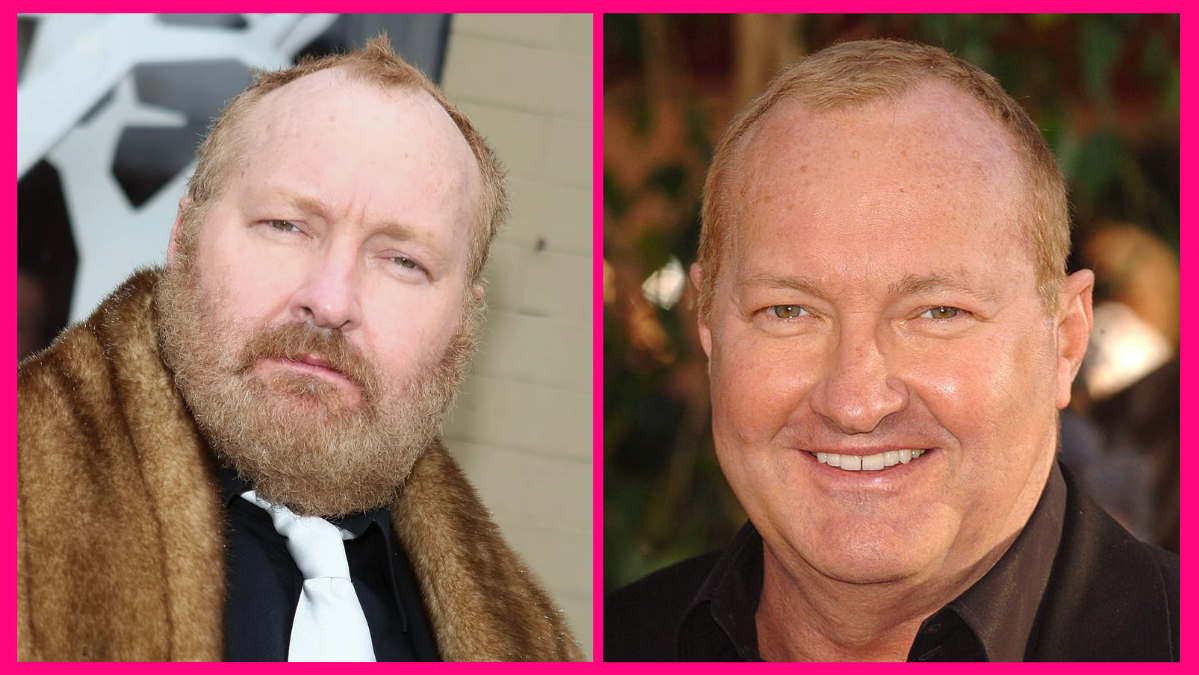
Randy Quaid is one of those performers whose face can instantly trigger a memory, whether it is Cousin Eddie standing beside his battered RV, a fearless pilot preparing to fight an alien invasion, or a complicated character in a serious drama. Born on October 1, 1950, in Houston, Texas, he developed a screen presence that could move comfortably between comedy, drama, satire, television, and blockbuster entertainment. His career has lasted for more than five decades, producing memorable performances, major award recognition, and a collection of characters that remain familiar to movie audiences.
What makes his story particularly interesting is the contrast between his early reputation as a highly respected dramatic actor and the enormous popularity he later gained through comedy. His Academy Award-nominated performance in The Last Detail established him as a serious young performer, while films such as National Lampoon’s Vacation, Christmas Vacation, Kingpin, and Independence Day introduced him to generations of mainstream viewers.
Early Life and the Beginning of His Acting Journey
Randy Quaid grew up in Texas in a family that would eventually become associated with Hollywood. He is the older brother of actor Dennis Quaid, but his own path into entertainment developed independently. He attended schools in Houston and later studied at the University of Houston, where his interest in acting began to take a serious direction. His early experiences helped him develop the confidence and unusual personality that would eventually become valuable assets on screen.
His breakthrough came when filmmaker Peter Bogdanovich noticed him while he was a student at the University of Houston. Bogdanovich cast him in The Last Picture Show, released in 1971. That opportunity was significant because the film became an acclaimed piece of American cinema and gave the young actor a chance to work alongside established performers. His early career quickly suggested that he was capable of much more than broad comedy or supporting appearances.
The experience also introduced a recurring theme in his career: he often played people who appeared ordinary, awkward, vulnerable, eccentric, or socially out of place. Rather than treating those characteristics as limitations, he turned them into strengths. His performances could feel understated one moment and surprisingly intense the next, giving even supporting characters a strong identity.
The Last Detail and His Early Dramatic Recognition
One of the most important films in Randy Quaid’s career was Hal Ashby’s The Last Detail, released in 1973. He portrayed Larry Meadows, a young sailor whose future is shaped by a military punishment. The film starred Jack Nicholson and Otis Young, placing Quaid in the company of major actors while giving him a demanding dramatic role. His performance earned an Academy Award nomination for Best Supporting Actor, along with Golden Globe and BAFTA recognition.
The role demonstrated why directors were willing to cast him in complicated character parts. Larry Meadows was not simply a comic figure or background player. He had innocence, fear, uncertainty, and emotional vulnerability. Quaid brought those qualities together without making the character feel artificial. The result helped establish him as an actor capable of making a substantial impression even when he was not the central star.
His early filmography continued to include respected projects such as The Apprenticeship of Duddy Kravitz, The Missouri Breaks, and Midnight Express. These films strengthened his reputation as a dependable character actor with an ability to work across genres.
Building a Reputation as a Versatile Character Actor
During the 1970s and early 1980s, Randy Quaid developed a style that was difficult to categorize. He could appear sympathetic and vulnerable, but he could also play intimidating, strange, or morally complicated characters. His physical presence was part of that appeal. Tall, broad, and expressive, he could dominate a scene without relying on traditional leading-man conventions.
This versatility became increasingly valuable as his filmography expanded. He appeared in dramas, thrillers, comedies, television productions, and stage projects. His work showed that character actors could move between very different forms of entertainment without losing their individuality.
Television also became an important part of his development. His performance in A Streetcar Named Desire earned a Primetime Emmy nomination in 1984, while his later portrayal of Lyndon B. Johnson in LBJ: The Early Years brought another Emmy nomination and a Golden Globe victory. The Television Academy lists three Emmy nominations for his work across A Streetcar Named Desire, LBJ: The Early Years, and Elvis.
Cousin Eddie and the National Lampoon Phenomenon
For many moviegoers, Randy Quaid became permanently associated with Cousin Eddie, the outrageous relative introduced in National Lampoon’s Vacation in 1983. The character was deliberately exaggerated, but Quaid’s performance made Eddie more than a collection of crude jokes. He gave the character a strange combination of confidence, friendliness, cluelessness, and loyalty.
Cousin Eddie became one of the defining supporting characters in the Vacation franchise. Quaid returned for National Lampoon’s Christmas Vacation, Vegas Vacation, and later National Lampoon’s Christmas Vacation 2: Cousin Eddie’s Island Adventure. His performance helped turn Eddie into a recognizable piece of American holiday-comedy culture.
The character’s popularity is particularly notable because Cousin Eddie was not designed as the traditional hero. Instead, he represented the unpredictable relative who arrives uninvited and somehow becomes the center of attention. Quaid understood the comedic rhythm perfectly. His timing, facial expressions, body language, and deadpan delivery allowed the character to become memorable without requiring complicated dialogue.
The enduring popularity of Christmas Vacation has kept that performance relevant decades after its original release. The film remains a holiday staple, and the character continues to appear in discussions of memorable Christmas movie personalities. In 2024, Quaid reunited with Chevy Chase for The Christmas Letter, demonstrating that audiences still associate him strongly with the comedy that helped define one part of his career.
From Comedy to Major Hollywood Blockbusters
The 1990s provided another major chapter in Randy Quaid’s career. He appeared in Days of Thunder, playing NASCAR team owner Tim Daland, and then took on the role of Ishmael in the cult comedy Kingpin. Both performances showed his ability to enter very different worlds while maintaining his distinctive screen personality.
His role in Independence Day became particularly important. Released in 1996, the science-fiction blockbuster featured Will Smith, Jeff Goldblum, Bill Pullman, and a large ensemble cast. Quaid played Russell Casse, a crop-duster pilot who becomes an unlikely participant in humanity’s fight against an alien invasion.
Russell was comic, damaged, courageous, and ultimately heroic. That mixture suited Quaid extremely well. He could make the character amusing without destroying the emotional stakes of the story. His final contribution to the battle gave the character a surprisingly memorable arc and helped make Russell Casse one of the more recognizable supporting figures in the movie.
The continuing popularity of Independence Day has ensured that this performance remains part of his cultural legacy. The movie celebrated its 30th anniversary in 2026, giving renewed attention to the original cast and their careers.
Kingpin, Brokeback Mountain, and Other Notable Performances
Randy Quaid also demonstrated his comic instincts in Kingpin, the 1996 bowling comedy directed by the Farrelly brothers. As Ishmael, an Amish bowler drawn into the competitive world of professional bowling, he created a character that was deliberately unusual but still emotionally accessible.
The performance illustrates an important quality in his acting: he rarely played eccentric characters as if they were simply jokes. Even when the material was exaggerated, he often gave the character an internal logic. That approach helped make his performances more memorable than a simple collection of comedic mannerisms.
In 2005, he appeared in Ang Lee’s acclaimed drama Brokeback Mountain as rancher Joe Aguirre. The role was considerably different from his familiar comedic work and demonstrated that he could still create tension and authority in a serious dramatic setting. His filmography from this period also included projects such as The Ice Harvest, Goya’s Ghosts, and Real Time.
His television work remained equally significant. His portrayal of Colonel Tom Parker in the 2005 miniseries Elvis earned him another Emmy nomination, as well as Golden Globe and other award recognition. The role allowed him to portray a larger-than-life entertainment figure with ambition, charm, calculation, and contradiction.
Awards and Professional Recognition
The awards history of Randy Quaid reflects how broad his career has been. Although audiences often remember him for comedy, the industry’s recognition of his dramatic work came much earlier and continued throughout his career.
| Award or Recognition | Project | Result |
|---|---|---|
| Academy Award | The Last Detail | Best Supporting Actor nomination |
| Golden Globe | The Last Detail | Supporting Actor nomination |
| BAFTA | The Last Detail | Supporting Actor nomination |
| Primetime Emmy | A Streetcar Named Desire | Supporting Actor nomination |
| Golden Globe | LBJ: The Early Years | Won |
| Primetime Emmy | LBJ: The Early Years | Lead Actor nomination |
| Primetime Emmy | Elvis | Supporting Actor nomination |
| Hollywood Walk of Fame | Career achievement | Star awarded in 2003 |
These honors show that his reputation was not built solely on commercial comedies. His early Oscar nomination for The Last Detail was a major achievement, while his Golden Globe win for LBJ: The Early Years demonstrated his strength in television drama.
His Hollywood Walk of Fame star was added in 2003, another indication of the lasting impact of his work. The official Walk of Fame listing identifies him as an actor recognized for roles in The Last Detail, the Vacation movies, Independence Day, Kingpin, and other productions.
A Career Defined by Unpredictability
One reason Randy Quaid remains an interesting Hollywood figure is that his career never followed a simple trajectory. He was initially recognized as a serious young actor, became an acclaimed television performer, turned into a major comedy presence, appeared in blockbuster movies, and later became known for increasingly unconventional public activity.
That unpredictability is reflected in his film choices. He could move from a prestigious drama to a broad comedy and then into a science-fiction blockbuster without appearing completely out of place. This is difficult for many performers, but his unusual personality made the transitions feel natural.
His acting style also benefited from his willingness to embrace characters who were flawed. Whether the role involved a confused relative, an eccentric athlete, an emotionally damaged pilot, or a powerful historical figure, he rarely seemed interested in presenting polished perfection. His characters often carried visible weaknesses, which gave them personality.
A useful description from the Los Angeles Times characterizes his career through roles involving “rangy rednecks, underachievers and shifty types,” a phrase that captures the unusual territory he occupied in American film.
Personal Life and Family
Randy Quaid’s personal life has attracted public attention over the years, particularly because of his marriage to Evi Quaid. The couple married in 1989 and have remained together for decades. His family history also includes his brother Dennis Quaid, who established his own successful acting career.
Before his marriage to Evi, Quaid was married to Amanda Marie Jolly. He has a daughter from that relationship, and later he and Evi became parents to adopted children. Public biographical sources have documented his family relationships alongside his long entertainment career.
The Quaid family name has therefore had a notable presence in American entertainment. While Dennis became widely known for leading roles in films and television, Randy developed a different niche based on character acting and distinctive supporting performances.
Public Controversies and Life Away From Hollywood
The later public image of Randy Quaid has been considerably more controversial than the one established during his most successful years in film. Legal disputes and other highly publicized incidents affected his relationship with Hollywood and contributed to a period when he appeared less frequently in mainstream productions. Contemporary coverage has often discussed these events alongside his political statements and unconventional public behavior.
These controversies should be considered separately from the quality and historical importance of his earlier acting work. A performer’s public life can change dramatically over several decades, while individual performances remain part of cinematic history.
In recent years, he has continued to make public comments about Hollywood and entertainment. In August 2026, for example, he attracted attention after criticizing the casting of Anne Hathaway in the upcoming Days of Thunder sequel and advocating for Nicole Kidman’s return to the franchise. Quaid appeared in the original 1990 movie as Tim Daland, but there has been no confirmation that he will reprise the role in the planned 2028 sequel.
The Lasting Appeal of His Most Famous Roles
The lasting appeal of Randy Quaid’s best-known characters comes from their imperfections. Cousin Eddie is irresponsible but strangely generous. Russell Casse is damaged but brave. Ishmael is innocent and eccentric but determined. His dramatic characters often carry a similar tension between vulnerability and strength.
That quality helps explain why his work continues to circulate through streaming platforms, television reruns, holiday programming, retrospectives, and anniversary coverage. Audiences may remember a character long after forgetting the actor’s other credits, and Quaid created several characters with that kind of staying power.
His career also demonstrates how important supporting actors can be to the success of major movies. A memorable supporting performance can give a film texture, humor, emotional contrast, or even a scene that audiences remember more vividly than the central plot.
Why His Acting Style Still Stands Out
The appeal of Randy Quaid’s acting lies partly in his physical expressiveness. He can communicate confusion, arrogance, fear, warmth, and irritation through posture and facial expression before delivering a line. That quality makes his performances particularly effective in comedy, where timing and reaction can be as important as dialogue.
At the same time, his dramatic work proves that his abilities extend well beyond comic performance. His Oscar-nominated work in The Last Detail and his award-winning portrayal of Lyndon Johnson showed an actor capable of emotional restraint, historical characterization, and serious dramatic commitment.
His career is therefore best understood as a combination of character acting, comedy, drama, television, and blockbuster filmmaking. Reducing him to Cousin Eddie overlooks the substantial body of work that came before and after that role.
Randy Quaid’s Place in American Film History
Looking at Randy Quaid’s full career reveals a performer who has occupied a unique space in American cinema. He was never dependent on conventional leading-man roles. Instead, his strength came from making unusual people believable and memorable.
From the early 1970s through major productions of the 1990s and acclaimed television projects of the 2000s, he worked with respected directors and major stars. His credits include films by filmmakers such as Hal Ashby, Peter Bogdanovich, Ang Lee, Milos Forman, and the Farrelly brothers.
The most important measure of a long acting career is often not the number of starring roles but the number of performances that remain recognizable. By that measure, his legacy is substantial. Cousin Eddie became a holiday icon, Russell Casse became part of a blockbuster phenomenon, and his dramatic performances earned some of the industry’s most important honors.
His career also serves as an example of how Hollywood can reward individuality. He did not fit neatly into one category, and that became part of his advantage. His unusual combination of size, comic timing, emotional vulnerability, and intensity gave directors a tool that was difficult to duplicate.
Frequently Asked Questions About Randy Quaid
What is Randy Quaid best known for?
Randy Quaid is best known for playing Cousin Eddie in the National Lampoon’s Vacation franchise. He is also widely recognized for roles in The Last Detail, Independence Day, Kingpin, Days of Thunder, and Brokeback Mountain.
His career is broader than his most famous comedy character, however. He earned an Academy Award nomination for The Last Detail, won a Golden Globe for portraying Lyndon B. Johnson, and received three Primetime Emmy nominations across several television projects.
When was Randy Quaid born?
Randy Quaid was born on October 1, 1950, in Houston, Texas. He grew up in Texas and later attended the University of Houston, where filmmaker Peter Bogdanovich discovered him as a student.
His early connection with Bogdanovich led to a role in The Last Picture Show, helping launch a professional acting career that would eventually span more than five decades.
Did Randy Quaid win an Oscar?
Randy Quaid did not win an Academy Award, but he received an Oscar nomination for Best Supporting Actor for his performance in The Last Detail. The nomination came early in his career and established him as a serious dramatic performer.
He received additional recognition from the Golden Globes and BAFTAs for the same performance. Later, he won a Golden Globe for LBJ: The Early Years, adding another major award to his résumé.
Is Randy Quaid related to Dennis Quaid?
Yes. Randy Quaid and Dennis Quaid are brothers, and both became professional actors. Randy developed a reputation primarily as a character actor, while Dennis became known for a wide range of leading and supporting roles in film and television.
Their careers have sometimes been discussed together because of their shared family background, but each actor established a distinct identity within the entertainment industry.
What happened to Randy Quaid’s Hollywood career?
Randy Quaid’s mainstream acting career became less consistent after the height of his success in major films and television productions. Legal controversies and highly publicized personal and political activity also affected his public profile and relationship with Hollywood.
Nevertheless, his earlier performances remain widely recognized. His roles in National Lampoon’s Vacation, Christmas Vacation, Independence Day, Kingpin, and The Last Detail continue to define a substantial part of his cinematic legacy.
Conclusion
Randy Quaid has built one of the more distinctive careers in American entertainment. His journey began with serious dramatic work, developed through acclaimed television performances, expanded into comedy, and reached enormous mainstream audiences through films such as Independence Day and the National Lampoon’s Vacation series.
What makes his legacy particularly interesting is the range of characters he has played. He could be hilarious without becoming disposable, dramatic without losing his individuality, and eccentric without sacrificing emotional depth. That balance helped him create performances that audiences still remember decades later.
His career has also contained significant controversy and periods away from mainstream Hollywood, but those later developments do not erase the artistic achievements of his earlier work. An Oscar nomination, a Golden Globe win, multiple Emmy nominations, a Hollywood Walk of Fame star, and numerous memorable film characters represent a substantial contribution to American popular culture.
Ultimately, his most enduring achievement may be the ability to make supporting characters feel essential. Whether audiences encounter him in a holiday comedy, a science-fiction blockbuster, a historical television drama, or a serious film, there is usually something unmistakably individual about the performance. That distinctive quality is why his work continues to attract attention long after many of his films first reached theaters.
Meta Description: Randy Quaid’s life, career, famous movies, awards, Cousin Eddie legacy, family, controversies, and lasting impact on Hollywood.
Read also John Galliano: The Extraordinary Career, Creative Genius, and Complicated Legacy of a Fashion Icon
