



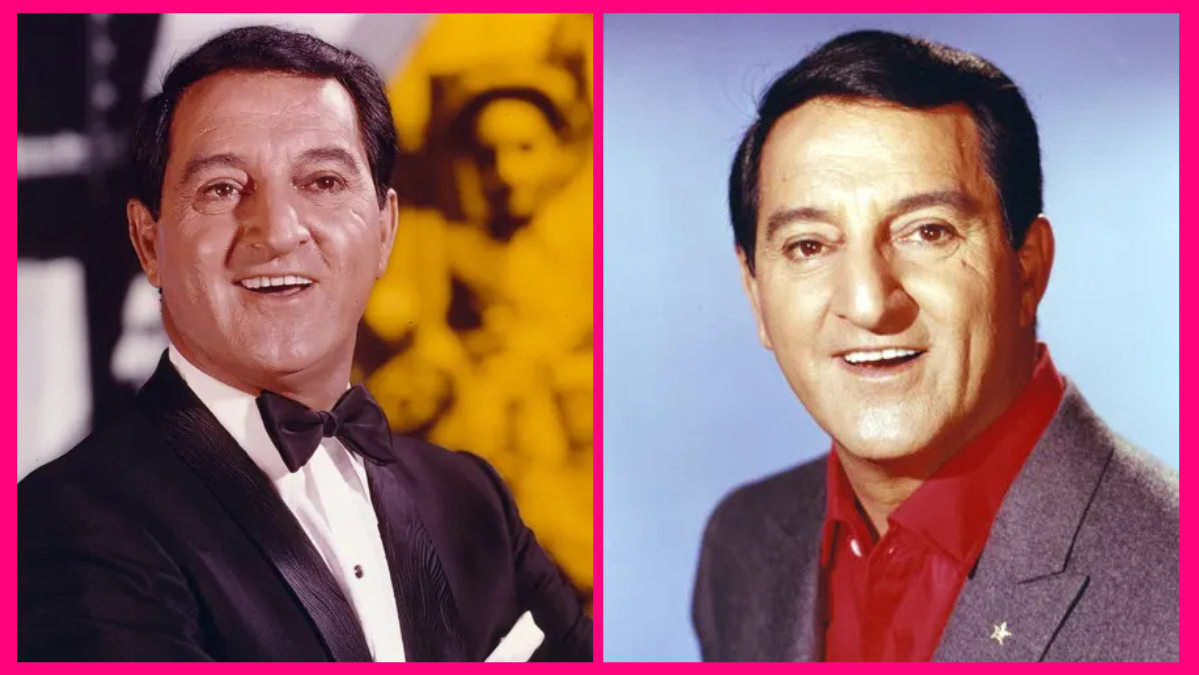
Danny Thomas was far more than a successful American entertainer. He was a comedian, actor, television producer, philanthropist, and visionary whose greatest achievement ultimately had little to do with Hollywood. Best remembered as the creator of St. Jude Children’s Research Hospital, he transformed his personal struggles and ambitions into a mission that would change the lives of countless children and families.
Born Amos Muzyad Yaqoob Kairouz in 1912, he rose from modest circumstances to become one of the most recognizable entertainers of mid-20th-century America. His journey included radio, nightclub performances, television success, and the creation of one of the world’s best-known pediatric research institutions.
The story of Danny Thomas is especially compelling because his career demonstrates how entertainment fame can be used to pursue something much larger than personal success. His name became closely connected with generosity, medical research, childhood cancer treatment, and the belief that families facing devastating illnesses should receive hope as well as care.
Early Life and Family Background
Danny Thomas was born on January 6, 1912, in Deerfield, Michigan, to Lebanese-American parents. His family later moved to Toledo, Ohio, where he grew up in a working-class environment. His birth name reflected his family’s Middle Eastern heritage, while his eventual stage name became famous across the United States.
Growing up during a period when financial security could be difficult to achieve, Thomas learned early about perseverance and hard work. His family was part of a close-knit immigrant community, and those experiences influenced his values throughout his life. Faith, family, generosity, and determination would repeatedly appear in both his personal philosophy and his professional decisions.
Thomas experienced the challenges of building a career without the advantages enjoyed by established entertainers. Before television made him a household name, he worked in radio and performed in clubs. These years were important because they helped him develop the conversational comedy style that later became one of his trademarks.
How Danny Thomas Built His Entertainment Career
The entertainment industry of the 1930s and 1940s was highly competitive, but Thomas gradually established himself through radio, nightclub appearances, and comedy performances. Rather than becoming famous overnight, he spent years learning how to connect with audiences.
His humor was generally built around personality, timing, everyday situations, and the character he created for himself. That approach proved particularly effective when television became a major force in American entertainment. Thomas had the warmth and comedic timing necessary to make audiences feel as though they knew him personally.
His breakthrough on television came with The Danny Thomas Show, originally known as Make Room for Daddy. The sitcom premiered in 1953 and became a major success. Thomas played Danny Williams, an entertainment-industry father whose family life supplied much of the show’s humor and emotional storytelling.
The series eventually became one of the defining sitcoms of its era. It also helped establish Thomas as more than a comedian. He became a producer and an important figure in television, contributing to the development of other successful programs.
The Danny Thomas Show and Television Success
The Danny Thomas Show ran for many years and became an important part of American television history. Its popularity reflected Thomas’s ability to combine comedy with family-centered stories that were accessible to a broad audience.
The show’s success also gave him considerable influence within the entertainment business. He worked with talented performers and production professionals and became involved in projects beyond his own starring role. His television career helped him build the resources and connections that would later support his philanthropic ambitions.
One of the show’s notable contributions to television history was the introduction of memorable supporting characters and spin-off opportunities. Make Room for Daddy helped lead to The Andy Griffith Show through the introduction of Andy Taylor, played by Andy Griffith, demonstrating Thomas’s importance as a producer as well as a performer.
This combination of acting, producing, and business experience made his career unusually versatile. He was not simply a television star; he understood how entertainment could be developed, packaged, and presented to large audiences.
Personal Faith and the Inspiration Behind St. Jude
The most important chapter of Thomas’s life developed from a deeply personal spiritual commitment. According to the story he told throughout his life, Thomas experienced financial hardship when he was a young entertainer and turned to Saint Jude Thaddeus, the patron saint of desperate and seemingly impossible causes.
Thomas promised that if he found success, he would build a shrine dedicated to Saint Jude. As his entertainment career progressed, he increasingly felt that his promise should take a practical form.
Instead of simply creating a traditional religious shrine, he envisioned something that could provide direct help to children. That idea eventually became St. Jude Children’s Research Hospital in Memphis, Tennessee.
The concept was groundbreaking. Thomas wanted children with serious illnesses to receive advanced treatment regardless of their family’s ability to pay. This principle became central to the institution’s identity.
A famous statement associated with his philosophy captures the idea behind his philanthropy: “Success in life has nothing to do with what you gain in life or accomplish for yourself. It’s what you do for others.” Whether viewed as a personal motto or a summary of his charitable philosophy, the sentiment closely reflects the mission he pursued.
St. Jude Children’s Research Hospital
St. Jude Children’s Research Hospital opened in 1962 in Memphis. Its creation represented an extraordinary commitment because pediatric cancer treatment was still very different from what it is today. Many childhood cancers had poor survival rates, and families often faced both medical uncertainty and overwhelming financial pressure.
Thomas wanted St. Jude to approach these challenges differently. The institution combined medical treatment with research, creating an environment where physicians and scientists could work together to understand childhood diseases and develop better therapies.
The hospital also adopted a powerful financial principle: families would not be billed for treatment, travel, housing, or food associated with their child’s care. This model helped make the institution distinctive and allowed parents to focus on their children rather than medical bills.
The hospital’s work eventually expanded beyond childhood cancer to include serious pediatric diseases such as sickle cell disease and other life-threatening conditions.
Key Facts About Danny Thomas
| Category | Details |
|---|---|
| Birth name | Amos Muzyad Yaqoob Kairouz |
| Born | January 6, 1912 |
| Birthplace | Deerfield, Michigan, United States |
| Profession | Actor, comedian, producer, philanthropist |
| Best-known TV role | Danny Williams in The Danny Thomas Show |
| Major charitable achievement | Founded St. Jude Children’s Research Hospital |
| St. Jude opening | 1962 |
| Wife | Rose Marie Cassaniti |
| Children | Marlo, Terre, and Tony Thomas |
| Died | February 6, 1991 |
| Legacy | Entertainment career and pediatric medical philanthropy |
A New Model for Pediatric Medical Care
The importance of Thomas’s vision went beyond establishing a hospital. St. Jude helped popularize an integrated approach in which medical research and patient care could exist together under one institution.
Researchers could study diseases while physicians treated patients. Discoveries made in laboratories could potentially be translated into treatments, while lessons from patients could inform future research.
This approach has become an important part of modern medical research, but when St. Jude opened, the concept represented a particularly ambitious undertaking. Thomas understood that improving outcomes for children required more than charitable donations alone. It required scientific progress.
The institution’s long-term influence can be measured not simply by the number of children treated but also by its contributions to pediatric medicine. St. Jude has become internationally recognized for research into childhood cancer and other catastrophic diseases.
Danny Thomas and His Family
Thomas married Rose Marie Cassaniti, and the couple had three children: Marlo, Terre, and Tony. His family later became involved in entertainment, creating a remarkable multigenerational connection to Hollywood.
Marlo Thomas became a celebrated actress, author, and philanthropist in her own right. She eventually became closely associated with St. Jude and served as National Outreach Director for the hospital’s fundraising organization.
Tony Thomas built a major career as a television and film producer. His credits include numerous popular productions, allowing the Thomas family name to remain connected with the entertainment industry long after Danny’s own career ended.
Terre Thomas also worked in entertainment and philanthropy. The family’s continued involvement with St. Jude helped preserve the connection between the institution and the values established by its founder.
Danny Thomas as a Philanthropist
What distinguished Thomas’s philanthropy was its practical focus. He did not simply donate money to existing organizations. He identified a problem, developed a vision, and built an institution around that vision.
His fundraising efforts became an important part of St. Jude’s development. He used his celebrity status to attract public attention, encourage donations, and persuade other entertainers and public figures to support the cause.
This was an early example of celebrity philanthropy being used strategically. Thomas recognized that fame could function as a form of public influence. Rather than allowing his celebrity to exist only as entertainment value, he used it to generate awareness and financial support for medical research.
His approach also emphasized the emotional reality of childhood illness. Families needed more than scientific breakthroughs; they needed reassurance that treatment would be available without destroying their financial future.
His Influence on Celebrity Philanthropy
Thomas’s legacy can also be viewed through the evolution of celebrity charity. Modern entertainers frequently establish foundations, support hospitals, participate in fundraising campaigns, and use public platforms to draw attention to social causes.
Thomas was part of an earlier generation that helped demonstrate how entertainment figures could mobilize audiences around charitable missions. His work with St. Jude provided a model in which a celebrity’s personal story and public identity became connected to a long-term institutional cause.
The success of this model was partly due to the clarity of the mission. Donors understood what their contributions were intended to accomplish: helping children with severe illnesses and advancing research that could improve future treatments.
This direct connection between fundraising and medical care helped make St. Jude one of the most recognizable charitable healthcare organizations in the United States.
Awards, Honors, and Professional Recognition
Thomas received significant recognition during his lifetime for both entertainment and humanitarian work. His television career earned him widespread popularity, while his philanthropic efforts eventually became the defining part of his public legacy.
He received a number of honors recognizing his contribution to American entertainment and charitable causes. His career demonstrated unusual longevity, moving successfully from radio and live performance into television and production.
However, awards alone do not fully explain his historical importance. His greatest achievement was the creation of an institution that continued operating and expanding decades after his death.
That distinction matters because many entertainers are remembered primarily for performances. Thomas is remembered for performances, but also for an institution designed to outlive him.
Danny Thomas’s Later Years
During his later years, Thomas remained closely connected to St. Jude and continued supporting its mission. By then, the hospital had developed into a major pediatric research and treatment center.
His personal story had also become closely associated with the institution. Fundraising campaigns frequently referred to the values and vision that inspired its creation, helping introduce new generations to the reason the hospital existed.
Thomas died on February 6, 1991, at the age of 79. His death marked the end of a remarkable entertainment career, but it did not mark the end of his most important project.
St. Jude continued to grow, expanding its research programs, treatment capabilities, fundraising network, and international influence.
The Lasting Legacy of Danny Thomas
The enduring legacy of Danny Thomas rests on a simple but powerful idea: success becomes more meaningful when it is used to improve the lives of others.
His story is unusual because his greatest achievement emerged from a combination of entertainment, personal faith, business experience, and philanthropy. He did not abandon Hollywood when he became involved with charity. Instead, he used the skills and relationships he had developed in entertainment to build support for a medical mission.
St. Jude became the physical expression of that mission. Its work continues to focus on children facing devastating diseases while advancing research intended to improve survival and quality of life.
The broader significance of his legacy is therefore much larger than a biography of a television star. It is a story about how one person’s ambition can evolve into an institution whose influence continues across generations.
Why St. Jude Remains So Closely Connected to His Name
Even decades after his death, the founder’s story remains central to the identity of St. Jude. The hospital represents the promise Thomas made when he was still a struggling entertainer and the way he ultimately fulfilled it.
The institution’s mission also reflects the values he emphasized throughout his life: compassion, generosity, scientific progress, and equal access to treatment. Families do not have to choose between seeking care and facing financial devastation.
That principle has helped St. Jude become one of the most recognizable names in pediatric healthcare. Its fundraising campaigns have reached millions of people, while its research has influenced medical understanding far beyond Memphis.
In this sense, Thomas’s most important performance was not on a television stage. It was the creation of a lasting public commitment to children and families facing extraordinary circumstances.
Danny Thomas in Popular Culture
Thomas remains an important figure in television history because The Danny Thomas Show helped define the family sitcom during the golden age of American television. The series combined comedy, domestic situations, and recurring characters in a format that influenced later sitcoms.
His role as Danny Williams also helped establish the image of the entertainer balancing professional commitments with family responsibilities. The character was comedic but recognizable, giving audiences a fictionalized version of the pressures faced by working parents.
Television historians continue to regard the series as an important part of the development of American sitcoms. Its connections to other successful programs also demonstrate the reach of Thomas’s influence as a producer.
Yet his cultural image ultimately became broader than television. Today, many people who may never have watched his sitcom know his name because of St. Jude.
Frequently Asked Questions
Who was Danny Thomas?
Danny Thomas was an American comedian, actor, television producer, and philanthropist who became famous through radio, nightclub performances, and television. He starred in The Danny Thomas Show, one of the major sitcoms of the 1950s and 1960s. He is also remembered as the founder of St. Jude Children’s Research Hospital.
What was Danny Thomas’s real name?
His birth name was Amos Muzyad Yaqoob Kairouz. He adopted the professional name Danny Thomas as he developed his entertainment career. The stage name eventually became internationally recognized through his work in comedy and television.
Why did Danny Thomas establish St. Jude Children’s Research Hospital?
Thomas established St. Jude as a way of fulfilling a personal promise connected to his faith and his belief in helping people facing desperate circumstances. He envisioned a hospital where children with serious illnesses could receive advanced treatment regardless of their families’ ability to pay.
When did St. Jude Children’s Research Hospital open?
St. Jude Children’s Research Hospital opened in Memphis, Tennessee, in 1962. From its beginning, the institution combined patient treatment with medical research and operated under the principle that families should not be charged for the cost of their child’s treatment.
Who were Danny Thomas’s children?
Thomas and his wife, Rose Marie Cassaniti, had three children: Marlo Thomas, Terre Thomas, and Tony Thomas. All became involved in entertainment or philanthropic activities, with Marlo becoming particularly prominent in supporting the St. Jude mission.
What is Danny Thomas best remembered for?
Although his television career made him a household name, his lasting reputation is strongly connected to St. Jude Children’s Research Hospital. His ability to turn entertainment success into sustained medical philanthropy is the central feature of his legacy.
Conclusion: A Legacy Bigger Than Hollywood
Danny Thomas built a successful career during one of the most transformative periods in American entertainment, but his greatest contribution extended far beyond television screens. From modest beginnings, he became a nationally recognized entertainer and then used that success to pursue a deeply personal philanthropic mission.
The creation of St. Jude Children’s Research Hospital transformed his vision into a lasting institution dedicated to children with serious illnesses. Its combination of research, treatment, and financial support for families reflected an unusually ambitious approach to healthcare.
His career remains a reminder that public success can be measured in more than ratings, awards, or financial achievements. Thomas left behind an institution that continued working toward better treatments and greater hope for children long after his death.
For that reason, the story of Danny Thomas remains relevant today. His entertainment career explains how he became famous, but his commitment to helping children explains why his name continues to matter.
Read also Elizabeth Holmes: The Rise, Fall, and Lasting Legacy of the Theranos Founder
