



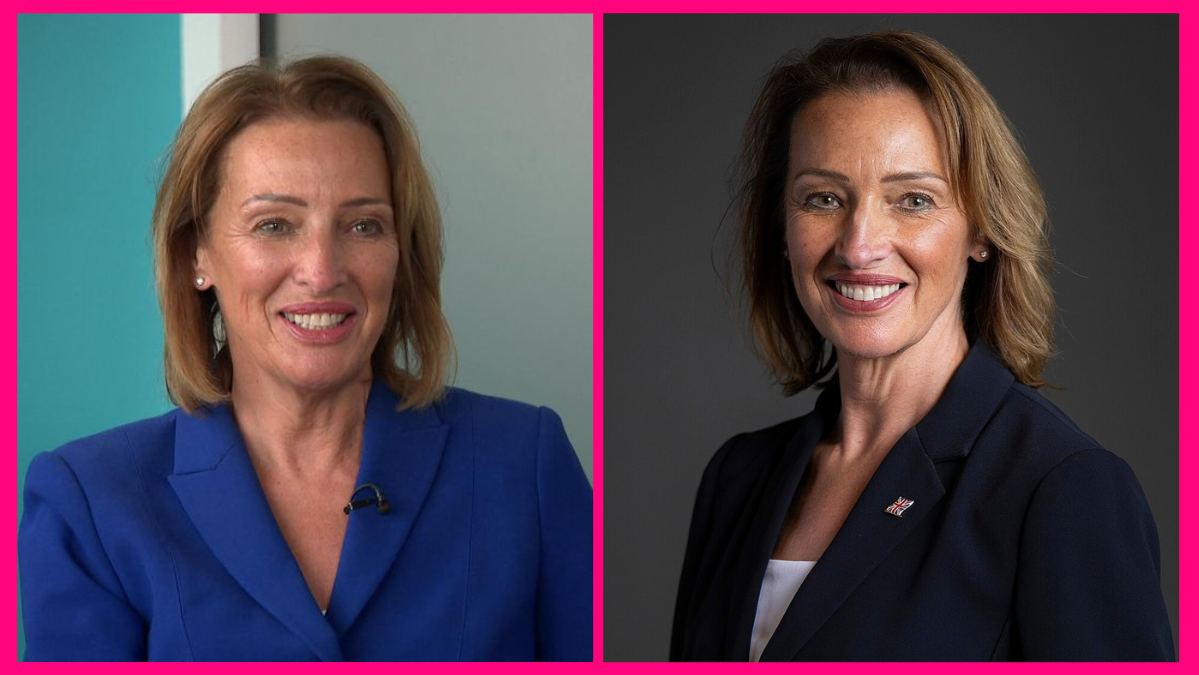
Few politicians arrive in Westminster with a story as dramatic as the one attached to Sarah Pochin. In May 2025 she took the Runcorn and Helsby seat for Reform UK by a margin so thin that it was almost impossible to believe. Six votes separated her from the Labour candidate, which made it one of the closest parliamentary contests in modern British history.
That result turned a relatively low-profile Cheshire councillor and magistrate into a national name almost overnight. This article walks through who she is, how she got here, what she believes, and why her name keeps popping up in political conversations across the country.
Who Is Sarah Pochin?
Before she became an MP, Pochin built a career that was rooted firmly in local life. She has lived in Cheshire for close to thirty years and worked in private business before moving into public service. For about two decades she sat as a magistrate, hearing cases in the Chester and Crewe courts, a role that tends to give people a grounded, practical view of how the justice system really works.
Her political career began at council level. She served as a Cheshire East borough councillor from 2015 until 2023, and between 2021 and 2022 she held the ceremonial position of mayor and council chair. During those years she was a Conservative, which makes her later move to Reform UK one of the more interesting parts of her story.
From Conservative Councillor to Reform UK Candidate
Pochin’s switch from the Conservatives to Reform UK did not happen in a vacuum. Across England, plenty of former Tory voters and activists had grown frustrated with the party and were drifting toward Nigel Farage’s movement. Pochin was part of that wave, and she was open about her reasons. In a video message she said simply that Reform UK represented her values.
When Mike Amesbury resigned as MP for Runcorn and Helsby after being convicted of assault, Reform needed a candidate who looked credible, local, and experienced. Pochin ticked every box. Farage introduced her as a candidate with a successful business background and twenty years of service as a magistrate, adding that she had stepped down from the bench to contest the seat. His message for voters was blunt: “Runcorn and Helsby needs Reform.”
The By-Election That Shocked Westminster
The numbers tell the story better than any commentary could. Labour had won the seat in 2024 with a majority of almost 14,700, which most analysts considered a comfortable cushion. A by-election was never going to be a walkover for the governing party, but few expected the contest to be decided by a handful of ballots.
When the result was declared, Pochin had won by just six votes. Recounts, tense counting-hall scenes, and a wave of national media attention followed. For Reform UK, the victory was a morale boost and proof that the party could win in a seat that Labour had treated as safe. For Labour, it was a bruising warning about voter patience.
Key Facts at a Glance
Readers searching for quick details often want a simple summary before they dive deeper. The table below pulls together the main points about her career and political milestones in one place.
| Detail | Information |
|---|---|
| Full name | Sarah Pochin |
| Current party | Reform UK |
| Previous party | Conservative |
| Constituency | Runcorn and Helsby, Cheshire |
| How she entered Parliament | By-election victory in May 2025 |
| Winning margin | Six votes |
| Predecessor | Mike Amesbury (Labour) |
| Previous roles | Magistrate, Cheshire East councillor, mayor of Cheshire East |
| Historic note | First female MP for Reform UK |
The table makes one thing clear: her résumé is far more local and traditional than the headlines suggest. She is not a political outsider in the usual sense, but a long-serving public figure who changed teams at the right moment.
Taking Her Seat in the Commons
Pochin’s first day in Parliament was full of ceremony. She walked into the chamber alongside Nigel Farage and chief whip Lee Anderson, took the oath of allegiance, and became Reform UK’s newest member. Even political opponents extended a courtesy. Health Secretary Wes Streeting welcomed her to the House with the line, “Despite my best efforts, can I welcome the member for Runcorn and Helsby.”
That small moment captured something about British politics: fierce rivalry in public, a measure of politeness in the chamber. Since then, she has joined a growing Reform group that also includes defectors from other parties, among them former Conservative minister Suella Braverman, who crossed over in January 2026. Being the first woman in the group meant that Pochin carried a symbolic weight that went beyond her individual votes.
Her Politics and Public Positions
Pochin’s views sit squarely within the mainstream of Reform UK’s platform, which emphasises national identity, tighter immigration control, and a more assertive approach to law and order. Her background as a magistrate informs the way she talks about crime and sentencing, and she often frames her arguments around community safety and practical common sense rather than abstract ideology.
At the same time, she has shown a willingness to say things that go further than the party line. That has given her a reputation as a plain-speaking MP, admired by supporters who like unfiltered talk and criticised by opponents who see it as careless. Whether that style helps or hurts her in the long run will depend heavily on how it plays in her constituency, where voters judge MPs by local results rather than national soundbites.
The Burqa Question and Internal Reform Tensions
Her most widely discussed moment came in the autumn of 2025, when she used her first question at Prime Minister’s Questions to call for a nationwide ban on the burqa. The intervention caused an immediate stir, not only among opposition parties but inside Reform UK itself. Party chairman Zia Yusuf publicly described the question as “dumb,” while chief whip Lee Anderson showed more sympathy for the idea.
A party spokesperson later stressed that a burqa ban was not official policy, though it was an issue that deserved national debate. Pochin suggested the question had come from public suggestions sent in online. The episode showed how a single sentence in the Commons can expose the fault lines inside a young, fast-growing party, and it reminded observers that Reform’s internal debates are often as newsworthy as its battles with rivals.
Security, Family, and Life as an MP
Life as a modern MP is not only about debates and votes. Pochin has spoken candidly about the personal cost of the job, including heightened security arrangements for Reform MPs and the effect those measures have on her family. She has two adult sons, and she has said they worry about her and have urged her to consider leaving politics.
She has also described Westminster as one of the most chauvinistic workplaces she has ever experienced, a striking comment from someone who spent years in courts and councils. These remarks add a human layer to her public profile and show that behind the headlines is a woman balancing duty, family concern, and a demanding career in the spotlight.
Why Runcorn and Helsby Matters Nationally
The seat itself has become a symbol. Runcorn and Helsby is a mix of industrial heritage, commuter towns, and rural pockets, which makes it a useful barometer for broader public mood. A constituency that swings from a near-15,000 Labour majority to a six-vote Reform win in under a year invites analysis from every corner of the political spectrum.
For Reform UK, holding the seat at the next general election will be a serious test. Pochin will need to convert a razor-thin win into a lasting local relationship, and that means constituency casework, visibility, and delivery matter more than headlines. For rival parties, the seat is a prime target, and expectations are high that it will see an intense campaign whenever voters next go to the polls.
What Her Rise Says About British Politics
The story of Pochin is really a story about a changing electorate. Voters have become less loyal to traditional parties, more willing to experiment, and more responsive to messages about identity, immigration, and trust in institutions. A former Conservative councillor winning a former Labour stronghold for a third party is exactly the kind of result that would have sounded absurd a decade ago.
It also highlights how important individual candidates can be. A credible local figure with a long record of public service can do something a national slogan cannot: reassure voters that a new party is a safe choice. Whatever one thinks of her policies, that ability to connect with local voters explains a great deal about her success.
Conclusion
Sarah Pochin’s journey from Cheshire magistrate and Conservative councillor to Reform UK’s first female MP is one of the more remarkable recent stories in British politics. A six-vote victory, a headline-grabbing question in the Commons, and a spot in a fast-growing parliamentary group have made her impossible to ignore.
What happens next is still unwritten. Her influence will depend on how well she serves her constituents, how Reform UK manages its internal debates, and how voters feel when the next election arrives. For now, she remains a fascinating case study in how modern politics can turn on the smallest margins.
Frequently Asked Questions
Who is Sarah Pochin?
She is the Reform UK Member of Parliament for Runcorn and Helsby in Cheshire. Before entering Parliament she worked in private business, served as a magistrate for roughly twenty years, and held roles as a Cheshire East councillor and mayor.
How did she win the Runcorn and Helsby by-election?
Pochin won by just six votes in May 2025, defeating the Labour candidate after Mike Amesbury resigned following an assault conviction. Labour had held the seat with a huge majority the previous year, which made the result especially dramatic.
Was she always a member of Reform UK?
No. She was previously a Conservative and served on Cheshire East Council under that banner. She later joined Reform UK, saying the party reflected her values better, and became its first female MP after the by-election.
Why did her burqa ban question cause controversy?
She raised the idea of a nationwide ban during Prime Minister’s Questions, and the comment drew criticism from within her own party as well as from opponents. Reform UK said the idea was not official policy, although it described the topic as one worth debating nationally.
What is Sarah Pochin’s background before politics?
Her career before Westminster combined business experience with long service as a Justice of the Peace in Chester and Crewe. That mix of commercial and judicial experience is a central part of how she presents herself to voters.
Why is her victory considered so significant?
A six-vote margin makes it one of the narrowest wins in parliamentary history, and it overturned a Labour majority of nearly 14,700 in less than a year. For many analysts, it showed how volatile voter loyalty has become across England.
Read also Is Lucy Letby Innocent? What the Evidence, Experts and Courts Actually Say
