



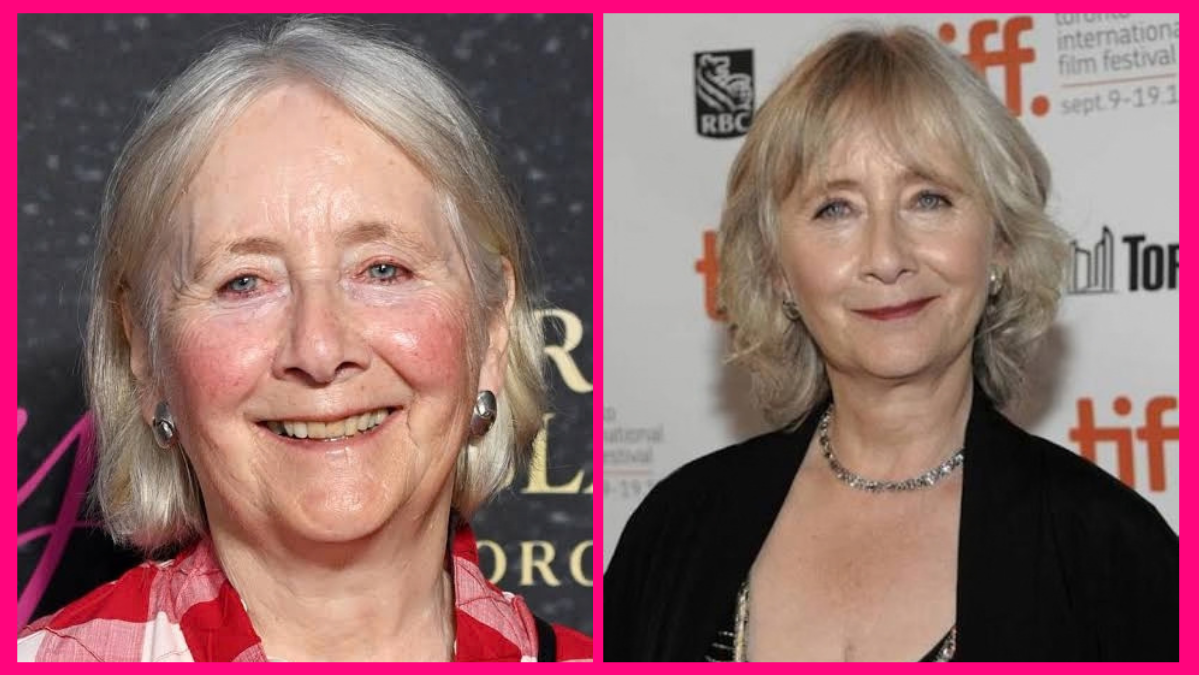
Gemma Jones is one of Britain’s most respected actresses, with a career that has stretched across stage, television and film for more than six decades. Born on 4 December 1942 in Marylebone, London, she has built a reputation for bringing warmth, intelligence and emotional depth to characters ranging from classic literary figures to modern family matriarchs.
For many viewers, she is instantly recognisable as Mrs Dashwood in Sense and Sensibility, Madam Pomfrey in the Harry Potter films, and Pamela Jones, Bridget Jones’s mother, in the popular Bridget Jones franchise. Her work, however, extends far beyond these famous parts. She has appeared in acclaimed television dramas, prestige films and numerous stage productions, demonstrating a remarkable ability to move comfortably between different forms of acting.
Her career is particularly interesting because it combines traditional British theatre training with an impressive screen presence. Rather than relying on one defining role, she has accumulated a body of work in which seemingly small appearances often become memorable. Her voice, expressive face and understated delivery have made her a natural fit for character-driven stories.
Early Life and Acting Background
Gemma Jones was born Jennifer R. Jones in London and grew up in a family with strong connections to the entertainment world. Her father was the actor Griffith Jones, while her brother Nicholas Jones also pursued acting. This family background gave her an early connection to the profession, although her eventual career was shaped by her own training and talent.
She studied at the Royal Academy of Dramatic Art, commonly known as RADA, one of the United Kingdom’s most prestigious drama schools. Formal theatre training helped establish the disciplined approach that would later become evident in her performances. Her work has often been praised for feeling natural while retaining the precision associated with a highly trained stage performer.
The early years of her career were strongly connected with British theatre and television. This was an era when actors were frequently expected to move between repertory theatre, television plays and major stage productions. That experience gave Jones a broad acting vocabulary and helped prepare her for the varied roles that would follow.
Her connection with classic drama has remained an important part of her professional identity. She has worked with material from writers such as William Shakespeare and Jane Austen, while also taking on contemporary stories. That balance between classical and modern performance has become one of the defining features of her career.
Career at a Glance
The scale of her career can be seen by looking at some of the productions that have defined different periods of her work.
| Career area | Notable work | Why it stands out |
|---|---|---|
| Film | Sense and Sensibility | Memorable performance as Mrs Dashwood |
| Film | Bridget Jones series | Established her as Bridget’s mother |
| Film | Harry Potter series | Played Madam Pomfrey |
| Television | The Duchess of Duke Street | Early acclaimed television work |
| Television | Marvellous | Earned her a BAFTA for Supporting Actress |
| Television | Gentleman Jack | Played Aunt Anne Lister |
| Film | Wicked Little Letters | Part of a celebrated modern British comedy-drama cast |
| Stage | British theatre productions | Built the foundation of her long career |
This range is important because it shows why describing her simply as a film actress would be incomplete. Her career has developed across several generations of British entertainment, with each period adding something new to her professional profile.
Breakthrough Television Work
Television played a major role in establishing Gemma Jones as a household name in Britain. One of her notable early successes came with The Duchess of Duke Street, a BBC drama that became an important part of her television career. She also received early BAFTA recognition for her television performances, including nominations during the 1970s.
Her early television work demonstrated a quality that would remain consistent throughout her career: she could make supporting characters feel substantial. Even when she was not the central figure in a story, her performances could provide emotional context and credibility to the surrounding cast.
This is one reason her career has remained so durable. Some performers become strongly associated with a particular decade, while Jones has repeatedly adapted to changing television styles. She has appeared in period dramas, crime productions, literary adaptations and contemporary series without losing the distinctive quality of her performances.
Her television career also helped establish her as an actress who could handle both serious drama and lighter material. This versatility later became especially useful when she began appearing in major international film franchises.
Sense and Sensibility and the Rise of Her Film Career
One of the most important films in her career was Ang Lee’s 1995 adaptation of Jane Austen’s Sense and Sensibility. Jones played Mrs Dashwood, the mother of Elinor, Marianne and Margaret Dashwood. The film starred Emma Thompson, Kate Winslet, Hugh Grant and Alan Rickman and became a major critical and commercial success.
As Mrs Dashwood, Jones brought emotional warmth to a character facing financial uncertainty and major changes in family life. Her performance fitted naturally into the film’s ensemble structure, allowing the character to feel affectionate without becoming overly sentimental.
The film also demonstrated why Jones was so effective in literary adaptations. She understood how to communicate character through small gestures and carefully controlled dialogue rather than relying on exaggerated emotion. That subtlety is particularly valuable in period drama, where social conventions often prevent characters from expressing their feelings directly.
Her role in Sense and Sensibility remains one of the most frequently remembered entries in her filmography and helped introduce her work to audiences far beyond Britain.
Becoming Madam Pomfrey in Harry Potter
A new generation discovered Gemma Jones through the Harry Potter film series, in which she played Madam Pomfrey, the caring but firm nurse at Hogwarts School of Witchcraft and Wizardry. She appeared in several films in the franchise, including Harry Potter and the Chamber of Secrets, Harry Potter and the Half-Blood Prince and Harry Potter and the Deathly Hallows – Part 2.
Madam Pomfrey is not one of the central protagonists, but the character has a memorable presence. She represents the practical side of life at Hogwarts, frequently dealing with the consequences of magical accidents and injuries. Jones gave the role an authoritative quality while retaining a sense of kindness.
The Harry Potter films expanded her international recognition considerably. Audiences who had known her from British television or literary dramas could now associate her with one of the most successful film franchises of its generation.
Her participation in the series also illustrates a recurring theme in her career: she has often made supporting characters memorable without trying to dominate the scene. Her performances tend to strengthen the world around the principal characters.
Bridget Jones and Pamela Jones
Another defining part of Gemma Jones’s career came through the Bridget Jones films. She plays Pamela Jones, Bridget’s mother, a character who combines affection, embarrassment, social ambition and comic timing.
Pamela is particularly memorable because she represents a familiar type of British family personality while still having her own eccentricities. Her relationship with Bridget creates much of the humour surrounding the family scenes, but the character also provides an emotional connection to Bridget’s personal life.
Jones returned to the role in later entries in the franchise, including Bridget Jones’s Baby and Bridget Jones: Mad About the Boy. Her continuing involvement demonstrates how strongly the character became connected with the series.
The success of Pamela Jones also highlights her ability to work in comedy without turning a character into a caricature. The humour generally comes from personality and circumstance rather than exaggerated acting, which makes the character feel believable even when the situations become ridiculous.
BAFTA Recognition and Marvellous
A major milestone arrived with the BBC television film Marvellous. Jones played Mary Baldwin, the mother of Neil Baldwin, whose extraordinary life was at the centre of the production. Her performance earned her the 2015 BAFTA Television Award for Supporting Actress.
The award was significant because it recognised an actress who had already spent decades working at a high level. BAFTA had previously nominated her for television performances during the 1970s, making the eventual win a particularly satisfying recognition of her long career.
Marvellous also demonstrated the emotional power of her acting. The story required warmth and humanity rather than spectacle, and Jones approached the character with restraint. Her performance helped give the drama its emotional foundation.
The achievement is a useful reminder that longevity in acting is not simply about accumulating credits. It is about continuing to find meaningful roles and delivering performances that remain relevant to audiences and critics across different generations.
Later Television Roles
In later years, Jones continued to appear in prominent British and international productions. Her television credits include Gentleman Jack, where she played Aunt Anne Lister, and The Crown, among many other productions. Her work has remained varied rather than being restricted to one genre.
Her role in Gentleman Jack was particularly well suited to her strengths. The series combined historical drama, family relationships and sharp character interactions, giving her room to create a personality that felt distinctive without overwhelming the ensemble.
She has also appeared in productions such as Finding Alice, Cold Feet, The Reckoning and Disclaimer. This continued presence on television demonstrates how adaptable she has remained.
Rather than treating age as a limitation, her later career has shown how valuable experienced character actors can be. Modern television increasingly gives supporting characters greater depth, and Jones has been able to take advantage of that trend.
Film Roles Beyond Her Most Famous Characters
Although Sense and Sensibility, Harry Potter and Bridget Jones are among her best-known projects, her filmography is much broader. She has worked in films including You Will Meet a Tall Dark Stranger, Rocketman, Ammonite, Emily and Wicked Little Letters.
These projects span different genres and periods, from romantic comedy and biographical drama to literary stories and contemporary comedy. That variety demonstrates her willingness to take on roles that serve the story rather than simply repeating the type of character audiences already associate with her.
In Rocketman, for example, she appeared as Ivy, while Ammonite gave her another opportunity to work within a serious historical drama. Her contribution to these productions was often measured rather than showy, which suits the ensemble nature of many of the films.
Her appearance in Wicked Little Letters also showed that she remained active in contemporary British cinema. The film featured Olivia Colman and Jessie Buckley and offered another example of Jones working alongside a strong ensemble cast.
Acting Style and Screen Presence
One of the most distinctive qualities associated with Gemma Jones is her voice. Her deep, resonant delivery can give even a short line considerable weight. IMDb also identifies her distinguished features and resonant voice among her recognisable characteristics.
Her acting style is generally understated. She does not need large gestures or dramatic speeches to communicate what a character is feeling. Instead, she often uses timing, facial expression and vocal control to establish personality.
This approach works particularly well for mothers, authority figures, relatives and other characters who provide emotional or social context. Her performances can feel immediately familiar because they are grounded in observation rather than theatrical exaggeration.
There is also a sense of confidence in her work. Decades of stage and screen experience allow her to occupy a scene naturally, whether she is playing a comic mother, a historical figure, a medical professional or a stern authority figure.
Personal Life and Interests
Jones has generally maintained a relatively private public profile compared with many contemporary celebrities. Her professional achievements have remained the main focus of public interest.
Biographical information records her as the daughter of actor Griffith Jones and Irene Isaac, with actor Nicholas Jones as her brother. Her family connection to Wales has also been noted in biographical material, including her interest in mountain climbing and later hill walking.
These interests offer an interesting contrast to her screen career. Away from film sets and theatres, she has been associated with gardening and walking in the Welsh mountains. Such activities reflect a quieter side of a performer whose professional life has placed her in front of audiences for decades.
Her longevity is perhaps one of the most notable aspects of her personal and professional story. She has remained active while allowing her body of work to speak for itself rather than depending on constant publicity.
Why Her Career Has Lasted So Long
The durability of her career can be explained by several factors. First, she has never been restricted to a single type of role. Her work encompasses comedy, historical drama, fantasy, romance, crime and family stories.
Second, she understands the importance of supporting characters. Some of the most memorable actors are not necessarily the people with the largest amount of screen time. Jones has repeatedly demonstrated that a well-developed supporting role can become an essential part of a production.
Third, her theatre training has given her a technical foundation that remains useful across different forms of screen acting. Whether performing in a period drama or a modern television series, she brings clarity and discipline to her work.
Finally, she has continued to evolve. Her more recent credits prove that she has not simply relied on the popularity of earlier productions. From Gentleman Jack to Wicked Little Letters and I, Jack Wright, her career has continued into contemporary screen storytelling.
Gemma Jones’s Most Memorable Roles
The most recognisable performances in her career cover several very different types of character. Mrs Dashwood is compassionate and emotionally expressive, Madam Pomfrey is authoritative and practical, while Pamela Jones is comic and socially ambitious.
| Role | Production | Character type |
|---|---|---|
| Mrs Dashwood | Sense and Sensibility | Caring mother |
| Madam Pomfrey | Harry Potter series | School nurse and authority figure |
| Pamela Jones | Bridget Jones series | Comic family matriarch |
| Mary Baldwin | Marvellous | Supportive mother |
| Aunt Anne Lister | Gentleman Jack | Historical family figure |
| Molly Anning | Ammonite | Historical supporting character |
| Victoria Swan | Wicked Little Letters | Contemporary character role |
| Penelope Carter | The Crown | Period television character |
Looking across these roles, a clear pattern emerges. She often plays people who help audiences understand the emotional world of the main characters. Her characters may not always drive the plot, but they frequently make the story feel more complete.
That is a valuable form of acting. It requires restraint, timing and an understanding of how a character fits into an ensemble. Jones has demonstrated those qualities repeatedly throughout her career.
The Lasting Legacy of a British Character Actress
The legacy of Gemma Jones is not built around a single performance. Instead, it comes from the remarkable consistency of her work across generations of British and international entertainment.
She has worked with celebrated directors, appeared alongside major stars and participated in productions that have become cultural touchstones. At the same time, she has continued accepting roles that depend on character and storytelling rather than celebrity status.
Her BAFTA recognition for Marvellous is especially important because it confirms the esteem in which her work has been held within the British television industry.
Her career also demonstrates the importance of experienced supporting performers. In an industry that often focuses heavily on leading stars, actors such as Jones provide continuity, credibility and emotional texture.
For audiences, her performances can feel reassuringly familiar. For fellow actors, her career represents the possibilities of sustained professional work built on versatility and craft.
Conclusion
Gemma Jones has created an unusually durable acting career that connects classic British theatre, acclaimed television, major Hollywood productions and contemporary cinema. From Sense and Sensibility and Harry Potter to Bridget Jones, Marvellous and Gentleman Jack, her work has reached audiences across multiple generations.
Her greatest strength is arguably her versatility. She can move from heartfelt drama to comedy and from period productions to modern stories without losing the natural quality that defines her performances. Her BAFTA-winning work in Marvellous further confirms the depth of her talent and the respect she has earned within the industry.
What makes her career particularly impressive is its longevity. Rather than being remembered for one famous role, she has built a substantial filmography filled with distinctive characters. Her performances continue to demonstrate that a great character actor can leave a lasting impression without always being at the centre of the story.
Frequently Asked Questions
Who is Gemma Jones?
Gemma Jones is an English actress known for her extensive work in film, television and theatre. She was born on 4 December 1942 in Marylebone, London, and trained at RADA. Her best-known roles include Mrs Dashwood in Sense and Sensibility, Madam Pomfrey in the Harry Potter films and Pamela Jones in the Bridget Jones series.
How old is Gemma Jones?
Gemma Jones was born on 4 December 1942. Her career has therefore covered more than six decades, making her one of the enduring figures of British screen and stage acting.
What is Gemma Jones best known for?
She is particularly well known for playing Mrs Dashwood in Sense and Sensibility, Madam Pomfrey in the Harry Potter series and Pamela Jones in the Bridget Jones films. She is also recognised for her BAFTA-winning performance in the television film Marvellous.
Did Gemma Jones win a BAFTA?
Yes. She won the 2015 BAFTA Television Award for Supporting Actress for her performance in Marvellous. She had previously received several BAFTA television nominations earlier in her career.
Was Gemma Jones in Harry Potter?
Yes. Gemma Jones played Madam Pomfrey, the nurse at Hogwarts, in several Harry Potter films. The role introduced her to a huge international audience and became one of her most recognisable screen appearances.
Who did Gemma Jones play in Bridget Jones?
She played Pamela Jones, Bridget Jones’s mother, throughout the Bridget Jones film series. Pamela is a humorous and affectionate character whose relationship with Bridget provides several memorable family moments. Jones returned to the role in Bridget Jones: Mad About the Boy.
What did Gemma Jones play in Sense and Sensibility?
She played Mrs Dashwood, the mother of the Dashwood sisters, in the 1995 film adaptation of Jane Austen’s Sense and Sensibility. The film featured Emma Thompson, Kate Winslet, Hugh Grant and Alan Rickman and remains one of the most celebrated adaptations of Austen’s work.
Is Gemma Jones still acting?
Yes. Her filmography includes productions released in recent years, including Wicked Little Letters and the television series I, Jack Wright. Her continuing screen work demonstrates the longevity and versatility of her career.
Read also Garrett Hedlund: His Career, Movies, Music, and Rise to Hollywood Recognition
