

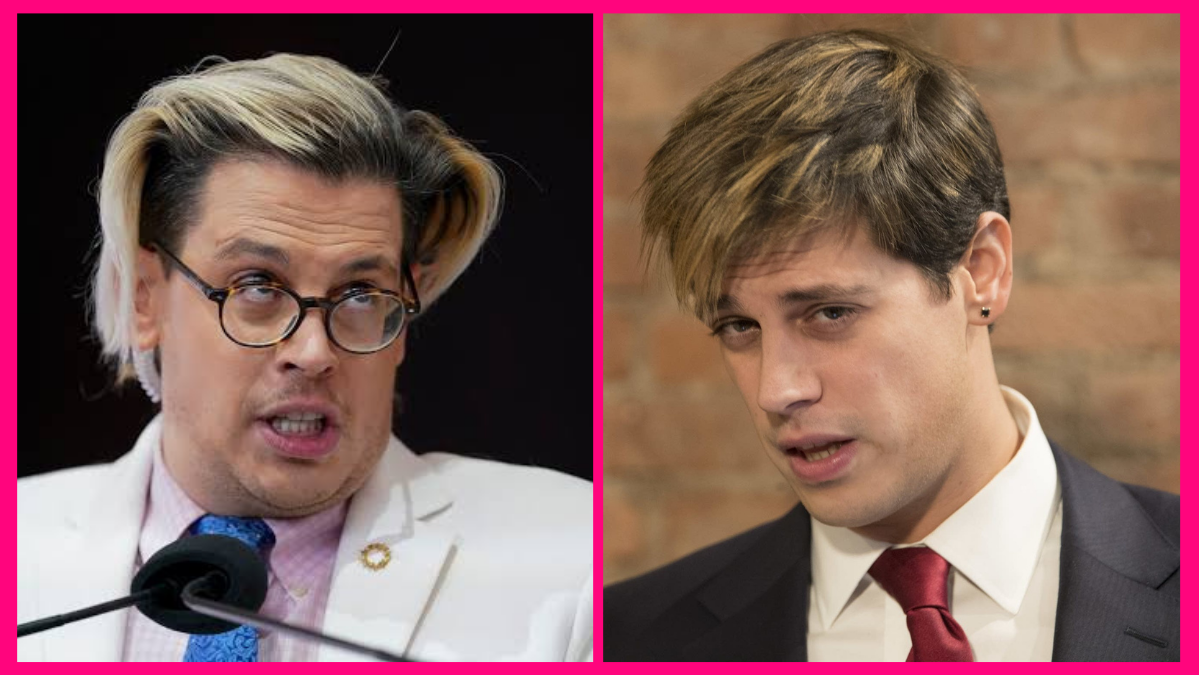
Milo Yiannopoulos is a British political commentator, writer, media personality, and provocateur who became one of the most recognizable and controversial figures associated with the online conservative movement of the 2010s. Known for his flamboyant personality, provocative rhetoric, sharp criticism of progressive politics, and highly confrontational approach to public debate, he built a substantial following while also attracting intense criticism from journalists, activists, academics, and political opponents. His career has moved through technology journalism, internet culture, political commentary, university speaking tours, publishing, and political activism.
Born in Chatham, Kent, England, in 1984, Yiannopoulos initially developed a career in technology journalism before becoming increasingly involved in political and cultural debates. His profile expanded dramatically during the Gamergate controversy and later through his work at Breitbart News. The combination of internet celebrity, provocative political messaging, and a talent for generating headlines helped turn him into a prominent figure within the broader alt-right and right-wing media ecosystem. The BBC described him in 2017 as an ultra-conservative writer and noted that he was particularly known for deliberately provoking controversy.
His public career has also been marked by major setbacks. He resigned from Breitbart in 2017 after controversial remarks concerning sexual relationships between adults and minors resurfaced, lost a planned speaking opportunity at the Conservative Political Action Conference, and saw Simon & Schuster cancel plans to publish his autobiography. Despite those setbacks, he continued producing political and cultural material and remained connected to controversial political figures and movements.
As of August 2026, Yiannopoulos is again the subject of major international attention. U.S. Immigration and Customs Enforcement detained him in Louisiana after authorities said he had overstayed his U.S. immigration status and failed to attend an immigration hearing. An immigration judge had issued a final order of removal on July 22, 2026.
Who Is Milo Yiannopoulos?
Milo Yiannopoulos is best understood as a media provocateur whose influence came from combining political commentary with internet culture. Rather than building his reputation through traditional political office or conventional journalism alone, he developed a highly recognizable online persona. His approach emphasized confrontation, humor, theatricality, culture-war subjects, and the deliberate creation of controversy.
His supporters have viewed him as a defender of free expression and an opponent of political correctness, while critics have characterized him as a far-right provocateur whose rhetoric targeted minorities, women, Muslims, transgender people, and other groups. The Anti-Defamation League has described him as a controversial right-wing media personality and provocateur, while noting his prominent role in the Gamergate controversy and his later association with Breitbart.
That sharply divided reputation is central to understanding his career. Yiannopoulos has repeatedly positioned himself against mainstream political and cultural institutions, arguing that traditional media, universities, technology companies, and progressive activists exercise excessive control over public debate. His critics, meanwhile, have argued that his style frequently crosses from provocative commentary into harassment and inflammatory rhetoric.
Milo Yiannopoulos Biography and Early Life
Yiannopoulos was born on October 18, 1984, in Chatham, Kent, England. His birth name was Milo Hanrahan. He grew up in England and attended Simon Langton Boys Grammar School in Canterbury before beginning university studies that he did not complete. The BBC reported that he attended both the University of Manchester and the University of Cambridge but dropped out of undergraduate programs.
His early interests centered heavily on writing, technology, culture, and the emerging influence of the internet. Before becoming nationally known as a political commentator, he worked as a technology journalist and developed a reputation for writing about the changing relationship between technology and society.
This early journalism career was important because it provided the foundation for his later internet-focused political persona. He understood how online communities worked, how controversy could generate attention, and how social media could transform relatively niche cultural debates into mainstream news stories.
Milo Yiannopoulos and His Education
Education is an interesting part of Yiannopoulos’ biography because his academic journey was relatively unconventional. Although he attended respected British institutions, he did not complete a traditional university degree. His later career therefore developed primarily through journalism, publishing, online media, public speaking, and political activism rather than through formal academic credentials.
His lack of a completed university degree did not prevent him from becoming a prominent public intellectual within certain conservative and online communities. In fact, his outsider image became part of his public identity. He frequently presented himself as someone challenging established institutions rather than someone seeking approval from them.
His Early Career in Technology Journalism
Before becoming associated with political controversy, Yiannopoulos worked in technology journalism. He wrote about the internet, social media, digital culture, and technology companies at a time when online platforms were becoming increasingly influential in everyday life.
In 2009, he moved into technology journalism with The Daily Telegraph. His writing during this period reflected an interest in the internet’s cultural potential and the ways technology was changing communication.
This background later became valuable when he began discussing online political communities. Unlike commentators who entered internet culture from traditional politics, Yiannopoulos had experience within technology journalism and understood the language and culture of online communities.
The Kernel and His Rise in Online Media
One of Yiannopoulos’ significant early projects was The Kernel, an online publication focused on technology and internet culture. He co-founded the publication in 2011 and served as its editor. The project eventually encountered financial and legal difficulties before being relaunched and later acquired by Daily Dot Media in 2014.
The Kernel helped establish Yiannopoulos as more than simply a journalist. It gave him experience as an editor, publisher, and media entrepreneur. It also placed him close to the rapidly changing world of online journalism, where personality-driven commentary was becoming increasingly valuable.
Although The Kernel was ultimately sold, the experience contributed to the skills that later defined his political career: producing provocative content, cultivating online audiences, responding quickly to controversy, and turning cultural disputes into media events.
Milo Yiannopoulos and Gamergate
Gamergate became one of the most important turning points in Yiannopoulos’ career. Beginning in 2014, the controversy involved disputes over ethics in video-game journalism, sexism, harassment, feminism, and online culture. The debate became extremely polarized, with participants and observers offering very different interpretations of what the movement represented.
Yiannopoulos became one of the most prominent media figures covering Gamergate. His articles and commentary helped move the controversy beyond gaming communities and into mainstream political discussion. The Anti-Defamation League identifies his involvement in Gamergate as an important part of his rise to prominence.
For Yiannopoulos, Gamergate demonstrated the power of internet-based cultural politics. It showed how online communities could challenge established media narratives while simultaneously creating enormous controversy. His visibility increased significantly as he positioned himself as an opponent of what he viewed as progressive influence within gaming and journalism.
His Years at Breitbart News
Yiannopoulos joined Breitbart News and became one of its most recognizable personalities. He worked for the organization from 2014 to 2017 and eventually became a senior editor.
Breitbart gave him a much larger platform and helped transform his online notoriety into a national political profile. During this period, he became associated with the emerging alt-right and frequently appeared at political events, on television programs, and at universities.
His writing focused heavily on feminism, political correctness, transgender issues, immigration, Islam, free speech, and cultural politics. The style was deliberately confrontational. Rather than presenting himself as a conventional conservative commentator, he adopted an exaggerated celebrity persona designed to attract attention and generate conflict.
Milo Yiannopoulos and the Alt-Right
Yiannopoulos became closely associated with the alt-right during the 2016 U.S. presidential election period. The alt-right was a loosely organized political and internet movement associated with nationalism, anti-immigration politics, opposition to multiculturalism, and hostility toward mainstream conservatism. It also attracted white nationalist and extremist elements.
Yiannopoulos has at different times rejected the label or described his relationship with the movement differently, but his public profile during the 2016 period made him one of its most recognizable media figures. The BBC noted his association with the alt-right while also reporting that he did not consider himself formally part of the movement.
His connection with the movement remains an important part of discussions about his political legacy. Supporters often emphasize his opposition to political correctness and censorship, while critics focus on his relationships with extremist figures and the inflammatory nature of some of his rhetoric.
University Speaking Tours and Free Speech Debates
University speaking tours became another defining feature of Yiannopoulos’ public career. He visited campuses across the United States and frequently spoke about free speech, feminism, political correctness, gender politics, and conservative activism.
His appearances often generated protests and heated debates. In some cases, demonstrations became disruptive, which further increased media coverage. Rather than reducing his profile, the controversy often amplified it because clips from his appearances circulated widely across social media.
The university events also reflected a broader political debate about freedom of speech on college campuses. Supporters argued that controversial speakers should be permitted to appear even when their views were offensive. Opponents argued that universities had responsibilities regarding harassment, discrimination, and campus safety.
The Twitter Ban and Social Media Controversies
Social media played a crucial role in Yiannopoulos’ rise and later became one of the areas in which he experienced major restrictions. In July 2016, Twitter permanently suspended his account following controversy surrounding his comments about actress Leslie Jones. The BBC reported that Twitter characterized the situation as targeted abuse or harassment.
The incident became part of a larger debate over social-media moderation. Supporters of Yiannopoulos portrayed his suspension as evidence that technology companies were suppressing conservative voices. Critics argued that social platforms had legitimate responsibilities to prevent targeted harassment and abuse.
His later removal from other major platforms reinforced his image as a banned or censored political personality. This became central to his messaging and helped maintain his relevance among audiences already skeptical of Silicon Valley companies.
The 2017 Controversy That Changed His Career
One of the biggest turning points in Yiannopoulos’ career occurred in February 2017, when previously recorded remarks about sexual relationships between adults and minors resurfaced. The comments caused widespread condemnation and prompted a rapid series of professional consequences.
Yiannopoulos resigned from Breitbart, the Conservative Political Action Conference withdrew his invitation, and Simon & Schuster canceled plans to publish his autobiography. He subsequently said that his comments had been misrepresented and expressed disgust toward adults who sexually abuse minors.
The controversy fundamentally changed his mainstream political position. Before the incident, he had become a highly visible conservative media celebrity with a large public platform. Afterward, many mainstream conservative organizations and media outlets distanced themselves from him.
His Book Dangerous and Publishing Career
One of the most recognizable books associated with Yiannopoulos is Dangerous. The book was originally scheduled for publication through Simon & Schuster’s Threshold Editions, but the publisher canceled the planned release in 2017 following the controversy surrounding his remarks.
Yiannopoulos subsequently published Dangerous independently. The book reflected his broader political philosophy and presented arguments concerning free speech, political correctness, feminism, cultural politics, and the changing nature of conservatism.
His publishing career continued beyond Dangerous. Other works associated with him include Diabolical, How to Be Poor, How to Be Straight, Middle Rages, and The Trial of Roger Stone.
Milo Yiannopoulos’ Political Views
Yiannopoulos’ political views have changed and evolved over time, but his public commentary has generally focused on opposition to progressive politics, political correctness, feminism, identity politics, and what he describes as ideological control within cultural institutions.
He has also expressed strong positions concerning immigration, Islam, transgender issues, and free speech. These positions have repeatedly generated controversy and contributed to his reputation as a provocative rather than conventional conservative commentator.
His political identity has also shifted depending on the period. He was closely associated with Donald Trump’s political rise during the 2016 election, later criticized Trump, and subsequently developed relationships with other controversial political figures.
Milo Yiannopoulos and Donald Trump
Yiannopoulos became a visible supporter of Donald Trump’s political movement during the 2016 election period. Trump represented a political style that challenged traditional Republican leadership, and Yiannopoulos viewed the movement as part of a broader rejection of establishment politics and political correctness.
His relationship with Trump and the wider Trump movement helped increase his visibility. However, his later political trajectory became less closely aligned with mainstream Trump conservatism. Reports have noted that he eventually criticized Trump before becoming associated with other controversial political figures.
His Connection to Marjorie Taylor Greene
In 2022, Yiannopoulos worked as an unpaid intern in the office of U.S. Representative Marjorie Taylor Greene. The arrangement attracted considerable attention because of his previous history as a controversial media personality.
The episode illustrated how his career had moved beyond online commentary into direct involvement with political networks. Although the internship itself was relatively brief, it became another notable chapter in his evolving relationship with American conservative politics.
Milo Yiannopoulos and Ye
Yiannopoulos later became involved with Ye, the artist formerly known as Kanye West. He worked with Ye during the latter’s political activities and was associated with his unsuccessful 2024 presidential campaign. He was also listed as chief of staff at Yeezy in 2024 before leaving the role in May of that year.
The relationship placed Yiannopoulos in another highly controversial political and cultural environment. Ye’s increasingly provocative political statements and associations attracted international attention, while Yiannopoulos’ involvement added another layer to the political operation surrounding him.
This period demonstrated that Yiannopoulos continued to operate primarily at the intersection of politics, celebrity culture, internet communities, and controversy rather than through conventional political institutions.
Milo Yiannopoulos Personal Life
Yiannopoulos has historically spoken publicly about his sexuality and relationships, making his personal life part of his public persona. He married his longtime boyfriend in Hawaii in September 2017, according to biographical sources.
His public identity has often been unusual within conservative political circles because he has openly discussed aspects of his personal life while simultaneously promoting positions that sometimes conflict with stereotypes associated with traditional conservative politics.
Over the years, his statements about his sexuality and relationships have also changed. In 2021, he publicly described himself differently and said that his husband had become a housemate. Because his personal statements have evolved, older descriptions of his relationship status should be treated carefully rather than assumed to represent his current circumstances.
Milo Yiannopoulos Career Highlights at a Glance
| Category | Details |
|---|---|
| Full name | Milo Hanrahan |
| Public name | Milo Yiannopoulos |
| Date of birth | October 18, 1984 |
| Birthplace | Chatham, Kent, England |
| Profession | Writer, commentator, media personality |
| Early field | Technology journalism |
| Major publication | The Kernel |
| Major media role | Former Breitbart editor |
| Major controversy | 2017 remarks concerning minors and sexual relationships |
| Major political association | U.S. conservative and alt-right media circles |
| Notable book | Dangerous |
| Other work | Political writing, public speaking, media activism |
| 2026 development | Detained by ICE while facing a final removal order |
Current biographical and news reporting confirms that he was born in England in 1984 and became prominent through technology journalism, Breitbart, Gamergate, political commentary, and public speaking.
Milo Yiannopoulos’ Latest News in 2026
The most significant recent development in Yiannopoulos’ life occurred in August 2026, when U.S. immigration authorities detained him in Louisiana. According to U.S. officials, he entered the United States legally in May 2019 but later overstayed his immigration status and failed to attend an immigration hearing. An immigration judge issued a final order of removal on July 22, 2026.
He was arrested on August 27 at Louis Armstrong New Orleans International Airport and remained in ICE custody as of August 28. Reports said the precise detention location had not been publicly disclosed, although officials confirmed that he was being held pending removal proceedings.
The development attracted particular attention because Yiannopoulos had previously advocated strict immigration enforcement and expressed support for policies favoring deportation of people without lawful status. The contrast between his political views on immigration and his own immigration case became a major theme in coverage of the detention.
Because the situation is ongoing, details concerning his legal representation, exact detention arrangements, and eventual removal should be distinguished from confirmed facts. Current reporting establishes his detention and final removal order, but the ultimate outcome of the immigration process may change.
Why Milo Yiannopoulos Remains a Controversial Figure
The controversy surrounding Yiannopoulos is not based on one isolated incident. Instead, it developed through years of provocative writing, political activism, social-media disputes, university appearances, relationships with controversial figures, and statements that generated widespread criticism.
His supporters have argued that controversy is part of his strategy for challenging cultural assumptions. They have portrayed him as a free-speech advocate willing to discuss subjects that other commentators avoid. His critics contend that deliberately inflammatory rhetoric can encourage harassment and normalize extremist ideas.
That disagreement explains why he continues to attract attention even after losing much of the mainstream platform he possessed during the height of his 2016-era popularity. His career illustrates the ability of internet personalities to remain culturally relevant even after being excluded from major institutions.
The Lasting Impact of His Internet Career
Yiannopoulos’ career also provides an example of how the internet transformed political celebrity. Traditional political commentators generally depended on newspapers, television networks, publishers, or established political organizations. Yiannopoulos demonstrated a different model based on social media, viral controversy, direct audience engagement, and highly personalized branding.
His influence peaked during a period when online political culture was becoming increasingly polarized. Gamergate, the 2016 election, campus free-speech debates, and disputes over social-media censorship all created an environment in which provocative personalities could quickly reach large audiences.
Even critics who strongly opposed his politics contributed to his visibility by covering his controversies. This created a familiar cycle in internet politics: provocative statement, public backlash, media coverage, online debate, increased recognition, and another controversy.
Milo Yiannopoulos’ Legacy in Modern Political Media
Assessing Yiannopoulos’ legacy requires separating his influence from judgments about his rhetoric. He was undeniably important to the development of personality-driven political media during the 2010s. His work helped demonstrate how internet culture could become an important force in mainstream political debates.
At the same time, his career illustrates the risks associated with deliberately provocative political communication. Statements designed to attract attention can generate enormous short-term visibility but can also result in professional isolation, platform bans, canceled publishing agreements, and long-term reputational consequences.
His story therefore remains relevant to discussions about online speech, political polarization, censorship, social-media moderation, celebrity politics, and the relationship between controversy and audience growth.
Frequently Asked Questions About Milo Yiannopoulos
Who is Milo Yiannopoulos?
Milo Yiannopoulos is a British writer, political commentator, and media personality who became prominent through technology journalism, Gamergate commentary, Breitbart News, university speaking tours, and conservative political activism. He became especially well known for his provocative approach to cultural and political issues.
How old is Milo Yiannopoulos?
Milo Yiannopoulos was born on October 18, 1984. That makes him 41 years old as of August 2026.
Why did Milo Yiannopoulos become famous?
His national profile grew through his coverage of Gamergate, his work at Breitbart News, his controversial university speaking tours, and his strong social-media presence. His provocative commentary on feminism, political correctness, technology, free speech, and cultural politics helped make him a highly recognizable internet personality.
Why did Milo Yiannopoulos leave Breitbart?
Yiannopoulos resigned from Breitbart in 2017 after controversial remarks about sexual relationships involving adults and minors resurfaced. The controversy also resulted in CPAC withdrawing his invitation and Simon & Schuster canceling plans to publish his autobiography.
What books has Milo Yiannopoulos written?
Books associated with Yiannopoulos include Dangerous, Diabolical, How to Be Poor, How to Be Straight, Middle Rages, and The Trial of Roger Stone. Dangerous became particularly notable because its original publishing agreement with Simon & Schuster was canceled following the 2017 controversy.
What happened to Milo Yiannopoulos in 2026?
In August 2026, U.S. immigration authorities detained Yiannopoulos in Louisiana. Officials said he had entered the United States legally in 2019 but overstayed his immigration status and failed to attend an immigration hearing. An immigration judge issued a final order of removal on July 22, 2026, and he was being held by ICE pending removal.
Final Thoughts on Milo Yiannopoulos
Milo Yiannopoulos remains one of the more distinctive and controversial personalities to emerge from the intersection of internet culture and modern political media. His journey from technology journalism to Gamergate commentator, Breitbart editor, university speaker, author, political activist, and associate of controversial public figures reflects the rapidly changing nature of political influence in the digital age.
His career has been shaped as much by controversy as by conventional professional achievements. Supporters have celebrated his willingness to challenge progressive cultural ideas, while critics have condemned his rhetoric and relationships with controversial political movements. Both perspectives are essential to understanding why his name has remained prominent in discussions of online politics.
The latest chapter is unfolding in 2026, with his detention by U.S. immigration authorities and a final removal order placing his future in the United States in question. Whatever happens next, his career offers a revealing case study in how internet fame, political polarization, free-speech debates, celebrity culture, and controversy can combine to create an unusually enduring public profile.
Read also Nancy Guthrie: Her Life, Family, and the Ongoing Search in Tucson
