



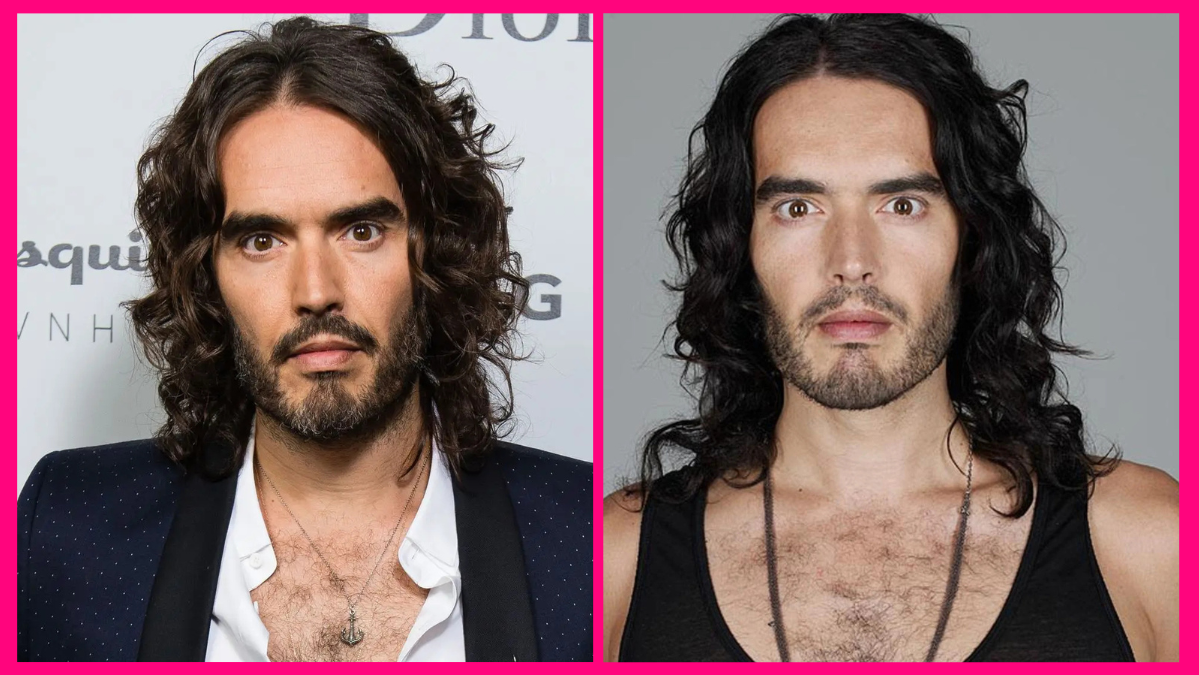
Russel Brand, more commonly spelled Russell Brand, is an English comedian, actor, author, broadcaster, and online media personality whose career has moved through several very different phases. He first became widely known in the United Kingdom through stand-up comedy, television presenting, radio, and appearances connected with Big Brother. His distinctive appearance, fast-talking delivery, provocative humor, and willingness to discuss personal experiences quickly made him one of the most recognizable British entertainers of his generation.
Over time, his career expanded beyond British television. Hollywood roles in films such as Forgetting Sarah Marshall, Get Him to the Greek, Arthur, Hop, and Despicable Me introduced him to a much wider international audience. He also became an author and public speaker, publishing books that explored addiction, personal transformation, politics, spirituality, and social issues.
Today, the public image surrounding the comedian is considerably more complicated than it was during his entertainment peak. His online work, political commentary, religious interests, and legal situation have all contributed to a dramatic shift in how he is discussed. Because criminal proceedings remain active, it is important to distinguish established facts, allegations, and Brand’s own responses when examining his life and career.
Early Life and Background
Russell Edward Brand was born on June 4, 1975, in Grays, Essex, England. He grew up in a working-class environment and later developed an interest in performance, acting, and comedy. His teenage and early adult years were turbulent, with struggles involving drugs and other personal difficulties becoming important parts of the story he later told through his comedy and writing.
His early experiences eventually became material for his stand-up career. Rather than presenting himself as a conventional comedian with a carefully controlled public image, Brand built a persona around honesty, eccentricity, provocative observations, sexuality, spirituality, and personal chaos. That approach helped distinguish him from many mainstream British performers.
Brand attended the Italia Conti Academy of Theatre Arts but was expelled during his first year. His early career included acting ambitions, but comedy gradually became the area in which he found the greatest opportunity. His experiences with addiction later became central to his recovery story and his public discussions about sobriety.
The Beginning of His Comedy Career
Brand’s rise in entertainment began with stand-up performances and television work in the early 2000s. His comedy was deliberately unconventional. He combined observational humor with exaggerated storytelling, political commentary, sexual jokes, and an unmistakable stage persona.
His early stand-up material frequently drew from his own experiences, including addiction and recovery. His one-man show Better Now, which dealt with his heroin addiction, appeared at the Edinburgh Festival in 2004. The performance helped establish a pattern that would remain important throughout his career: turning difficult personal experiences into material for a public audience.
Television helped take that reputation further. His association with MTV and later British programs gave him a platform outside the comedy-club circuit. He eventually became particularly associated with Big Brother’s Big Mouth, a role that brought his eccentric presentation style into millions of homes.
His rapid delivery, unusual clothing, long hair, and deliberately theatrical manner made him instantly recognizable. He was not simply trying to deliver jokes; he was creating a character around himself.
Television and Radio Success
During the middle of the 2000s, Brand became a major figure in British entertainment. His television appearances expanded, while his radio work gave him another way to build a loyal following.
His BBC radio career became particularly significant. The Russell Brand Show developed a dedicated audience, and his work demonstrated that his appeal extended beyond visual comedy. His conversational style allowed him to move between jokes, cultural commentary, celebrity discussions, and philosophical ideas.
Brand also appeared on Channel 4 programs and hosted other television projects. His growing profile eventually brought opportunities in film and international entertainment. By the late 2000s, he had moved from being a distinctive British comedian to a recognizable global celebrity.
His success was also accompanied by controversy. One of the most famous incidents was the 2008 Sachsgate scandal involving prank phone messages left for actor Andrew Sachs during Brand’s BBC radio program. The incident generated widespread criticism and became a major moment in his career. Brand resigned from the BBC, but the controversy did not prevent him from expanding his career in the United States.
Hollywood Breakthrough
The international turning point came with Forgetting Sarah Marshall, released in 2008. Brand played Aldous Snow, a flamboyant British rock star whose confidence and outrageous behavior became one of the film’s most memorable elements.
The role was especially important because it introduced Brand to a large American audience. According to accounts of the production, the character was changed during development after Brand’s audition, allowing him to bring more of his own performance style to the role.
The success of the character led to Get Him to the Greek in 2010. Brand returned as Aldous Snow, this time as the central character. The movie paired him with Jonah Hill and became one of his most recognizable Hollywood projects.
His film career continued with projects including Bedtime Stories, Arthur, Hop, Rock of Ages, and voice work as Dr. Nefario in the Despicable Me franchise.
| Career area | Notable work | Importance |
|---|---|---|
| Stand-up comedy | Better Now, Messiah Complex | Established his distinctive comedic identity |
| Television | Big Brother’s Big Mouth | Built his British celebrity profile |
| Radio | The Russell Brand Show | Expanded his audience and conversational style |
| Film | Forgetting Sarah Marshall | Major international breakthrough |
| Film | Get Him to the Greek | Gave him a leading Hollywood comedy role |
| Voice acting | Despicable Me | Reached a family-film audience |
| Writing | My Booky Wook | Turned personal experiences into published work |
| Online media | YouTube and Rumble | Became central to his later public presence |
Acting Career and Most Recognizable Roles
Although comedy remained the foundation of his public identity, acting demonstrated that Brand could carry both supporting and leading roles. His most recognizable character remains Aldous Snow, the fictional rock star who appears in Forgetting Sarah Marshall and Get Him to the Greek.
Aldous Snow worked because the character combined several traits associated with Brand’s comedic style: arrogance, charm, unpredictability, confidence, and self-destructive behavior. The character was exaggerated, but Brand’s performance gave it enough personality to become memorable.
He also appeared in Arthur, a remake of the classic comedy in which he played the wealthy, irresponsible title character. The film placed him alongside actors such as Helen Mirren, Jennifer Garner, and Greta Gerwig.
Another important part of his film career was voice acting. He provided the voice of Dr. Nefario in Despicable Me, giving him an opportunity to reach audiences who might not have followed his adult-oriented stand-up career.
Books and Writing Career
Writing became another major part of Brand’s career. His memoir My Booky Wook offered readers an account of his childhood, addiction, relationships, entertainment career, and personal development.
The book helped strengthen the connection between his public comedy persona and his personal story. Instead of separating his professional identity from his past struggles, Brand used those experiences as part of his storytelling.
He later published additional books, including Revolution, which explored political and social ideas. His writing increasingly moved beyond autobiography into discussions about power, inequality, culture, spirituality, and political systems. Penguin Random House lists Brand as an author alongside his work as a comedian, actor, radio host, and public figure.
His writing style, much like his comedy, tends to be energetic and unconventional. Supporters appreciate the willingness to challenge established ideas, while critics have often questioned the conclusions and arguments presented in his work.
Russell Brand and Katy Perry
One of the most heavily publicized relationships in Brand’s personal life was his marriage to American singer Katy Perry. The pair met in 2009 and became engaged later that year. They married in India in 2010.
The relationship attracted enormous media attention because both were major entertainment personalities. Their marriage lasted relatively briefly, and they divorced in 2012.
The relationship also represented the height of Brand’s mainstream celebrity period. At that time, he was simultaneously successful in Hollywood, stand-up comedy, television, publishing, and international entertainment.
His relationship with Perry became part of the broader celebrity narrative surrounding him, but it was only one chapter in a much larger career. Much of his later public life moved away from Hollywood and toward independent media, political commentary, and spirituality.
From Mainstream Celebrity to Online Commentator
The most significant transformation in Brand’s career came as his focus shifted away from conventional entertainment. Instead of depending primarily on television networks, movie studios, and traditional media organizations, he increasingly built an audience through online platforms.
His digital content covers subjects including politics, culture, religion, freedom of speech, media criticism, health-related claims, and social commentary. His official website currently describes him as a comedian interested in “change” and “awakening,” while also promoting his online broadcasts and community projects.
This transition reflects a broader change in the media landscape. A celebrity no longer needs a television contract or major newspaper column to maintain a large audience. YouTube, podcasts, livestreaming platforms, newsletters, and online communities can provide direct communication with followers.
For Brand, this model has allowed him to maintain a significant public presence despite becoming less prominent in mainstream entertainment.
Political Views and Public Commentary
Brand’s political identity has changed considerably over the course of his public life. Earlier in his career, he became known for criticism of conventional politics and for discussing inequality and social reform.
His book Revolution represented a particularly visible stage of that political development. Later, his online commentary increasingly focused on distrust of institutions, media criticism, free speech, global politics, and cultural debates.
This has produced a highly polarized public reaction. Some viewers see him as an independent commentator willing to challenge powerful institutions. Others argue that his content can oversimplify complex subjects or give credibility to controversial claims.
That divide is important when assessing his modern career. Brand is no longer simply a comedian or Hollywood actor. He has become an online personality whose influence depends heavily on his ability to attract and retain an audience interested in political and cultural commentary.
Spirituality and Religious Transformation
Spirituality has also become a major theme in Brand’s later public identity. He has spoken extensively about personal transformation, faith, addiction, morality, and the search for meaning.
In 2024, Brand publicly discussed his Christian faith and was baptized. His religious interests have since become a recurring part of his online commentary and public appearances. Contemporary reports have described his shift toward Christianity as another major stage in his personal transformation.
This development is connected to his earlier discussions about addiction and recovery. Throughout his career, Brand has frequently presented his life as a continuing process of change rather than a fixed identity.
His spiritual messaging also fits into his broader interest in questioning modern institutions and searching for alternative ways of understanding society. For supporters, this represents genuine personal growth. For critics, it is another evolution in a highly calculated public persona.
Controversies and Public Scrutiny
Controversy has followed Brand throughout much of his career. Earlier disputes involved his comedy, radio broadcasts, political comments, relationships, and public behavior.
The 2008 Sachsgate incident remains one of the best-known examples from his mainstream media years. However, the most serious controversy surrounding him today concerns allegations of sexual offenses.
In September 2023, investigations by The Sunday Times, The Times, and Channel 4’s Dispatches published allegations from women concerning sexual misconduct. The Metropolitan Police subsequently investigated the allegations. In April 2025, prosecutors authorized charges involving alleged offenses between 1999 and 2005.
Brand has denied the allegations and pleaded not guilty. The Crown Prosecution Service has repeatedly emphasized that criminal proceedings are active and that the defendant is entitled to a fair trial.
Additional charges were authorized in December 2025 in relation to alleged offenses in 2009 involving two further women.
Current Legal Situation
As of September 2026, Brand’s legal situation remains unresolved. He has pleaded not guilty to the charges against him, meaning the allegations have not been established as criminal guilt.
The initial charges involved two counts of rape, one count of indecent assault, and two counts of sexual assault concerning four women and alleged incidents between 1999 and 2005. Two additional charges, involving alleged conduct in 2009, were later authorized, bringing the total to seven charges involving six women.
In February 2026, Brand pleaded not guilty to the two additional charges of rape and sexual assault.
The trial was subsequently delayed. A Southwark Crown Court judge moved the trial from June to October 12, 2026, partly because the case was expected to require substantial court time.
This distinction between allegations and proven facts is essential. Until a court reaches a verdict, responsible reporting should describe the accusations as allegations and Brand’s position as a denial.
Career Lessons From His Rise and Reinvention
The story of Brand’s career is unusual because it involves several complete reinventions. He moved from struggling performer to television personality, then from British comedian to Hollywood actor, then from mainstream celebrity to author and political commentator.
One of the strongest lessons from his career is the value of a distinctive identity. His voice, appearance, delivery, and willingness to be unconventional made him difficult to confuse with other entertainers.
Another important factor was his ability to turn personal experiences into stories. Addiction, recovery, relationships, fame, politics, and spirituality have all become part of his public narrative.
His career also illustrates the risks that come with maintaining a highly provocative public persona. A style that creates attention can also generate controversy, criticism, and long-term reputational challenges.
Why Russel Brand Still Attracts Public Interest
The continued interest in Russel Brand comes partly from the extraordinary range of his career. Few British entertainers have moved so visibly between comedy clubs, television, Hollywood films, publishing, radio, political commentary, and online broadcasting.
Search interest is also driven by his personal life, his films, his former marriage to Katy Perry, his political views, his religious transformation, and his ongoing legal proceedings.
For people discovering his name today, understanding his career requires more than looking at one period. The comedian who became famous through British television is not identical to the Hollywood actor who played Aldous Snow, and neither completely explains the online commentator he later became.
His story is therefore best understood as a series of professional and personal transitions rather than one simple celebrity biography.
Frequently Asked Questions About Russel Brand
Who is Russel Brand?
Russel Brand is commonly spelled Russell Brand, an English comedian, actor, author, broadcaster, and online commentator. He became famous through British television and stand-up comedy before achieving international recognition through Hollywood films including Forgetting Sarah Marshall and Get Him to the Greek.
What movies is Russell Brand famous for?
Russell Brand is particularly known for Forgetting Sarah Marshall, Get Him to the Greek, Arthur, Hop, Rock of Ages, and the Despicable Me franchise. His role as Aldous Snow in Forgetting Sarah Marshall was especially important because it helped establish his American film career.
Is Russel Brand still a comedian?
Yes. Comedy remains an important part of his identity, although his work has expanded considerably beyond traditional stand-up. His current public presence includes online broadcasts, commentary, interviews, and discussions about politics, culture, spirituality, and personal change. His official website continues to describe him as a comedian.
What happened to Russel Brand’s Hollywood career?
His Hollywood career was strongest around the late 2000s and early 2010s, when he appeared in several major comedy and family films. Over time, his focus shifted away from mainstream film and television toward writing, independent media, online commentary, and personal-development themes.
What are the current legal allegations against Russell Brand?
Brand faces seven sexual offense charges connected with allegations involving six women and alleged incidents dating from 1999 to 2009. He has pleaded not guilty to all charges. The case remains active, and a trial has been scheduled to begin on October 12, 2026.
Has Russell Brand been found guilty?
No. As of September 2026, the charges against Brand remain unresolved. He has pleaded not guilty, and the case is awaiting trial. The Crown Prosecution Service has emphasized that defendants in active criminal proceedings have the right to a fair trial.
What is Russell Brand known for today?
Today, Brand is known less for mainstream Hollywood acting and more for online commentary, political discussions, spirituality, comedy, and his direct relationship with a large digital audience. His later career has been markedly different from his earlier period as a television presenter and Hollywood actor.
Conclusion
Russel Brand, correctly spelled Russell Brand, has built one of the more unconventional entertainment careers of the modern British celebrity era. His journey has included stand-up comedy, television, radio, Hollywood movies, books, political commentary, online media, and a highly public spiritual transformation.
His rise was powered by an unusual combination of confidence, humor, personal storytelling, and a willingness to challenge conventional expectations. Films such as Forgetting Sarah Marshall and Get Him to the Greek gave him international recognition, while his books and later online work allowed him to develop a more personal relationship with his audience.
At the same time, his career cannot now be discussed without acknowledging the serious allegations and criminal proceedings that remain active. Brand denies the charges and has pleaded not guilty, so the legal outcome remains for the courts to determine.
Ultimately, his public story is one of dramatic reinvention. From an unconventional British comedian to a Hollywood performer and later an online political and spiritual commentator, Brand has repeatedly changed direction while maintaining a strong public identity. His career remains notable not only because of his entertainment achievements, but also because of the extraordinary shift in his public role and the continuing scrutiny surrounding him.
Read also Jan Francis Net Worth: Career, Earnings, Biography, and Legacy
