

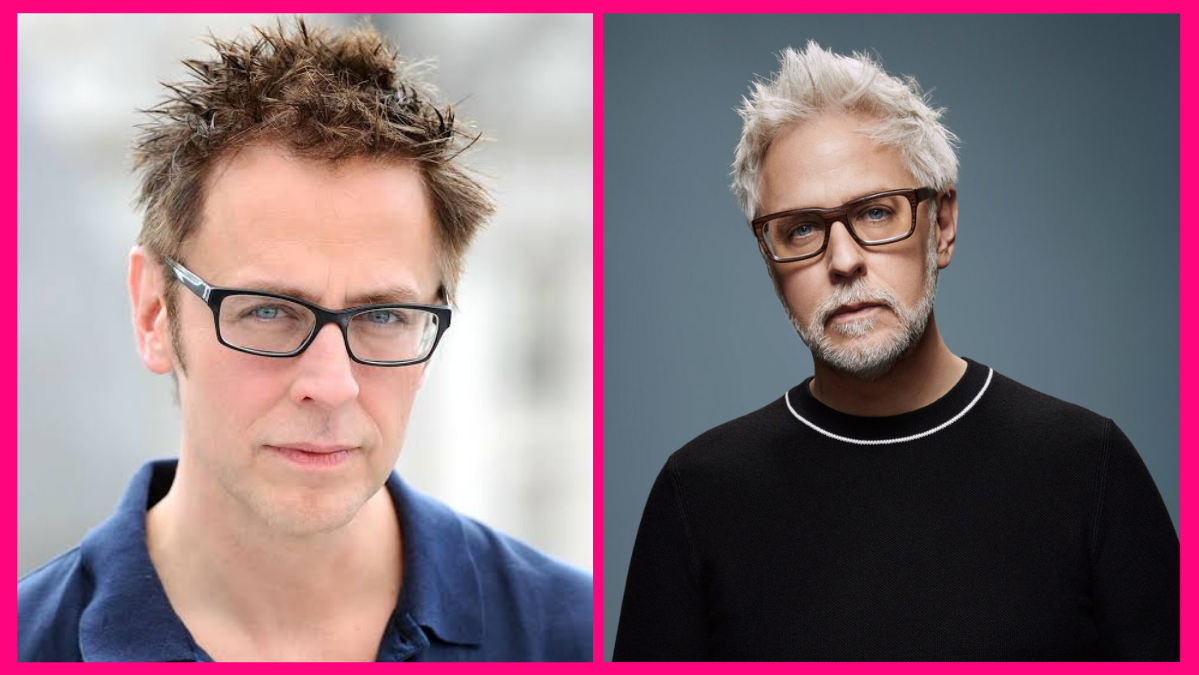
James Gunn is one of the most recognizable filmmakers in modern superhero cinema, but his career was never built around superheroes alone. From low-budget cult movies and irreverent comedy to some of the biggest comic-book franchises in Hollywood, he has developed a distinctive filmmaking identity that combines outrageous humor, emotional storytelling, eccentric characters, violence, and genuine affection for the source material.
Born in St. Louis, Missouri, Gunn began experimenting with filmmaking at a young age before moving into professional screenwriting and independent cinema. His early work with Troma Entertainment helped him develop a reputation for unconventional storytelling, while scripts for projects such as Scooby-Doo and Dawn of the Dead demonstrated his ability to work within established franchises.
His major breakthrough came with Guardians of the Galaxy in 2014. The Marvel film transformed a relatively obscure comic-book team into a worldwide pop-culture phenomenon and established Gunn as a director capable of balancing spectacular action with deeply personal character arcs. Later, his work on The Suicide Squad and Peacemaker strengthened his relationship with DC, eventually leading to a much larger responsibility: helping shape the future of the DC Universe alongside producer Peter Safran.
Today, Gunn is the Co-Chairman and CEO of DC Studios alongside Safran. Warner Bros. Discovery identifies him as the filmmaker behind Guardians of the Galaxy, The Suicide Squad, Peacemaker, and other major genre projects.
James Gunn Early Life and Childhood
James Francis Gunn Jr. was born on August 5, 1966, in St. Louis, Missouri. He grew up in a large family and developed an interest in movies and comics early in life. His fascination with horror, science fiction, and comic books became especially important to his creative development, eventually influencing the mixture of humor and darkness that would become a recognizable feature of his work.
Gunn reportedly began making short films with an 8mm camera when he was around 12 years old. Instead of treating filmmaking as a distant professional ambition, he was already experimenting with cameras, storytelling, monsters, and practical effects as a child. That early willingness to create unusual material helped establish the hands-on approach he would later bring to major Hollywood productions.
His education also shaped his writing. He attended Saint Louis University and later earned an MFA in creative writing from Columbia University. His background in prose writing is significant because many of his films are driven as much by character dialogue and relationships as they are by spectacle.
Rather than following a straightforward path into mainstream Hollywood, Gunn spent part of his early adulthood exploring music, writing, illustration, and low-budget entertainment. Those experiences gave him a broader understanding of storytelling and helped him develop the unconventional voice that would eventually separate him from more traditional studio filmmakers.
James Gunn and His Troma Entertainment Beginnings
One of the most interesting parts of Gunn’s career is his early association with Troma Entertainment, the independent company known for outrageous low-budget movies and its Toxic Avenger franchise. Gunn worked in an environment where filmmakers had considerable freedom to be strange, provocative, funny, and experimental.
His work on Tromeo and Juliet in the 1990s became an important early credit. The project was a deliberately outrageous reinterpretation of Shakespeare, and it gave Gunn an opportunity to combine classic storytelling with the deliberately excessive style associated with Troma.
This period mattered because it taught him lessons that would remain visible throughout his later career. Gunn learned how to create memorable characters without enormous budgets, how to use humor to change the tone of a scene, and how to embrace unusual ideas rather than trying to make every story conventionally polished.
Those lessons eventually proved valuable when he entered the mainstream. Even when working with enormous budgets, Gunn retained the spirit of independent filmmaking. His movies often feel more interested in personalities, jokes, oddball details, and emotional surprises than in simply moving from one action sequence to another.
James Gunn as a Screenwriter in Hollywood
Before becoming a major director, Gunn established himself as a screenwriter. His credits included Scooby-Doo and Scooby-Doo 2: Monsters Unleashed, as well as the 2004 remake of Dawn of the Dead. These projects demonstrated that he could write for established properties while still injecting his own sense of humor and pacing.
The Scooby-Doo movies were especially important because they required a balance between family-friendly entertainment, comedy, mystery, and recognizable characters. Gunn’s ability to understand the tone of a franchise while adding adult humor and fast-paced dialogue helped make the scripts distinctive.
His screenplay work also showed that he was comfortable moving between genres. Horror, comedy, superhero stories, animation-inspired characters, and science fiction could all appear in his professional portfolio. That versatility later became one of his biggest strengths as a filmmaker.
Gunn’s career therefore did not begin with a giant superhero franchise. It developed gradually through writing, independent movies, genre experimentation, and years of learning how audiences respond to unusual characters. That background helps explain why his later blockbuster films often feel different from conventional studio productions.
James Gunn Directorial Breakthrough With Slither
Gunn made his feature directorial debut with Slither, a 2006 horror-comedy starring Nathan Fillion, Elizabeth Banks, and Michael Rooker. The film blended grotesque body horror with comedy and science-fiction elements, creating the kind of genre hybrid that would become closely associated with Gunn.
Although Slither was not an enormous commercial blockbuster, it became a cult favorite. Its reputation grew among genre fans who appreciated its practical effects, bizarre creatures, dark humor, and affection for classic horror.
The film also introduced an important creative partnership with actors who would later become frequent collaborators. Gunn’s ability to build long-term relationships with performers became a recurring feature of his career, particularly as he moved into Marvel and DC productions.
After Slither, he continued exploring superhero storytelling with Super, a dark and unconventional 2010 film starring Rainn Wilson. The movie was much smaller than the superhero blockbusters that later defined his career, but it showed Gunn thinking about what happens when ordinary people try to become heroes.
James Gunn and the Rise of Guardians of the Galaxy
The defining turning point in Gunn’s career arrived when he was selected to direct Guardians of the Galaxy. At the time, the property was far less familiar to mainstream audiences than characters such as Iron Man, Captain America, or Spider-Man.
That unfamiliarity became an advantage. Gunn could build the movie around a strange group of characters without being heavily constrained by audience expectations. The result was a colorful space adventure centered on Peter Quill, Gamora, Drax, Rocket, and Groot.
The first Guardians of the Galaxy film arrived in 2014 and became a major success for Marvel. Warner Bros. Discovery later described Gunn’s Guardians films as among his most notable credits.
The film worked because its emotional center was surprisingly human. Beneath the jokes, explosions, and cosmic battles was a story about damaged people forming an unexpected family. That theme became one of Gunn’s signatures.
Music was another major part of the movie’s identity. The use of classic songs created a strong connection between Peter Quill’s memories and his present-day adventures. Instead of treating the soundtrack as background decoration, Gunn used music as part of the storytelling.
James Gunn and Guardians of the Galaxy Vol. 2
The success of the first film led to Guardians of the Galaxy Vol. 2, which arrived in 2017. Rather than simply attempting to repeat the first movie, Gunn expanded the emotional stories of the characters.
The sequel focused heavily on family, identity, parenthood, and the idea that biological relationships do not necessarily determine who truly belongs in a family. Characters such as Yondu received considerably more emotional depth, while Rocket’s insecurity became an important part of the story.
Gunn’s talent for combining comedy with sadness was particularly evident in the sequel. Characters could make audiences laugh in one scene and become unexpectedly heartbreaking in another.
That emotional flexibility became a major part of his reputation. His superhero films were not simply action-comedy productions. They were character stories presented through the enormous visual language of comic-book cinema.
James Gunn and His Departure From Marvel
Gunn’s relationship with Marvel experienced a major disruption in 2018 when he was removed from Guardians of the Galaxy Vol. 3 following controversy surrounding old social-media posts. The situation generated intense public debate, and the cast of the Guardians films publicly supported Gunn.
Eventually, Disney reinstated him as director of the third installment. The decision allowed him to complete the trilogy he had started nearly a decade earlier.
Guardians of the Galaxy Vol. 3 was released in 2023 and served as the emotional conclusion to Gunn’s main Guardians trilogy. Warner Bros. Discovery notes that the film was released on May 5, 2023, and went on to exceed $835 million worldwide.
The experience also became an important chapter in Gunn’s professional evolution. He returned to Marvel, completed his trilogy, and then continued building his future at DC. Few contemporary superhero filmmakers have had such prominent roles at both major comic-book studios.
James Gunn and The Suicide Squad
After his Marvel career was temporarily interrupted, Gunn moved to DC and wrote and directed The Suicide Squad. Released in 2021, the film gave him a chance to work with a completely different collection of characters.
The movie embraced an R-rated, chaotic style while still providing emotional stakes. Characters such as Bloodsport, Ratcatcher 2, King Shark, Peacemaker, and Harley Quinn were thrown into an intentionally unpredictable story.
DC describes the movie as a superhero action adventure built around Task Force X, with Gunn serving as both writer and director.
One of the film’s biggest strengths was its willingness to make audiences care about characters who initially appeared disposable. Gunn repeatedly used that uncertainty to create tension. The audience never knew which character might survive.
The film also strengthened Gunn’s connection with John Cena, whose Peacemaker character became important enough to receive a standalone television series.
James Gunn and Peacemaker
Peacemaker premiered in January 2022 as a spinoff from The Suicide Squad. The series focused on Christopher Smith, a deeply flawed character who believes passionately in achieving peace while using extremely violent methods.
Gunn wrote and directed the series and created a story that was simultaneously absurd, emotional, violent, and surprisingly sincere. John Cena’s performance allowed the character to evolve beyond the caricature introduced in the film.
The opening dance sequence became one of the show’s most recognizable elements, while its carefully selected soundtrack added another layer to Gunn’s storytelling approach. Warner Bros. Discovery specifically notes the show’s praised soundtrack and Emmy nomination.
The success of Peacemaker also demonstrated that Gunn could translate his cinematic style into episodic television. He could allow characters more time to develop while still maintaining the rapid comedy and visual energy associated with his films.
James Gunn as the Head of DC Studios
In 2022, Gunn and longtime producer Peter Safran were named Co-Chairmen and CEOs of DC Studios. Their task was much bigger than making a single movie. They were responsible for helping establish a more connected DC Universe across film and television.
This represented a major career shift. Gunn was no longer simply a director hired to interpret someone else’s franchise. He became one of the people responsible for deciding which DC stories would be developed, how the universe would connect, and what overall creative direction the franchise would follow.
The new approach was announced under the first chapter titled Gods and Monsters. DC Studios presented the plan as a connected slate involving movies and television projects.
For Gunn, the challenge was balancing creative ambition with the expectations of a global audience. DC has decades of comic-book history, countless characters, multiple previous screen continuities, and an enormous international fan base.
His job therefore involves more than directing. It requires long-term planning, franchise management, storytelling, casting decisions, and collaboration with numerous filmmakers.
James Gunn and Superman
One of the biggest responsibilities in Gunn’s career has been writing and directing Superman, which became the first feature film in the new DC Universe. The movie stars David Corenswet as Superman, Rachel Brosnahan as Lois Lane, and Nicholas Hoult as Lex Luthor.
The film was designed to present Superman as a symbol of compassion, optimism, and humanity rather than focusing exclusively on his physical power. DC described the movie as combining epic action with humor and heart.
Gunn has explained that his interpretation was heavily influenced by the experience of reading Superman comics as a child. He wanted to bring the broader comic-book world to the screen, including superhero friends, unusual technology, giant monsters, and Krypto the Superdog.
One particularly revealing quote captures his philosophy: “I wanted to bring that world to the screen.”
Another important aspect of the movie is its emphasis on journalism. Gunn said, “Journalism is important to me,” explaining his admiration for people who pursue the truth.
That idea reflects a larger creative theme. Superman is not interesting merely because he can fly or lift enormous objects. His moral choices, relationships, compassion, and willingness to help others are central to his identity.
James Gunn’s Superman Creative Philosophy
The Superman project gave Gunn the opportunity to redefine the tone of a character who has been adapted for film and television many times. Rather than treating Superman as an isolated figure, the movie presents him within a larger superhero world.
Gunn has said that he wanted to create a Superman who remained “the ultimate good guy.” That philosophy is important because modern superhero stories often emphasize morally complicated protagonists. Gunn’s version instead places kindness near the center of the character.
The movie also draws inspiration from major Superman comic stories, including All-Star Superman, Superman for All Seasons, Birthright, and other influential runs. Gunn specifically discussed the importance of Frank Quitely’s artwork and the work of Superman creators Jerry Siegel and Joe Shuster.
This approach demonstrates how closely Gunn connects his filmmaking to comics. He does not simply adapt characters by name. He looks at the visual language, emotional themes, bizarre concepts, and imaginative details that made the original comics memorable.
James Gunn Movies and Major Career Credits
The following table highlights several of Gunn’s most important creative projects and why they matter to his career.
| Project | Year | Role | Career Significance |
|---|---|---|---|
| Tromeo and Juliet | 1996 | Writer/Producer | Early Troma breakthrough |
| Scooby-Doo | 2002 | Screenwriter | Major studio screenwriting credit |
| Dawn of the Dead | 2004 | Screenwriter | Successful horror franchise work |
| Slither | 2006 | Writer/Director | Feature directorial breakthrough |
| Super | 2010 | Writer/Director | Independent superhero exploration |
| Guardians of the Galaxy | 2014 | Writer/Director | Global Marvel breakthrough |
| Guardians of the Galaxy Vol. 2 | 2017 | Writer/Director | Expanded the Guardians story |
| The Suicide Squad | 2021 | Writer/Director | Major DC feature |
| Peacemaker | 2022 | Creator/Writer/Director | Successful DC television expansion |
| Guardians of the Galaxy Vol. 3 | 2023 | Writer/Director | Completion of Guardians trilogy |
| Superman | 2025 | Writer/Director/Producer | Launch of the new DC Universe |
These credits show an unusually broad progression. Gunn moved from cult cinema to studio screenwriting, then independent directing, Marvel blockbusters, DC films, television, and finally studio leadership.
His filmography is also notable for its genre consistency. Even when the budgets changed dramatically, he continued returning to horror, comedy, science fiction, superheroes, and stories about outsiders.
James Gunn’s Filmmaking Style and Signature Themes
A major characteristic of Gunn’s filmmaking is his love of damaged or unconventional characters. His protagonists are rarely perfect. They often carry emotional wounds, make terrible decisions, or struggle to communicate with the people around them.
Another signature is the combination of humor and vulnerability. A joke may appear immediately before an emotional revelation, allowing the audience to shift rapidly between laughter and sympathy.
Music is another important part of his style. Songs often serve a narrative purpose, connecting characters to memories, relationships, or particular emotional moments. His work on Guardians of the Galaxy made this approach especially famous.
Gunn also enjoys practical creatures, unusual costumes, bizarre supporting characters, and visual details that might seem too strange for conventional blockbusters. Rather than removing eccentricity, he often makes it central to the appeal of the story.
James Gunn’s Influence on Modern Superhero Cinema
Gunn’s influence extends beyond his individual movies. His success with Guardians of the Galaxy demonstrated that unfamiliar comic-book characters could become mainstream stars when supported by strong characterization and a clear creative identity.
He also helped demonstrate that superhero projects could combine blockbuster spectacle with the sensibilities of other genres. Guardians borrowed from space opera and comedy, The Suicide Squad embraced war-movie and exploitation influences, and Peacemaker mixed superhero storytelling with workplace comedy and family drama.
His work has therefore contributed to the continuing expansion of what audiences expect from comic-book entertainment.
At the same time, his influence comes from his willingness to take emotional risks. The characters may be ridiculous on the surface, but the stories often focus on loneliness, grief, family, forgiveness, insecurity, and the desire to belong.
James Gunn’s Personal Life and Family
Gunn comes from a family with several members involved in creative or professional careers. His brother Sean Gunn became especially familiar to audiences through repeated collaborations with him, including roles in the Guardians of the Galaxy films and other projects.
His personal and professional worlds have often overlapped. Gunn has developed long-standing creative partnerships with actors, writers, producers, and other members of his filmmaking teams.
He married actress Jennifer Holland in 2022. Holland has appeared in several Gunn-related projects, including The Suicide Squad and Peacemaker.
Despite his high-profile career, much of Gunn’s public identity remains connected to filmmaking and comic books. His interviews frequently return to his enthusiasm for characters, storytelling, genre cinema, and the comics that influenced him when he was young.
James Gunn’s Future at DC Studios
The future of Gunn’s career is closely connected to DC Studios. His leadership role means that he is helping shape an interconnected franchise rather than simply directing individual movies.
The success of Superman is particularly important because DC Studios positioned the film as the foundation of its new cinematic universe. The movie’s approach combines a classic Superman ideal with a broader world filled with other heroes and fantastical elements.
DC has also announced Man of Tomorrow, a follow-up to Superman, for July 9, 2027. The project reunites Gunn with David Corenswet and Nicholas Hoult.
This gives Gunn an opportunity to continue developing the Superman mythology while expanding the larger DC Universe around it. His role as both filmmaker and studio executive makes his future particularly significant for comic-book entertainment.
Why James Gunn Remains So Important to Pop Culture
Gunn’s career is unusual because he has succeeded in multiple corners of the entertainment industry without completely abandoning his original creative personality. The filmmaker who emerged from low-budget genre cinema eventually became a major studio executive, yet his work continues to feature strange creatures, unconventional heroes, sharp jokes, emotional vulnerability, and affection for comic-book mythology.
His greatest strength may be his understanding that audiences can care deeply about characters who initially appear ridiculous. Rocket, Groot, Peacemaker, King Shark, and many other characters could easily have been treated as simple comic relief. Instead, Gunn builds emotional histories around them.
That balance between spectacle and humanity has become his creative trademark. Whether he is working with a giant superhero franchise or a smaller genre story, he tends to focus on characters who are searching for connection.
For that reason, Gunn’s legacy is likely to extend beyond individual box-office results. His work has influenced the tone of modern superhero entertainment and helped prove that even enormous franchises can maintain a distinctive personal voice.
Frequently Asked Questions About James Gunn
Who is James Gunn?
James Gunn is an American filmmaker, screenwriter, producer, and studio executive best known for Guardians of the Galaxy, The Suicide Squad, Peacemaker, and Superman. He is also the Co-Chairman and CEO of DC Studios alongside Peter Safran.
What is James Gunn best known for?
James Gunn is particularly famous for directing the Guardians of the Galaxy trilogy for Marvel and The Suicide Squad for DC. He also created and developed Peacemaker and became a leading creative figure at DC Studios.
Did James Gunn direct Superman?
Yes. Gunn wrote and directed Superman, which was released in 2025 as the first feature film in the new DC Universe. The film stars David Corenswet as Superman, Rachel Brosnahan as Lois Lane, and Nicholas Hoult as Lex Luthor.
Is James Gunn the head of DC Studios?
Gunn serves as Co-Chairman and CEO of DC Studios alongside Peter Safran. Their responsibilities include overseeing the development of DC’s interconnected film and television projects.
What movies did James Gunn direct before becoming a major superhero filmmaker?
Before his biggest superhero successes, Gunn directed Slither and Super. He also wrote several notable projects, including Tromeo and Juliet, Scooby-Doo, Scooby-Doo 2: Monsters Unleashed, and Dawn of the Dead.
Why is James Gunn’s filmmaking style so recognizable?
His style combines dark comedy, emotional character development, unusual creatures, comic-book influences, carefully selected music, and sudden shifts between humor and serious drama. His stories frequently focus on outsiders who gradually form their own families.
Conclusion
James Gunn’s career represents one of the more unusual journeys in contemporary Hollywood. He began with low-budget genre filmmaking and screenwriting before becoming a major director, first through Guardians of the Galaxy and later through DC projects such as The Suicide Squad and Peacemaker.
His importance today goes beyond directing individual movies. As a DC Studios executive, he is helping determine the creative direction of one of entertainment’s most valuable superhero franchises. His work on Superman represents a particularly significant step because it combines his personal love of comics with the responsibility of establishing a new cinematic universe.
What makes Gunn stand out is not simply his ability to stage enormous action sequences. It is his instinct for character. His films repeatedly show that strange, damaged, funny, and imperfect people can become heroes when they find something worth fighting for.
From cult horror to Marvel blockbusters and now the future of DC, his career has consistently demonstrated the value of having a strong creative voice. That combination of comic-book passion, humor, emotional storytelling, and unconventional ideas is likely to remain central to his legacy for years to come.
Read also Sylvester Stallone Net Worth: How Rocky, Rambo, and Hollywood Built His Fortune
